J Clin Aesthet Dermatol. 2026;19(7):38–40.
by Walter Liszewski, MD, and Naiem Issa, MD, PhD
Dr. Liszewski is with the Department of Dermatology and the Department of Cancer Epidemiology, Northwestern University, Chicago, Illinois. Dr. Issa is with Forefront Dermatology, Vienna, Virginia; the Dr. Phillip Frost Department of Dermatology and Cutaneous Surgery, University of Miami Miller School of Medicine, Miami, Florida, and the Department of Dermatology, George Washington University School of Medicine and Health Sciences, Washington, District of Columbia.
FUNDING: No funding was provided for this article.
DISCLOSURES: The authors have no relevant conflicts of interest.
Abstract: OX40 and OX40L inhibitors represent the next generation of therapies to treat atopic dermatitis. However, because to their unique mechanism, they have tremendous potential to treat allergic contact dermatitis. Although the cornerstone of allergic contact dermatitis management is allergen avoidance, it is not possible in all cases. In this article, we outline the immunology of these drugs and how they could be leveraged to treat refractory allergic contact dermatitis. Keywords: Eczema, OX40, OX40L, ACD, patch testing, contact dermatitis, allergic contact dermatitis
Introduction
Anovel class of biologic agents targeting OX40 (CD134) and its ligand, OX40L, a costimulatory receptor and its cognate ligand critical for T-cell activation and survival, is currently under development for the treatment of atopic dermatitis (AD).1,2 Although these agents are primarily positioned for AD based on the known pathophysiology, OX40/OX40L inhibitors may also represent a targeted and rational therapeutic approach for allergic contact dermatitis (ACD). Herein, we present evidence supporting the potential of OX40/OX40L inhibitors as future treatments for patients with refractory ACD.
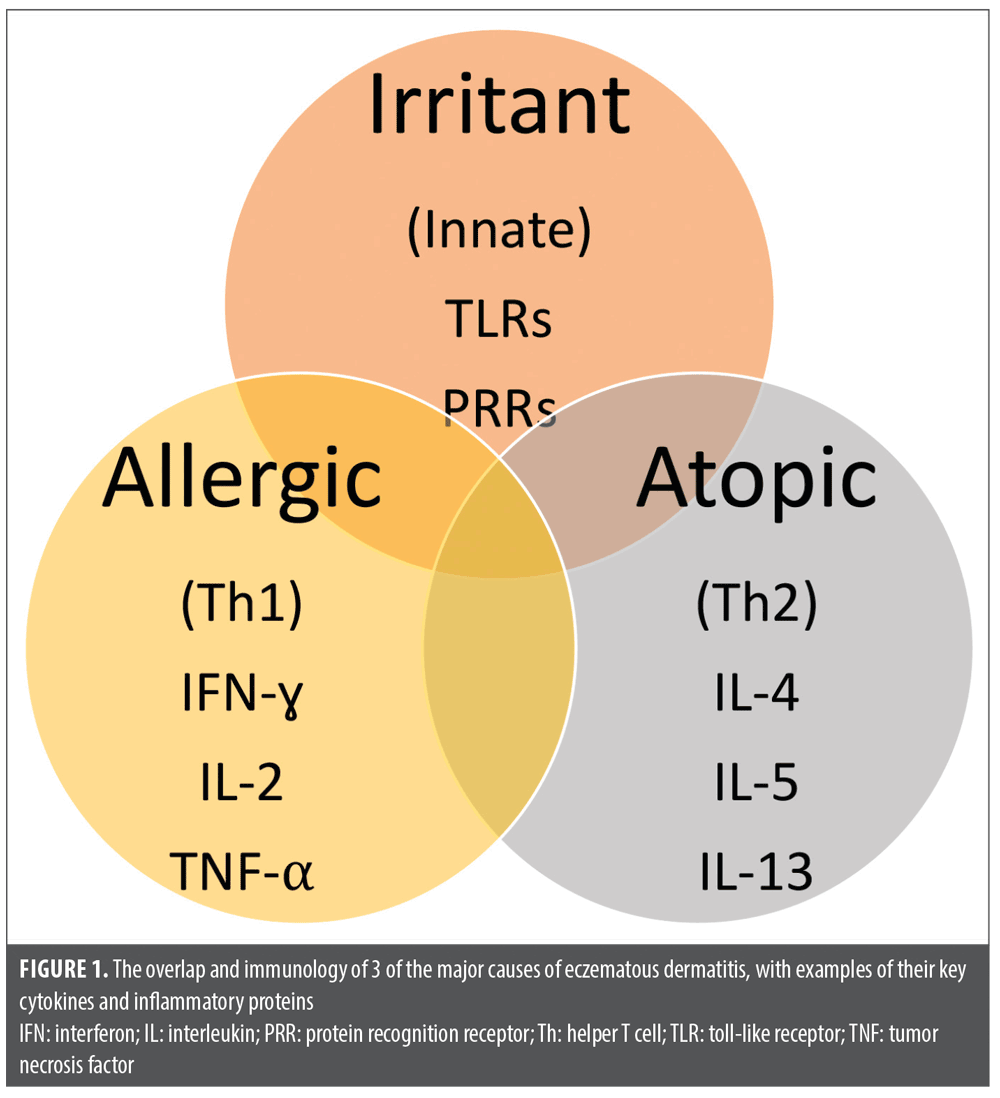
Eczemas comprise a broad group of inflammatory skin disorders, among which the 3 major subtypes are AD, irritant contact dermatitis, and ACD.3–5 Canonical AD is primarily mediated by a helper T cell (Th) 2-driven immune response, whereas most forms of ACD are mediated by Th1-predominant pathways (Figure 1). In recent years, several targeted biologic therapies have been developed for AD, including dupilumab, lebrikizumab, tralokinumab, and nemolizumab. Although these agents have revolutionized the management of AD, therapies that target the interleukin (IL)-4 receptor (dupilumab), IL-13 cytokine (lebrikizumab, tralokinumab), or IL-31 receptor (nemolizumab) do not adequately address the Th1-driven inflammation characteristic of ACD.6–8 Illustrating this point, a recent study demonstrated that among patients receiving dupilumab with persistent, uncontrolled AD, 93% were subsequently found to have contact allergies via patch testing.8 This suggests that Th2-focused biologics, such as dupilumab, are unable to control Th1-mediated ACD.
Within dermatology, ACD represents the fifth most common reason for outpatient dermatology visits.9 The burden of ACD is heterogeneous and includes reactions to personal care products, such as cosmetics, shampoos, and hair dyes, as well as occupational exposures, including adhesives, gloves, and cleansing agents.10 The cornerstone of ACD management is allergen avoidance rather than pharmacologic therapy. However, avoidance is not always feasible, particularly in occupational cases where elimination of exposure, substitution of materials, or use of protective equipment may be impractical or ineffective.
Treatment options for refractory ACD include systemic immunosuppressive agents, such as methotrexate, mycophenolate mofetil, and azathioprine, as well as phototherapy.11 More recently, oral and topical Janus kinase inhibitors have emerged as an alternative treatment option, although their use is limited by the potential for immunosuppressive adverse effects.10,12
ACD develops through 2 distinct phases: sensitization and elicitation.4 By inhibiting OX40 activation, it may be possible to pharmacologically attenuate or halt the helper, memory, and cytotoxic T cells that mediate these 2 immune responses. During the sensitization phase, a chemical allergen penetrates the skin and forms hapten-protein complexes with epidermal proteins. These complexes are taken up by antigen-presenting cells (APCs) and transported to regional lymph nodes, where allergen-specific effector and memory T cells are generated. These T cells subsequently home to the skin. In the elicitation phase, re-exposure to the allergen leads to its presentation by cutaneous APCs to allergen-specific T cells, resulting in T-cell activation.4,10 Mechanistically, the APC will present the allergen on extracellular major histocompatibility complex II proteins, which bind to T-cell receptors on T cells (Figure 2). Subsequent costimulation between the 2 cells will occur, including the expression and binding of OX40L to OX40. Once this occurs, Th1 cytokines are released, leading to the activation of cytotoxic T cells. These effector T cells will mediate epidermal damage directly and through the release of pro-inflammatory cytokines, which recruit additional inflammatory cells and amplify the cutaneous immune response, resulting in a positive feedback of itch, nerve sensitization, and epidermal barrier disruption.13,14

Given this pathophysiology, inhibition of the OX40-OX40L signaling axis represents a potential therapeutic strategy for ACD. OX40 is a costimulatory receptor expressed on regulatory T cells, effector T cells, and activated cytotoxic T cells, whereas its ligand, OX40L, is expressed on APCs. A blockade of OX40 or OX40L disrupts APC-mediated T-cell costimulation, thereby impairing T-cell activation.14 Inhibiting this pathway may attenuate or prevent the elicitation phase of ACD by suppression of Th1 cells, memory T cells, and cytotoxic T cells. Consequently, OX40 inhibitors developed for AD may have therapeutic use in ACD, particularly in cases where allergen avoidance is impractical.
To illustrate this potential application, we present the case of a 32-year-old woman with a 2-year history of progressive eczema involving the hands and arms, who presented for patch testing. She worked as a beautician and reported improvement in her symptoms during periods away from work. Patch testing revealed multiple clinically relevant allergies, including hair dyes (3+ paraphenylenediamine sulfate, 2+ toluenediamine sulfate), hair dye processing chemicals (1+ 4-aminophenol), surfactants (1+ dimethylaminopropylamine), and fragrance components (1+ linalool). Management of ACD in this setting is particularly challenging. Complete avoidance of shampoos and hair dyes would require a change in occupation, and while protective equipment such as gloves may reduce exposure, their use is often impractical for tasks requiring fine motor dexterity such as hair cutting and styling. In the absence of a career change, management is limited to exposure minimization combined with systemic immunosuppressive therapy. It is in such scenarios that OX40/OX40L inhibitors may represent a novel therapeutic option.
At present, none of the OX40/OX40L inhibitors undergoing clinical trials specifically evaluate ACD as an indication. However, once approved, there are several simple approaches to evaluate and establish their efficacy in ACD. The most straightforward application would be in occupational ACD, where allergen avoidance is difficult or impossible. If a patient were started on an OX40 inhibitor and their hand eczema improved despite not avoiding their allergens, this would demonstrate its effectiveness. Another approach would involve repeat patch testing in patients with known contact allergies after initiation of an OX40/OX40L inhibitor. Allergic reactions in patch testing are typically reproducible; thus, loss or attenuation of a previously positive reaction after initiating an OX40 inhibitor would suggest suppression or modulation of the allergic immune response. Similar methodologies have been employed in studies evaluating the impact of dupilumab on patch testing.7,8
Although allergen avoidance remains the primary goal of patch testing and the optimal strategy for preventing ongoing allergic inflammation, in the future, OX40/OX40L inhibitors may occupy a narrow but clinically meaningful role in the management of ACD when avoidance is not feasible.
References
- Weidinger S, Blauvelt A, Papp KA, et al. Phase 2b randomized clinical trial of amlitelimab, an anti-OX40 ligand antibody, in patients with moderate-to-severe atopic dermatitis. J Allergy Clin Immunol. 2025;155(4):1264–1275.
- Guttman-Yassky E, Simpson E, Bissonnette R, et al. ROCKET: a phase 3 program evaluating the efficacy and safety of rocatinlimab in moderate-to-severe atopic dermatitis. Immuotherapy. 2025;17(2):83–94.
- Brunner PM, Guttman-Yassky E, Leung DYM. The immunology of atopic dermatitis and its reversibility with broad-spectrum and targeted therapies. J Allergy Clin Immunol. 2017;139(4S):S65–S76.
- Lambert J. Itch in allergic contact dermatitis. Front Allergy. 2021;2:702488.
- Lee HY, Stieger M, Yawalkar N, Kakeda M. Cytokines and chemokines in irritant contact dermatitis. Mediators Inflamm. 2013;2013:916497.
- Prados-Camona A, Navarro-Triviño FJ, Ruiz-Villaverde R, Corell A. Role of interleukins in dermatology: exploring the immune mechanisms in skin diseases. JEADV Clin Pract. 2024;3(5):1381–1398.
- Raffi J, Botto N. Patch testing and allergen-specific inhibition in a patient taking dupilumab. JAMA Derm. 2019;155(1):120–121.
- Ashbaugh AGA, Murase EM, Raffi J, Botto N, Murase JE. Characterization of residual facial dermatitis during dupilumab thereapy: a retrospective chart review to delineate the potential role of expanded series patch testing. Dermatitis. 2022;33(1):51–61.
- Lim HW, Collins SAB, Resneck JS Jr, et al. The burden of skin disease in the United States. J Am Acad Dermatol. 2017;76(5):958–972.e2.
- Aristizabal-Torres MA, Bruce CJ, Caruso MA, et al. Allergic contact dermatitis revisited: a comprehensive review. J Am Acad Dermatol Rev. 2025;4:92–103.
- Sung CT, McGowan MA, Machler BC, Jacob SE. Systemic treatments for allergic contact dermatitis. Dermatitis. 2019;30(1):46–53.
- Johnson H, Guenther J, Adler BL, Yu J. Janus kinase inhibitors: a promising therapeutic option for allergic contact dermatitis. Cutis. 2023;111(2):92–95,105.
- Azeem M, Kader H, Kerstan A, et al. Intricate relationship between adaptive and innate immune system in allergic contact dermatitis. Yale J Biol Med. 2020;93(5):699–709.
- Guttman-Yassky E, Croft M, Geng B, et al. The role of OX40 ligand/OX40 axis signalling in atopic dermatitis. Br J Dermatol. 2024;191(4):488–496.

OX40/OX40L Costimulatory Pathway: A Potential Therapeutic Target for Allergic Contact Dermatitis?
Categories:
J Clin Aesthet Dermatol. 2026;19(7):38–40.
by Walter Liszewski, MD, and Naiem Issa, MD, PhD
Dr. Liszewski is with the Department of Dermatology and the Department of Cancer Epidemiology, Northwestern University, Chicago, Illinois. Dr. Issa is with Forefront Dermatology, Vienna, Virginia; the Dr. Phillip Frost Department of Dermatology and Cutaneous Surgery, University of Miami Miller School of Medicine, Miami, Florida, and the Department of Dermatology, George Washington University School of Medicine and Health Sciences, Washington, District of Columbia.
FUNDING: No funding was provided for this article.
DISCLOSURES: The authors have no relevant conflicts of interest.
Abstract: OX40 and OX40L inhibitors represent the next generation of therapies to treat atopic dermatitis. However, because to their unique mechanism, they have tremendous potential to treat allergic contact dermatitis. Although the cornerstone of allergic contact dermatitis management is allergen avoidance, it is not possible in all cases. In this article, we outline the immunology of these drugs and how they could be leveraged to treat refractory allergic contact dermatitis. Keywords: Eczema, OX40, OX40L, ACD, patch testing, contact dermatitis, allergic contact dermatitis
Introduction
Anovel class of biologic agents targeting OX40 (CD134) and its ligand, OX40L, a costimulatory receptor and its cognate ligand critical for T-cell activation and survival, is currently under development for the treatment of atopic dermatitis (AD).1,2 Although these agents are primarily positioned for AD based on the known pathophysiology, OX40/OX40L inhibitors may also represent a targeted and rational therapeutic approach for allergic contact dermatitis (ACD). Herein, we present evidence supporting the potential of OX40/OX40L inhibitors as future treatments for patients with refractory ACD.
Eczemas comprise a broad group of inflammatory skin disorders, among which the 3 major subtypes are AD, irritant contact dermatitis, and ACD.3–5 Canonical AD is primarily mediated by a helper T cell (Th) 2-driven immune response, whereas most forms of ACD are mediated by Th1-predominant pathways (Figure 1). In recent years, several targeted biologic therapies have been developed for AD, including dupilumab, lebrikizumab, tralokinumab, and nemolizumab. Although these agents have revolutionized the management of AD, therapies that target the interleukin (IL)-4 receptor (dupilumab), IL-13 cytokine (lebrikizumab, tralokinumab), or IL-31 receptor (nemolizumab) do not adequately address the Th1-driven inflammation characteristic of ACD.6–8 Illustrating this point, a recent study demonstrated that among patients receiving dupilumab with persistent, uncontrolled AD, 93% were subsequently found to have contact allergies via patch testing.8 This suggests that Th2-focused biologics, such as dupilumab, are unable to control Th1-mediated ACD.
Within dermatology, ACD represents the fifth most common reason for outpatient dermatology visits.9 The burden of ACD is heterogeneous and includes reactions to personal care products, such as cosmetics, shampoos, and hair dyes, as well as occupational exposures, including adhesives, gloves, and cleansing agents.10 The cornerstone of ACD management is allergen avoidance rather than pharmacologic therapy. However, avoidance is not always feasible, particularly in occupational cases where elimination of exposure, substitution of materials, or use of protective equipment may be impractical or ineffective.
Treatment options for refractory ACD include systemic immunosuppressive agents, such as methotrexate, mycophenolate mofetil, and azathioprine, as well as phototherapy.11 More recently, oral and topical Janus kinase inhibitors have emerged as an alternative treatment option, although their use is limited by the potential for immunosuppressive adverse effects.10,12
ACD develops through 2 distinct phases: sensitization and elicitation.4 By inhibiting OX40 activation, it may be possible to pharmacologically attenuate or halt the helper, memory, and cytotoxic T cells that mediate these 2 immune responses. During the sensitization phase, a chemical allergen penetrates the skin and forms hapten-protein complexes with epidermal proteins. These complexes are taken up by antigen-presenting cells (APCs) and transported to regional lymph nodes, where allergen-specific effector and memory T cells are generated. These T cells subsequently home to the skin. In the elicitation phase, re-exposure to the allergen leads to its presentation by cutaneous APCs to allergen-specific T cells, resulting in T-cell activation.4,10 Mechanistically, the APC will present the allergen on extracellular major histocompatibility complex II proteins, which bind to T-cell receptors on T cells (Figure 2). Subsequent costimulation between the 2 cells will occur, including the expression and binding of OX40L to OX40. Once this occurs, Th1 cytokines are released, leading to the activation of cytotoxic T cells. These effector T cells will mediate epidermal damage directly and through the release of pro-inflammatory cytokines, which recruit additional inflammatory cells and amplify the cutaneous immune response, resulting in a positive feedback of itch, nerve sensitization, and epidermal barrier disruption.13,14
Given this pathophysiology, inhibition of the OX40-OX40L signaling axis represents a potential therapeutic strategy for ACD. OX40 is a costimulatory receptor expressed on regulatory T cells, effector T cells, and activated cytotoxic T cells, whereas its ligand, OX40L, is expressed on APCs. A blockade of OX40 or OX40L disrupts APC-mediated T-cell costimulation, thereby impairing T-cell activation.14 Inhibiting this pathway may attenuate or prevent the elicitation phase of ACD by suppression of Th1 cells, memory T cells, and cytotoxic T cells. Consequently, OX40 inhibitors developed for AD may have therapeutic use in ACD, particularly in cases where allergen avoidance is impractical.
To illustrate this potential application, we present the case of a 32-year-old woman with a 2-year history of progressive eczema involving the hands and arms, who presented for patch testing. She worked as a beautician and reported improvement in her symptoms during periods away from work. Patch testing revealed multiple clinically relevant allergies, including hair dyes (3+ paraphenylenediamine sulfate, 2+ toluenediamine sulfate), hair dye processing chemicals (1+ 4-aminophenol), surfactants (1+ dimethylaminopropylamine), and fragrance components (1+ linalool). Management of ACD in this setting is particularly challenging. Complete avoidance of shampoos and hair dyes would require a change in occupation, and while protective equipment such as gloves may reduce exposure, their use is often impractical for tasks requiring fine motor dexterity such as hair cutting and styling. In the absence of a career change, management is limited to exposure minimization combined with systemic immunosuppressive therapy. It is in such scenarios that OX40/OX40L inhibitors may represent a novel therapeutic option.
At present, none of the OX40/OX40L inhibitors undergoing clinical trials specifically evaluate ACD as an indication. However, once approved, there are several simple approaches to evaluate and establish their efficacy in ACD. The most straightforward application would be in occupational ACD, where allergen avoidance is difficult or impossible. If a patient were started on an OX40 inhibitor and their hand eczema improved despite not avoiding their allergens, this would demonstrate its effectiveness. Another approach would involve repeat patch testing in patients with known contact allergies after initiation of an OX40/OX40L inhibitor. Allergic reactions in patch testing are typically reproducible; thus, loss or attenuation of a previously positive reaction after initiating an OX40 inhibitor would suggest suppression or modulation of the allergic immune response. Similar methodologies have been employed in studies evaluating the impact of dupilumab on patch testing.7,8
Although allergen avoidance remains the primary goal of patch testing and the optimal strategy for preventing ongoing allergic inflammation, in the future, OX40/OX40L inhibitors may occupy a narrow but clinically meaningful role in the management of ACD when avoidance is not feasible.
References
Share:
Recent Content:
Stephanie DePouw-Simmerman, DNP, APRN: Overview and Long-Term Safety Profile of Ruxolitinib for Vitiligo
Andrew Blauvelt, MD, MBA: Reviewing Upadacitinib Data in Atopic Dermatitis
The Treatment Journey: Expectations and Progress
Heather Woolery-Lloyd, MD: Chemical Peels in Skin of Color
Radhika Srivastava, MD: Management of Pruritus in Pediatric Atopic Dermatitis
Categories:
Recent Articles:
Understanding Opzelura: Clinical Evidence and Efficacy
Operational Alignment in Dermatology: Workforce Evolution, Therapeutic Complexity, and the Need for Intentional Education Across Care Teams
From the 2nd Annual RAPIDS Immuno-Dermatology Conference: From Approval to Adoption—Translating Innovation Into Clinical Practice
Selected Abstracts from GDPA Pearls Conference 2026
A Proactive Approach to the Prevention and Management of Postinflammatory Hyperpigmentation