
J Clin Aesthet Dermatol. 2026;19(8):16–19.
Toan S. Bui, BS*; Mei Hong Liu, BS*; Kijung Kwak, BA; Emily R. Nadelmann, MD; and Caroline P. Halverstam, MD, FAAD
Mr. Bui and Mr. Kwak are with the University of Maryland School of Medicine, Baltimore, Maryland. Ms. Liu is with the Albert Einstein College of Medicine, Bronx, New York. Dr. Nadelmann and Dr. Halverstam are with the Department of Medicine, Division of Dermatology, Albert Einstein College of Medicine, Bronx, New York.
*Co-first authors.
FUNDING: No funding was provided for this article.
DISCLOSURES: The authors have no relevant conflicts of interest.
Abstract: BACKGROUND: Dermatology is a highly competitive specialty and one of the least diverse fields in medicine. As research experience has become increasingly important for dermatology residency applications, particularly following the transition of United States Medical Licensing Examination Step 1 to pass/fail scoring, the barriers that medical students, especially those underrepresented in medicine (URiM), face in securing research fellowships remain understudied. OBJECTIVE: To identify barriers to securing research fellowships to inform efforts promoting equity and inclusivity in dermatology. METHODS: An anonymous 34-question national survey was distributed through the Dermatology Interest Group Association from March to June 2024. The survey assessed demographics, interest in dermatology, barriers to securing research fellowships, and fellowship characteristics. Descriptive statistics and χ2 tests were used to compare URiM and non-URiM respondents. RESULTS: Of 115 respondents, 94 completed the survey (completion rate: 81.7%). Among 73 participants who were currently in or had completed research fellowships, 23 (31.6%) identified as URiM and 50 (68.4%) as non-URiM. URiM students reported significantly higher barriers, including lack of a home dermatology program (52.2%; P<0.001), lack of guidance or mentorship (91.3%; P<0.01), and lack of knowledge on how to find a fellowship (87.0%; P<0.01). A significantly greater proportion of non-URiM students reported no barriers compared to URiM students (P=0.0421). Funding, personal obligations, and lack of research interest were not statistically significant barriers. CONCLUSION: URiM students face disproportionate structural barriers to dermatology research fellowships, particularly related to mentorship and institutional access. Addressing these inequities through early mentorship, expanded funding, and centralized, transparent fellowship application processes is essential to promoting diversity and equity in dermatology. KEYWORDS: Dermatology research fellowships, underrepresented in medicine (URiM), mentorship, research barriers, equity, diversity
Introduction
Dermatology is one of the most competitive medical specialties and the second least diverse, particularly in terms of underrepresented minority physicians.1 Factors such as United States Medical Licensing Examination (USMLE) Step 1 have influenced the playing field in various ways, potentially leveling or even skewing opportunities for students from different programs. However, with the shift to a pass/fail scoring system as of January 2022,2 the future impact of this change is uncertain. As Step 1 is de-emphasized, research experience has gained importance among dermatology applicants, evidenced by an increase in research publications.3 To date, no studies have examined the specific barriers that both underrepresented in medicine (URiM) and non-URiM students face in securing research fellowships during their gap years. Understanding these challenges is essential for promoting inclusivity and equity in dermatology. This study aims to identify these barriers and help pave the way for institutional efforts to address them.
Methods
This anonymous survey study, conducted from March to June 2024, was deemed exempt by the institutional review boards of the University of Maryland School of Medicine and Albert Einstein College of Medicine. The 34-question survey was distributed through the national Dermatology Interest Group Association (DIGA) to its local chapters. While peer-validated, the survey underwent no formal validation. The survey comprised 4 sections—Demographics, Interest in Dermatology, Barriers to Finding Research Fellowships, and Research Fellowship Details—and was administered online via Qualtrics. The Demographics section collected information on participants’ gender, age, and race/ethnicity. The Interest in Dermatology section explored participants’ interest in the dermatology specialty and motivations for pursuing it. The Barriers to Finding Research Fellowships section examined the specific challenges and obstacles participants faced during their search for dermatology research fellowships. Finally, the Research Fellowship Details section gathered information about the characteristics and outcomes of the research fellowships participants completed or were currently pursuing.
URiM was defined as Black or African American, Hispanic/Latino, American Indian/Alaska Native, and Native Hawaiian/Pacific Islander.4
Statistical analyses were performed using GraphPad Prism software version 9. P values <0.05 were considered statistically significant. Descriptive statistics were used to analyze and describe the final cohort. Survey responses between URiM and non-URiM students were compared using χ2 tests in a pairwise manner.
Results
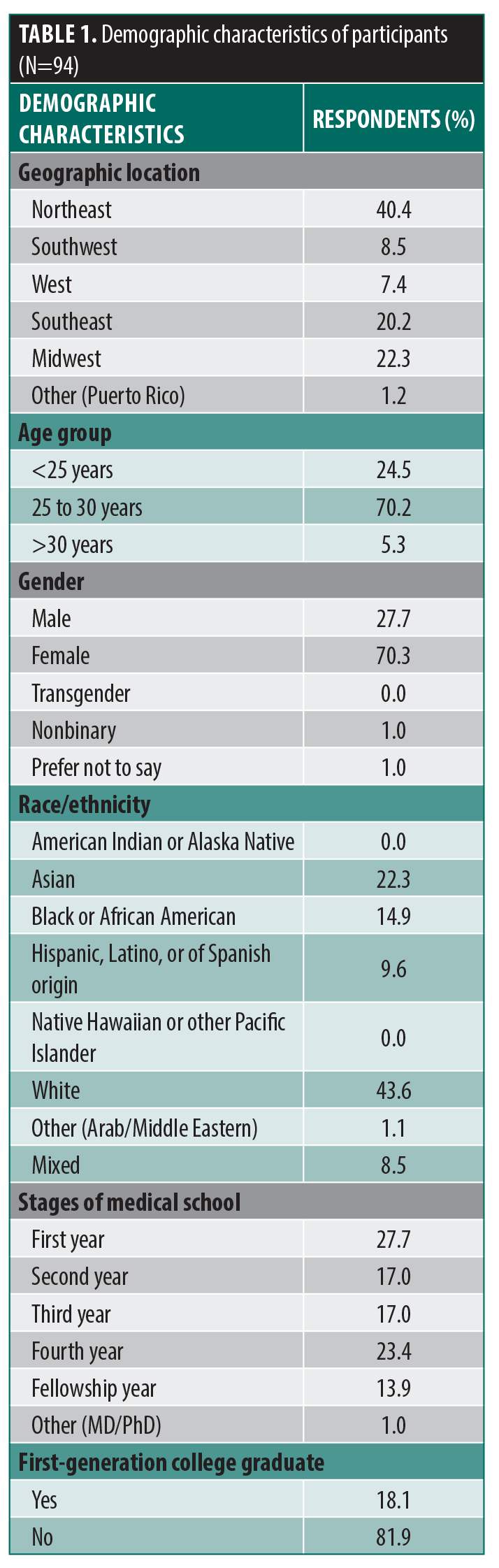
A total of 115 students responded to the recruitment media by clicking the link sent by DIGA. Of these, 19 were excluded due to incomplete responses, leaving 94 completed surveys for analysis (completion rate: 81.7%). Of the participants, 70.3% were female, 22.3% identified as Asian, 14.9% as Black or African American, 9.6% as Hispanic/Latino, and 43.6% as White. Additionally, 18.1% were first-generation college graduates and 24.4% lacked a home dermatology program. Most were first-year (27.7%) and fourth-year (23.4%) medical students (Table 1).
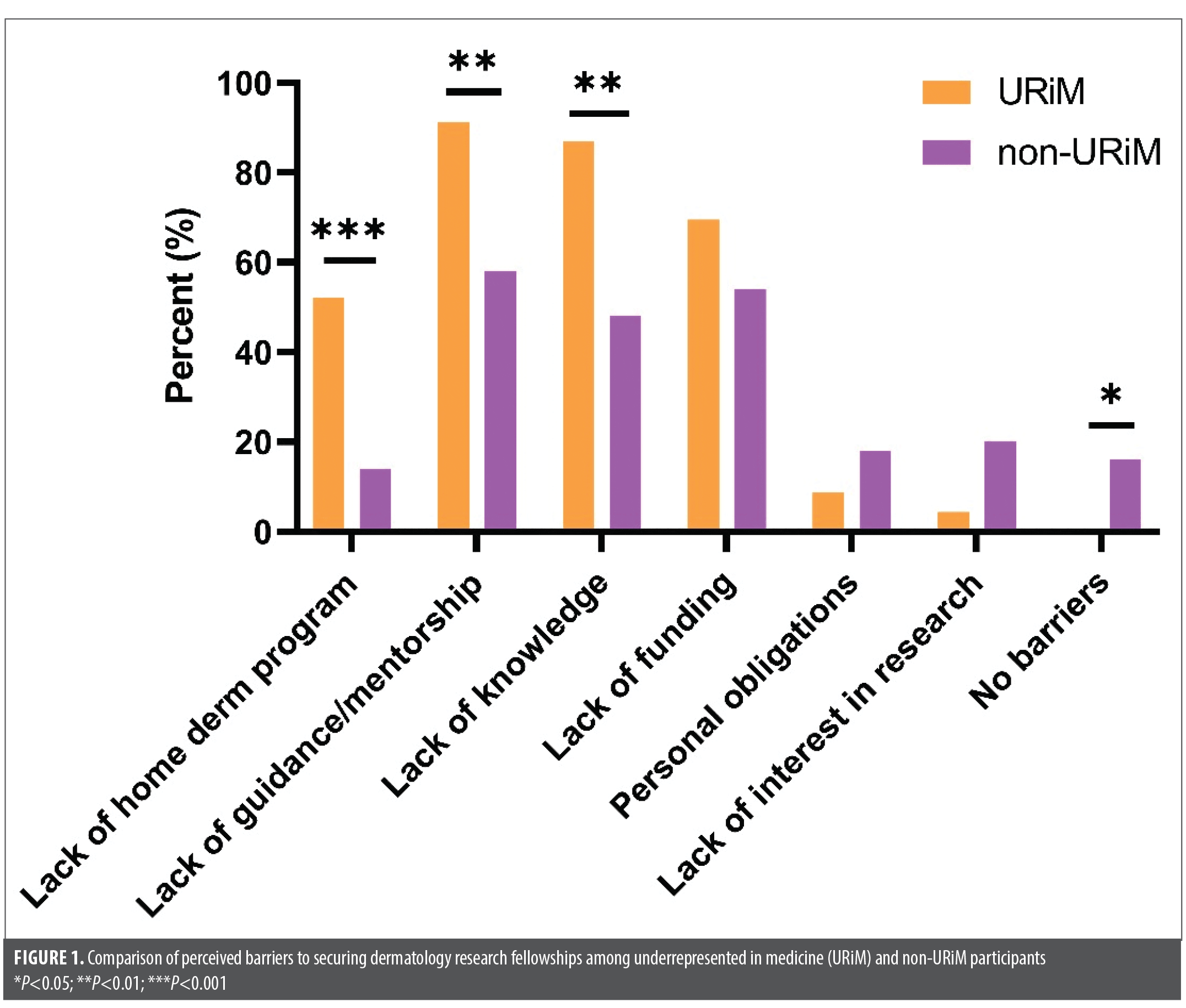
Of the 73 participants who were currently in or had completed research fellowships, 50 (68.4%) were non-URiM and 23 (31.6%) were URiM. A χ2 analysis revealed significant barriers for URiM participants, including lack of a home dermatology program (12/23 [52.2%] vs 7/50 [14.0%]; P<0.001), lack of guidance/mentorship on applying (21/23 [91.3%] vs 29/50 [58.0%]; P<0.01), and lack of knowledge on how to find a fellowship (20/23 [87.0%] vs 24/50 [48.0%]; P<0.01). A significantly greater proportion of non-URiM participants reported facing no barriers compared to URiM participants (8/50 [16.0%] vs 0/23 [0%]; P=0.0421). However, lack of funding for a research year (16/23 [69.6%] vs 27/50 [54.0%]; P=0.209), personal obligations affecting ability to take time off (2/23 [8.7%] vs 9/50 [18.0%]; P=0.302), and lack of interest in research (1/23 [4.3%] vs 10/50 [20.0%]; P=0.082) were not statistically significant barriers (Figure 1).
Additionally, when asked about the ways participants found fellowships, most participants reported using cold emails to faculty at outside institutions to identify fellowship opportunities. When asked for suggestions to improve access to research fellowships, 44 participants preferred a centralized database of fellowships, followed by 13 who favored a formalized application process.
Discussion
This study highlights that URiM students face distinct barriers, including the absence of a home dermatology program and mentorship, while funding and personal obligations were less significant obstacles. The high percentage of first-year students in the survey (27.7%) may explain the focus on mentorship, as they likely have not yet formed mentor relationships at this point in their medical school career.
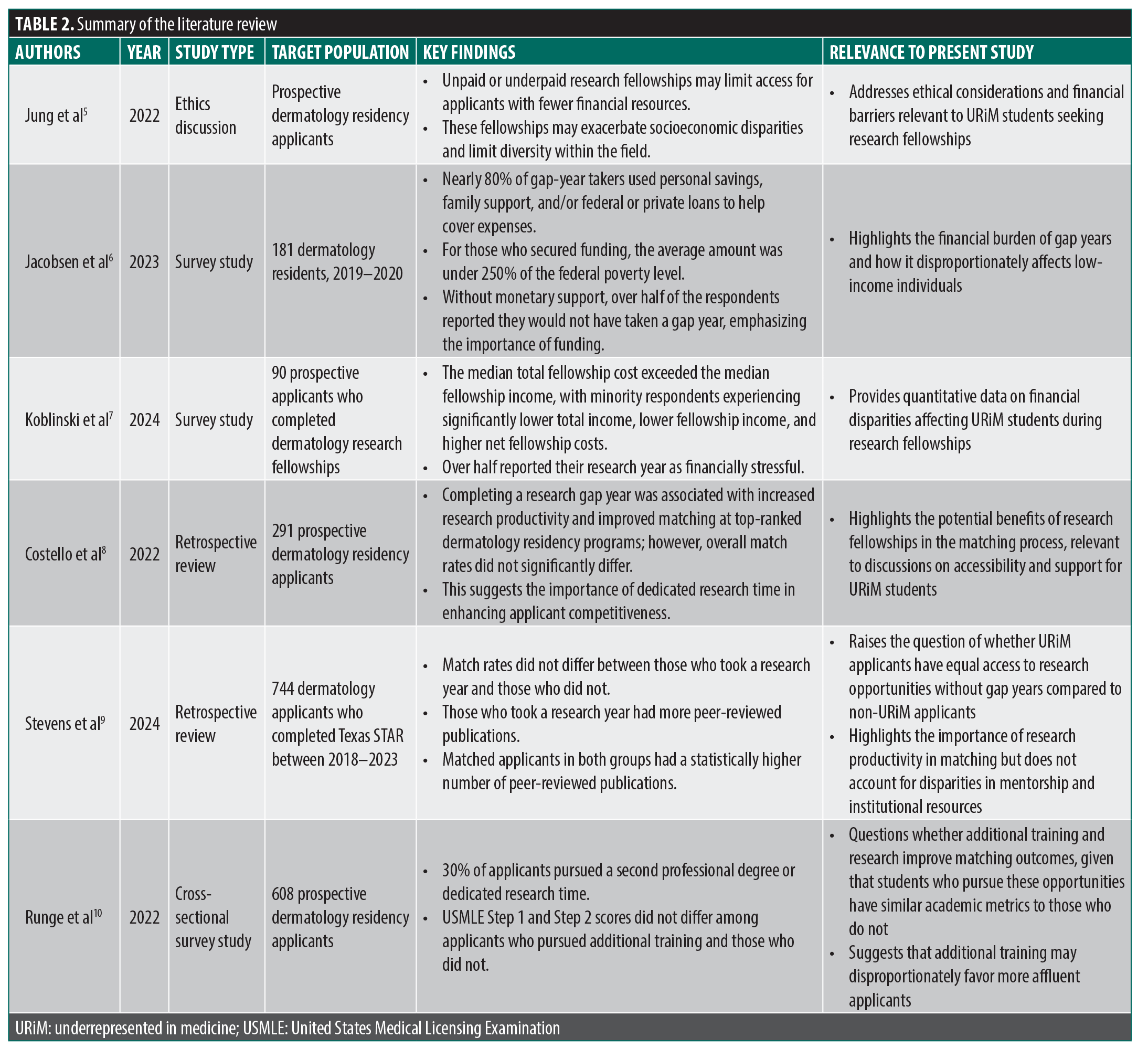
A review of the existing literature is summarized in Table 2. Significant financial, structural, and accessibility barriers that impact medical students, particularly those from underrepresented backgrounds, were prevalent when pursuing dermatology research fellowships.
Although funding was not a major barrier in this study, several studies5–7 highlight the financial burden of research years, with many students relying on personal savings or family support. These financial constraints disproportionately impact URiM and lower-income applicants, potentially limiting the diversity of the dermatology residency applicant pool.
Other studies8–10 explored the impact of research years on residency matching. Costello et al8 found increased research productivity and improved matching at top-ranked programs among applicants who pursued research years, although overall match rates did not significantly differ. Similarly, Stevens et al9 suggested that match rates may not significantly differ between those who take a research year and those who do not. These findings highlight the inconsistency in the literature regarding the impact of research years on residency matching, suggesting benefits in research productivity and competitiveness, while others show no significant difference in match outcomes. It is important to note that the study by Costello et al8 had a smaller sample size compared to Stevens et al9 (291 vs 744, respectively), which may have limited the ability to detect differences in match outcomes. In addition, Stevens et al9 demonstrated that those who matched had a significantly higher number of peer-reviewed publications, highlighting the potential importance of research and mentorship. Interestingly, Runge et al10 found that students who pursued additional research training had comparable USMLE Step 1 and Step 2 scores to those who did not. This suggests that the decision to pursue a research year may not be driven primarily by the desire to improve USMLE scores; instead, it may reflect broader implications, such as increased financial burdens, which could disproportionately affect students from more disadvantaged backgrounds and increase medical students’ debt.
Given the importance of mentorship and professional connections identified in our findings, medical schools should provide early mentorship to all students. Additional solutions include expanding targeted mentorship programs for URiM students, increasing access to research funding, and fostering collaborations between institutions to improve accessibility. Specifically, for research fellowships, establishing a centralized database and a formalized application process—managed by a major organization such as the American Academy of Dermatology or DIGA—would enhance transparency and promote equitable opportunities. Many of our participants reported relying on cold-emailing faculty outside their institutions, emphasizing the need for a more structured and accessible process.
This study has several limitations that should be considered when interpreting the findings. First, the relatively small sample size may limit the statistical power of the analysis and reduce the generalizability of the results. Additionally, nonresponse bias may be present, as individuals who chose to participate may differ from those who did not respond. A substantial proportion of respondents were first-year medical students, many of whom may not yet have actively pursued research fellowships; however, their responses still provide valuable insight into early perceived barriers encountered while navigating dermatology career pathways. Selection bias is also a consideration, as participants were preselected for interest in dermatology and therefore may not represent broader URiM medical student experiences. Lastly, the survey did not capture the precise timing or circumstances surrounding research fellowship participation, such as whether fellowships occurred during a dedicated gap year, after graduation, or following an unsuccessful residency match cycle.
References
- Pandya AG, Alexis AF, Berger TG, Wintroub BU. Increasing racial and ethnic diversity in dermatology: a call to action. J Am Acad Dermatol. 2016;74(3):584–587.
- Raborn LN, Janis JE. Current views on the new United States Medical Licensing Examination Step 1 pass/fail format: a review of the literature. J Surg Res. 2022;274:31–45.
- Ezekor M, Pona A, Cline A, Huang WW, Feldman SR. An increasing trend in the number of publications and research projects among dermatology residency applicants. J Am Acad Dermatol. 2020;83(1):214–216.
- Akhiyat S, Cardwell L, Sokumbi O. Why dermatology is the second least diverse specialty in medicine: how did we get here? Clin Dermatol. 2020;38(3):310–315.
- Jung J, Stoff BK, Orenstein LAV. Unpaid research fellowships among dermatology residency applicants. J Am Acad Dermatol. 2022;87(5):1230–1231.
- Jacobsen A, Kabbur G, Freese RL, Rypka KJ, Goldfarb N. Socioeconomic factors and financial burdens of research “gap years” for dermatology residency applicants. Int J Womens Dermatol. 2023;9(3):e099.
- Koblinski JE, Greene A, Quillen JK, et al. Racial/ethnic disparities in dermatology research fellowship funding. J Racial Ethn Health Disparities. 2024;11(5):2989–2994.
- Costello CM, Harvey JA, Besch-Stokes JG, et al. The role research gap years play in a successful dermatology match. Int J Dermatol. 2022;61(2):226–230.
- Stevens CR, Jacob L, Murina AT. Match outcomes of dermatology applicants who pursue research gap year using the Texas STAR database. J Am Acad Dermatol. 2024;91(3):575–576.
- Runge M, Jairath NK, Renati S, Helfrich Y. Pursuit of a research year or dual degree by dermatology residency applicants: a cross-sectional study. Cutis. 2022;109(1):E12–E13.
From the 2nd Annual RAPIDS Immuno-Dermatology Conference: From Approval to Adoption—Translating Innovation Into Clinical Practice