
Applying the 487-Gene Expression Profile Test When Choosing a Systemic Agent to Treat Atopic Dermatitis: A Practical Perspective
Dear Editor:
The therapeutic landscape of atopic dermatitis (AD) has expanded rapidly with the introduction of multiple targeted systemic therapies, yet selecting the most appropriate treatment for an individual patient remains a clinical challenge. Although AD often appears phenotypically similar across patients, the underlying immune pathways driving disease activity can vary substantially.1 The recently published IDENTITY study in the Journal of the American Academy of Dermatology, which described the CASTLE Biosciences AdvanceAD-Tx gene expression profile (GEP) test, highlighted a potential role for molecular profiling in helping clinicians better characterize disease biology and guide treatment selection, especially when initiating systemic therapy.2 By analyzing lesional skin gene expression across 12 key inflammatory and skin barrier pathways, the test aims to identify molecular signatures that may predict differential responses to targeted therapies. The 2 molecular signatures identified by this testing are the T helper 2 (Th2) molecular profile and the Janus kinase (JAK) inhibitor responder profile.
In the validation cohort, approximately 70% of patients classified as having a Th2 molecular profile did not demonstrate a statistically significant difference in clinical outcomes between Th2-targeted biologic therapy and JAK inhibitor therapy (90% improvement in Eczema Area and Severity Index [EASI90] 26.5% vs 33.3%, respectively; P=0.728). This group responded similarly to biologic or JAK inhibitor therapy. These data support that treatment selection in this larger subgroup may reasonably be guided by patient-specific clinical factors relevant to the clinician coupled with shared decision-making with the patient/responsible caretaker after they are fully educated on the details of available options, rather than a predicted differential efficacy determined by this GEP test. Alternatively, approximately 30% of patients demonstrated a JAK inhibitor responder profile. Among these individuals, those treated with a JAK inhibitor achieved substantially higher rates of EASI90 by 3 months compared to those treated with Th2-targeted therapy (45.5% vs 8.3%; P=0.021), along with much faster onset of clinical response, higher rates of complete clearance, greater itch resolution, and a greater likelihood of remaining flare-free.
In this letter, we describe how we incorporated this test into our clinical workflow and offer practical considerations for clinicians managing patients with AD (Figure 1).
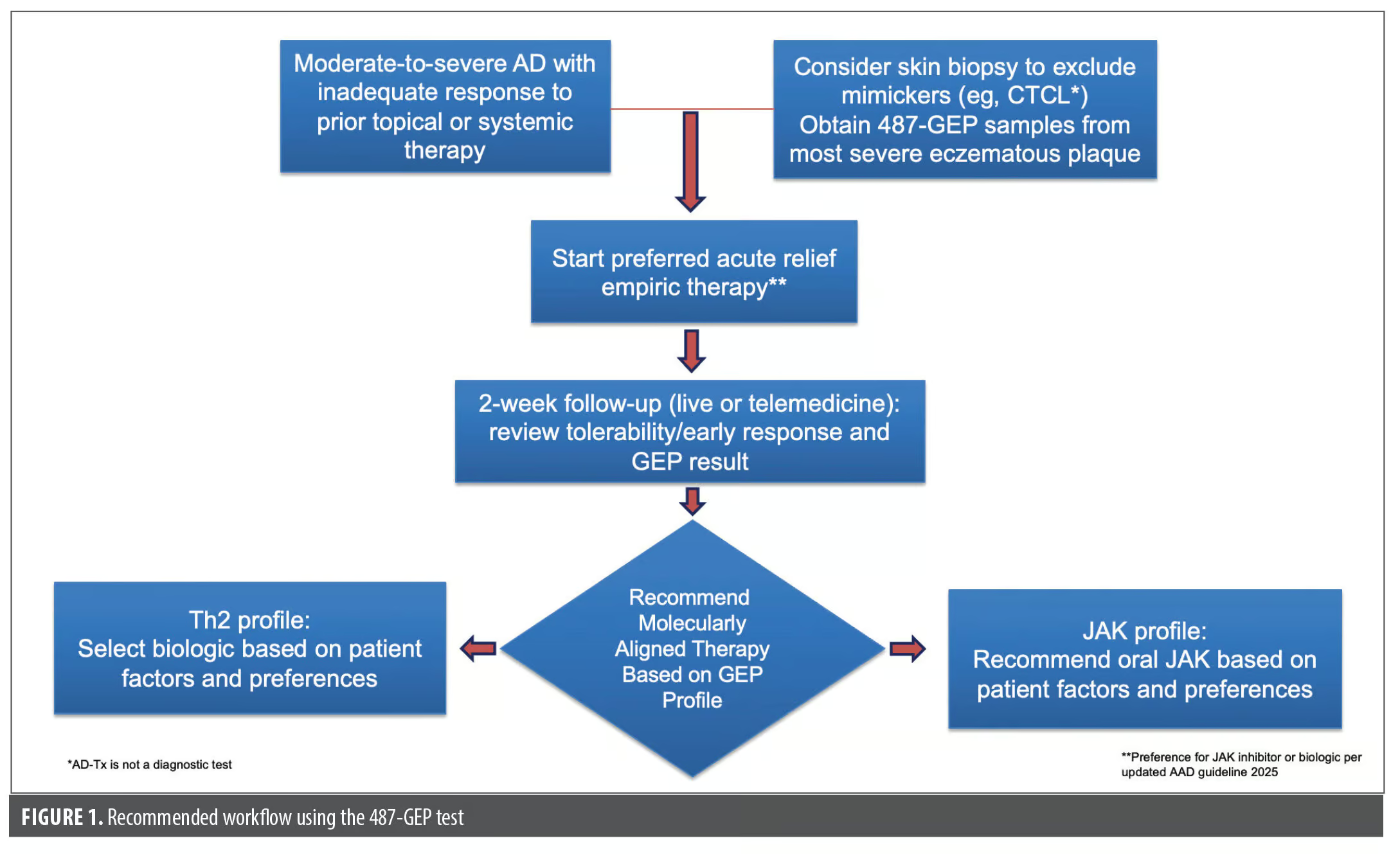
We incorporate the AdvanceAD-Tx test into the evaluation of all patients with moderate-to-severe AD, both when initiating therapy and in cases that involve switching systemic therapies. We test from the most severe site (except bloody or infected sites, palmoplantar surfaces, or genitals). We collect 2 samples at least 2 cm apart by gently scraping the skin surface with the dull side of a curette. We prioritize equally severe sites in this order: (1) arms/trunk, (2) hands/feet, (3) scalp, and (4) legs.
While awaiting results, which may take 5 to 10 business days, we typically initiate treatment. Some patients may prefer maintaining topical therapy, while others will initiate therapy with a sample biologic or oral JAK inhibitor. As there are multiple biologic and oral JAK inhibitor agents approved for use in AD by the United States Food and Drug Administration (FDA), these are preferred overall. However, clinicians have the option of initiating treatment with an off-label conventional systemic therapy (usually an immunosuppressive agent, though the recommended laboratory testing with conventional immunosuppressive agents makes them impractical at this point in treatment selection) or even an FDA-approved oral JAK inhibitor without first obtaining and reviewing the results of the label-recommended baseline laboratory testing. Although best avoided overall, clinicians may consider using a short course of systemic corticosteroid therapy in select cases, given the most recent American Academy of Dermatology guidelines recommend against the use of systemic corticosteroids in AD.3
In the absence of contraindications, other mitigating concerns in the patient’s history or patient preference, we initiate a 14-day sample course of an oral JAK inhibitor while the baseline laboratory testing is pending; if necessary, therapy can be adjusted based on the results of the baseline laboratory testing.4 At a 2-week follow-up visit, conducted either in person or via telemedicine, we review the laboratory results and GEP test findings. If the test demonstrates a Th2-predominant molecular profile, systemic therapy selection is guided primarily by patient-specific factors and preferences as explained above. Conversely, if a JAK-predominant profile is identified, we counsel the patient that a biologic agent for AD is likely to offer inadequate and/or negligible clinical improvement in most cases, treatment with an oral JAK inhibitor is very likely to offer the greatest likelihood of treatment success, and the originally given oral JAK inhibitor can be continued (or adjusted if needed). Nonetheless, shared decision-making and a risk/benefit conversation are always important so that patients are empowered to have a say in their care.
The IDENTITY study is limited by the range of systemic therapies represented, primarily dupilumab (biologic) and upadacitinib (oral JAK inhibitor). Most of the evaluated therapy responses were to dupilumab (approximately 70%) or upadacitinib (approximately 17%), while approximately 10% of assessed responses were to other Th2-targeted therapies (tralokinumab and lebrikizumab) and less than 3% to abrocitinib; nemolizumab was not represented.2 As a result, the predictive performance of the GEP test was primarily evaluated in the context of interleukin (IL)-4/IL-13 blockade and JAK inhibition, leaving uncertainty regarding how the test may perform among other mechanisms of action and specific pharmacologic characteristics. Until further studies are completed and additional data are known, the currently available data with GEP testing is a helpful guide to clinicians and a significant step closer to personalized management of chronic inflammatory skin disease. Additional validation studies that include the full range of FDA-approved targeted therapies are important and ongoing to further determine the generalizability of this molecular approach across the evolving therapeutic landscape of AD. Despite these limitations, we believe this test and workflow represent an encouraging leap toward precision medicine in the management of AD and have been well received by our patients.
With regard,
Diego Ruiz Dasilva, MD; Graham Litchman, DO; Harrison Nguyen, MD, MPH, MBA; and David Cotter, MD, PhD
Keywords: Atopic dermatitis, advanced systemic, Th2, JAK inhibitor, biologic, GEP
Affiliations: Dr. Dasilva is with Forefront Dermatology, Virginia Beach, Virginia, and the Eastern Virginia Medical School, Norfolk, Virginia. Dr. Litchman is with Vivida Dermatology, Las Vegas, Nevada; University of Nevada Las Vegas School of Medicine, Las Vegas, Nevada; and Touro University Nevada, Henderson, Nevada. Dr. Nguyen is with Harrison Dermatology and Research Group, Houston, Texas. Dr. Cotter is with Las Vegas Dermatology, and the University of Nevada Las Vegas School of Medicine, Las Vegas, Nevada.
Funding: No funding was provided for this article.
Disclosures: Dr. Dasilva has served as a speaker, consultant, or investigator for AbbVie, Arcutis, Castle Biosciences, Dermavant/Organon, Galderma, Incyte, Johnson & Johnson, LEO Pharma, Lilly, Novartis, Pfizer, Sanofi & Regeneron, Takeda, UCB, Vanta Diagnostics, and Verrica. Dr. Litchman has served as a consultant, investigator and/or speaker for: AbbVie, Almirall, Arcutis, Bristol Myers Squibb, Castle Biosciences, Galderma, Incyte, Janssen, Johnson & Johnson, LEO Pharma, Novartis, Organon, Pfizer, ReachRx, Regeneron, Sanofi-Genzyme, SUN, Takeda, UCB, and Veradermics. Dr. Nguyen has served as a consultant/advisor: AbbVie, Alumis, Amgen, Apogee, Arcutis, Boehringer Ingelheim, Bristol Myers Squibb, Castle Biosciences, Galderma, Incyte, Johnson & Johnson, LEO Pharma, Novartis, Organon, Pfizer, Regeneron, Sanofi, Sun Pharmaceutical, Takeda, and UCB; speaker’s bureau: Amgen, Bristol Myers Squibb, Castle Biosciences, Galderma, Johnson & Johnson, LEO Pharma, Novartis, Organon, Pfizer, Regeneron, Sanofi, Sun Pharmaceutical, and UCB; clinical research principal investigator: AbbVie, Apogee, Arcuitis, Castle Biosciences, CorEvitas, LEO Pharma, and Novartis. Dr. Cotter has served as an advisor, consultant, speaker, and/or study investigator for AbbVie, Alumis, Arcutis, Boehringer Ingelheim, Blueprint Medicines, Bristol Myers Squibb, Castle Biosciences, Celgene, Corvus, CorEvitas, Dermavant, DermTech, Galderma, Janssen, Johnson & Johnson, Journey, Incyte, LEO Pharma, Lilly, Nektar, Novartis, Organon, Pfizer, Prose, ReachRx, Regeneron, Sanofi, Signatera, Thermo Fisher Scientific, UCB, and Veradermics.
References
- Singh K, Valido K, Swallow M, et al. Baseline skin cytokine profiles determined by RNA in situ hybridization correlate with response to dupilumab in patients with eczematous dermatitis. J Am Acad Dermatol. 2023;88(5):1094–1100.
- Silverberg JI, Eichenfield LF, Armstrong AW, et al. The 487-gene expression profile test guides systemic therapy selection to improve outcomes for patients with atopic dermatitis: results from a prospective trial. J Am Acad Dermatol. 2026;94(6):1714–1722.
- Davis DMR, Frazer-Green L, Alikhan A, et al. Focused update: guidelines of care for the management of atopic dermatitis in adults. J Am Acad Dermatol. 2025;93(3):745.e1–745.e7.
- Haag C, Alexis A, Aoki V, et al. A practical guide to using oral Janus kinase inhibitors for atopic dermatitis from the International Eczema Council. Br J Dermatol. 2024;192(1):135–143.
From the 2nd Annual RAPIDS Immuno-Dermatology Conference: From Approval to Adoption—Translating Innovation Into Clinical Practice