
J Clin Aesthet Dermatol. 2026;19(8 Suppl 2):17–27.
Annie Chiu, MD; Zakia Rahman, MD, FAAD; Gilly Munavalli, MD, MHS, FACMS; Omer Ibrahim, MD; Amir Moradi, MD; Mona Sadeghpour, MD; Nazanin Ashourian, PhD; Jorge Ng Zheng, PharmD, MBA; and Birgitte Sondergaard, PhD
Dr. Chiu is with the Derm Institute, Redondo Beach, California. Dr. Rahman is with Stanford Dermatology, Redwood City, California. Dr. Munavalli is with Dermatology, Laser & Vein Specialists of the Carolinas, Charlotte, North Carolina. Dr. Ibrahim is with DermaScience Institute, Chicago, Illinois. Dr. Moradi is with Moradi MD, San Diego, California. Dr. Sadeghpour is with SkinMed Institute, Pittsburgh, Pennsylvania. Drs. Ashourian, Zheng, and Sondergaard are with Allergan Aesthetics, an AbbVie company, Irvine, California.
FUNDING: Funding for this supplement was provided by Allgeran Aesthetics, an AbbVie company, and Research Execute Learn.
Abstract: OBJECTIVE: To evaluate aesthetic concerns and treatment interests of diverse participants in a large United States (US)-based study. Herein, we report the findings for Asian female participants, including East/Southeast Asian and Indian/Central or Southwest Asian subgroups. METHODS: Aesthetically inclined participants (aged 22–85 years) completed an online survey (February 2022–April 2022) to rate the frequency and degree of bothersomeness of 41 facial and 31 body characteristics and the likelihood of seeking professional treatment within the next year. The relative bothersomeness of each characteristic was ranked using a Maximum Difference scaling framework. Participants also ranked 48 aesthetic treatments by degree of interest. RESULTS: Of 3,974 participants, 652 (16.4%) self-identified as Asian and female. Top facial concerns among all Asian female participants included hair loss/thinning hair and uneven skin color/hyperpigmentation (equivalent rankings), dark circles under the eyes, and under-eye bags or sagginess and acne scarring (equivalent rankings). Stubborn body fat was a predominant concern among all Asian female participants, particularly around the stomach, flanks, and bra or back area. Characteristics participants would seek professional treatment for within the next year largely overlapped with top aesthetic concerns, except for East/Southeast Asian female participants, where most concerns (eg, stubborn body fat in the bra or back area, arms, and thighs) were not likely to be treated. Across Asian subgroups, top treatment interests included facials, nonsurgical fat reduction, and professional-grade skin care. LIMITATIONS: Survey data may be subject to self-reporting bias. US data for Asian female participants may not be generalizable to broader populations. CONCLUSION: These findings may help practitioners better tailor treatment plans based on aesthetic concerns and treatment interests of Asian women. Keywords: Aesthetic treatment, face, body, survey, Maximum Difference Scaling, Asian, aesthetic concern
Introduction
Asian and Asian American women represent a rapidly growing segment of the aesthetic market in the United States (US) and are increasingly pursuing minimally invasive facial rejuvenation procedures that enhance facial harmony while preserving ethnic identity.1,2 A 2025 US survey of 8,738 adults found that 35% of Asian women have gotten or would consider getting nonsurgical cosmetic treatments, compared to 32% of White women, likely reflecting expanding beauty standards, increased awareness of available treatments, and greater social acceptance of cosmetic enhancements in Asian cultures.1–3
As the range of minimally invasive medical aesthetic treatments for facial rejuvenation has increased over the past decade, so too has their safety and applicability across a broad spectrum of skin types and ethnicities.4,5 This rise in interest underscores the need to better understand how aesthetic concerns and treatment interests differ among individuals from various ethnicities and cultures in order to individualize and personalize the needs of aesthetic patients today and in the future. Simultaneously, demographic shifts in the US have led to increased racial and ethnic diversity among patients seeking aesthetic treatments.6 Practitioners are recognizing that aesthetic treatment planning should incorporate the varying beauty ideals across populations, and clinicians should individualize enhancement to preserve ethnic identity and align with each patient’s goals.7
Studies of aesthetic inclinations often focus on White populations,8–10 and therefore, there is a paucity of data examining viewpoints from the perspective of Asian women compared to other races and ethnic groups. Asian skin and facial anatomy present unique considerations in aesthetic medicine, as patients typically present with greater dermal thickness, collagen, and melanin compared to White skin. Although these characteristics may delay wrinkle formation, they may also increase the risk of postinflammatory hyperpigmentation and hypertrophic scarring.11 In addition, Asian facial anatomy is often distinct from European facial morphology based on the presence of epicanthal folds, wider intercanthal distance, greater upper eyelid/lateral brow hooding, narrower oral width, shorter palpebral fissures, broader mandibular structure, and reduced chin projection.2
Despite the need for unique treatment approaches based on ethnicity, many published treatment algorithms and clinical guidelines remain centered on facial aging patterns observed in populations of European descent.1 This difference underscores the need for more inclusive research that addresses the specific needs and preferences of Asian patients.12 Within the US, Asian Americans account for approximately 7% of the total population (roughly 25 million people as of 2023), comprising a fast-growing ethnic group nationally.13 This population is highly diverse, largely identifying as Chinese (22%), Indian (21%), Filipino (19%), Vietnamese (9%), Korean (8%), or Japanese (7%).13 Geographic distribution is uneven, with 54% of Asian Americans residing in 5 states.13 On the basis of this diversity, the present study assessed aesthetic preferences among Asian women, including subgroups of East/Southeast and Indian/Central or Southwest Asian descent.
To gain perspective on how aesthetic concerns and treatment interests differ across various sex/gender, racial, ethnic, and age categories, a survey was conducted to describe facial and body aesthetic inclinations of adults in the US. The study incorporated Maximum Difference (MaxDiff) methodology14 to rank the relative level of bothersomeness of each of the facial and body characteristics and interest in the specific aesthetic treatments surveyed. Data from the overall female population and additional participant subgroups are published separately.15–19 Herein, findings from the subgroup of Asian female participants, comprising East/Southeast and Indian/Central or Southwest Asian female participants, are reported and analyzed separately to capture cultural, phenotypic, and aesthetic preference differences among these groups.
Methods
Study design. Detailed methodology for this study was described in the overview publication.15 Briefly, this study was an anonymous online survey conducted by Research Learn Execute between February 25, 2022 and April 5, 2022. All participants were blinded to the sponsor throughout the study. Survey questions aimed to understand 4 areas related to aesthetic concerns and treatment interests: participant treatment preferences for the face vs the body, characteristics of the face and body considered most frequently bothersome and relatively most bothersome (top aesthetic concerns), facial and body characteristics most likely to be treated, and the aesthetic treatments that participants were most interested in receiving for the face and body.
Assessment of concern with the face or body. Participants responded to the question, “When you think about your appearance overall, are you more concerned about the appearance of your body or the appearance of your face?” on a 5-point scale. Percentages are presented for participants reporting greater concern with characteristics of the face vs the body, equal concern with the face and the body, and greater concern with the body vs the face.
Identifying and ranking aesthetic concerns. Of 41 facial and 31 body characteristics selected based on prior research and consultation with subject matter experts,15 participants were asked to select those they had and found bothersome. Participants then ranked these characteristics by bothersomeness using a MaxDiff scaling framework, which involved selecting the most and least bothersome characteristics among each randomized set of 5; facial and body characteristics were presented separately. The MaxDiff score (expressed as a percentage from 0% to 100%) indicated how often a characteristic was chosen as the most bothersome. Top aesthetic concerns were defined as characteristics that were both frequently reported as bothersome and had high MaxDiff scores. The MaxDiff framework has been used in similar studies and was selected for its ability to provide greater differentiation on preference dynamics.1,8,15,20 Frequently bothersome, most bothersome, and top aesthetic concerns are also presented across age categories.
Aesthetic treatment intentions. Participants were asked to choose from the same 41 facial and 31 body characteristics and to select those that they were likely to have professionally treated within the next year. Those responding “probably will” or “definitely will” seek treatment were included in the analysis.
Interest in aesthetic treatments. Participants ranked 48 facial or body treatments (grouped by category) based on their likelihood of receiving each within the next year using a MaxDiff scaling framework (Supplemental Table 1). Data for the top 10 treatments among Asian female participants are presented and compared to the corresponding percentages of participants in the overall female population who were interested in those treatments. For all female participants, the percentages of contributions of each race or ethnicity were weighted based on 2022 US census data.15,21 The top 10 most desired treatments are also presented across age categories.
Participants. All participants self-reported the racial or ethnic background description that best captured their specific race/origin (see full list in the overview publication15). Participants were asked to select the sex/gender they identify with the most (including female, male, transgender female, transgender male, and nonbinary). Body mass index was calculated based on participant self-reported height and weight. Fitzpatrick skin phototype was determined based on a composite score from participant responses to key criteria, including eye and hair color, presence of freckles, sun exposure, and tanning. Eligible participants were adults living in the US aged 22 to 85 years who were aesthetically inclined (ie, those who wanted to enhance their facial and/or body appearance and who expressed willingness to pursue professional treatments) and who had an annual income of at least $35,000 (and reported having some discretionary income). Age categories were defined as Generation Z or younger millennial, aged ≤30 years; older millennial, aged 31 to 41 years; Generation X, aged 42 to 57 years; and 58+, aged 58 to 85 years. In this study, the descriptor “Asian” encompassed a diverse population with ethnic origins in East/Southeastern Asia (ie, China, Korea, Japan, Taiwan, Thailand, Singapore, Indonesia, Philippines) and Indian/Central–Southwestern Asia (ie, Bangladesh, Nepal, Pakistan, Sri Lanka).
This study followed the EPHMRA Code of Conduct and the International Code of Marketing and Social Research Practice. Study participants were informed about data collection and privacy measures, such as anonymization of survey responses, as well as the option to withdraw from the study at any time. Participants were required to provide informed consent by agreeing to these terms prior to completing the study.
Results
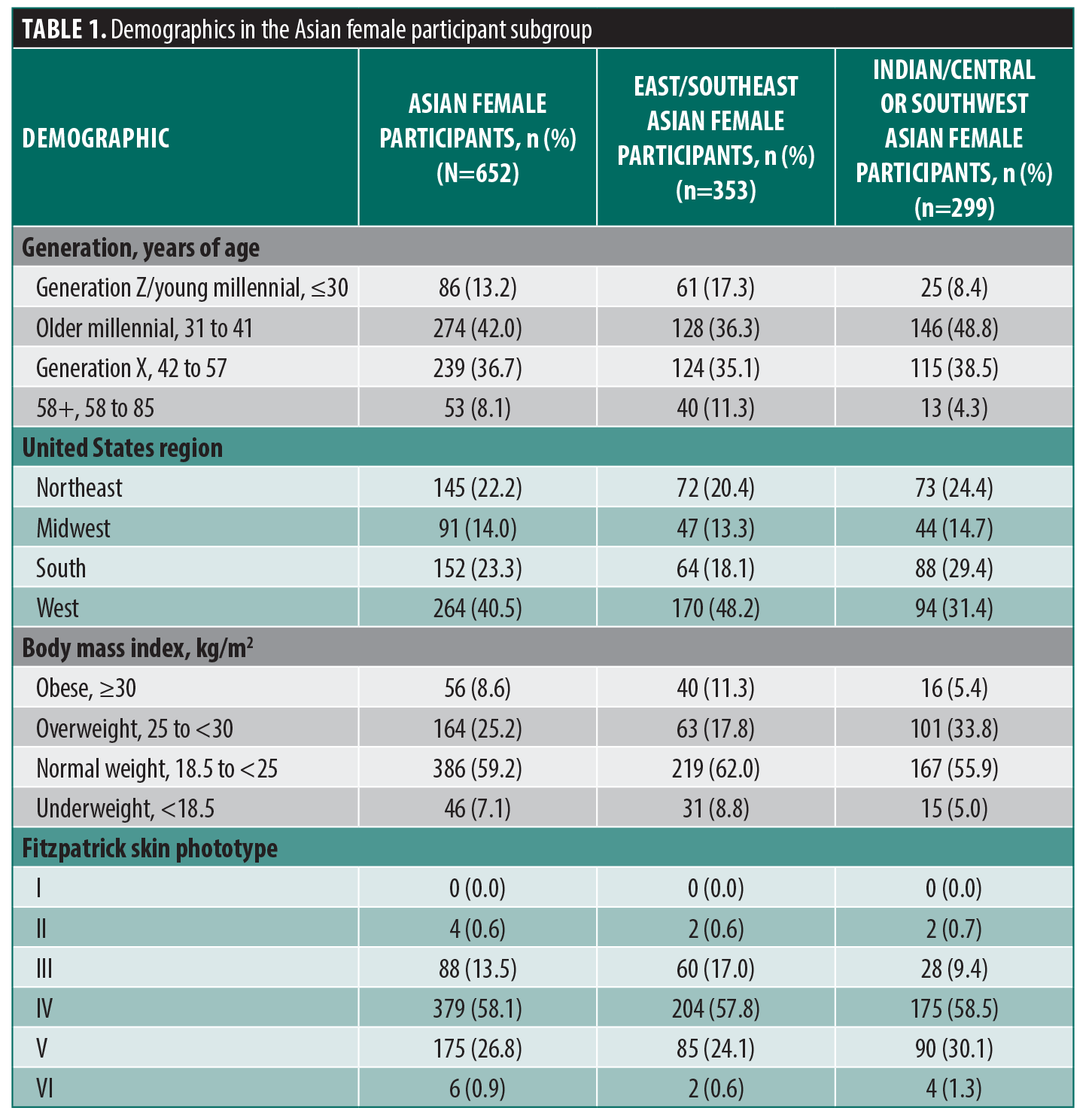
Participant demographics. Of 3,974 total participants, 652 (16.4%) self-identified as Asian and female. Participant demographics and baseline characteristics for this subgroup are presented in Table 1. Demographics of the total population are reported separately.15 At study entry, 44.8% of Asian female participants were Generation X or older. All geographic regions across the US were represented. The majority (59.2%) reported a body mass index of 18.5 to <25 kg/m2, and most (85.0%) had Fitzpatrick skin phototype IV or V.
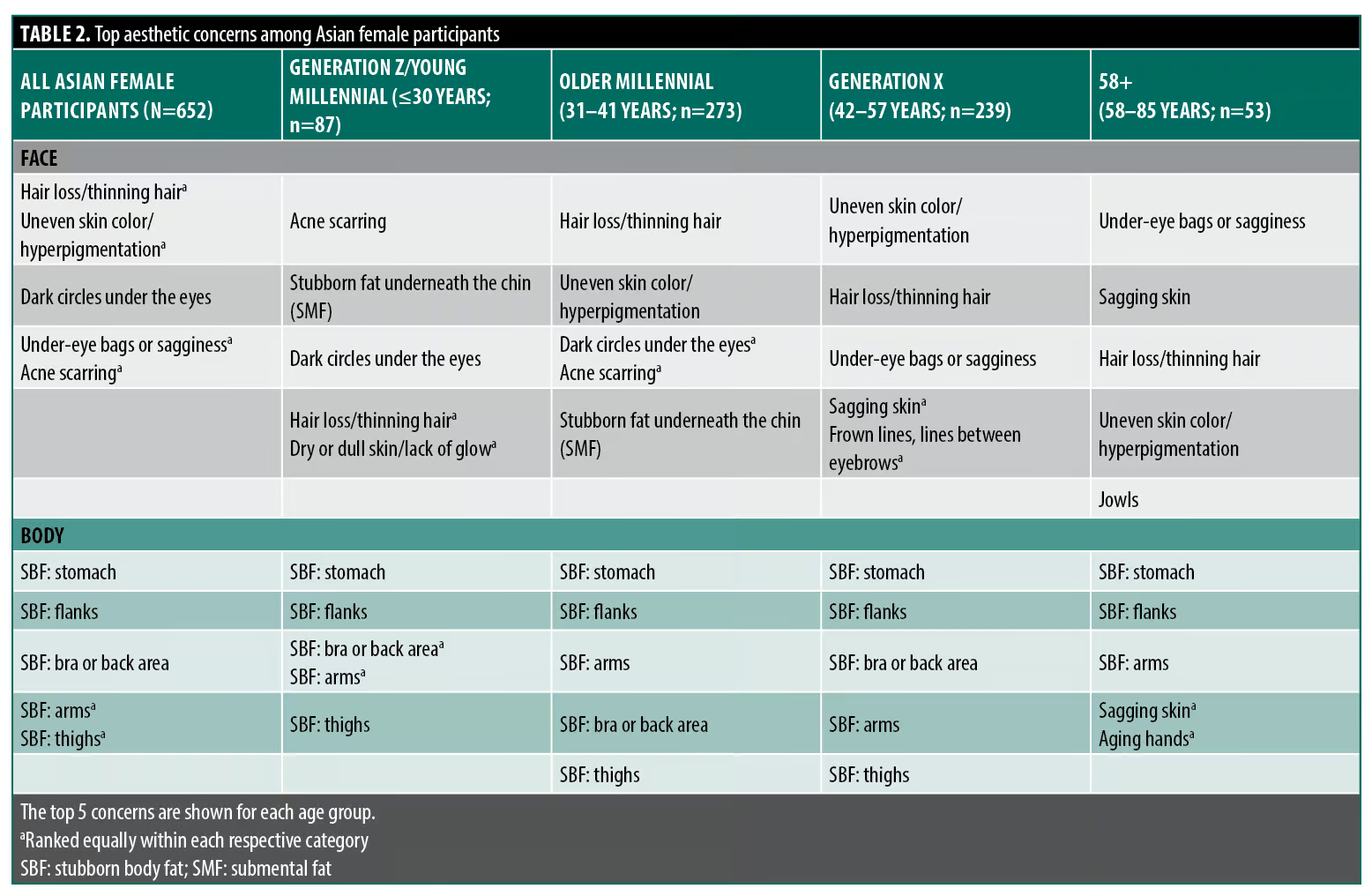
Top aesthetic concerns among Asian female participants. The face was more of an aesthetic concern than the body for 43.5% of East/Southeast Asian female participants; 42.9% were equally concerned about their face and body, and 13.6% were more concerned about their body. Similarly, the face was more of an aesthetic concern than the body for 41% of Indian/Central or Southwest Asian female participants; 30% were equally concerned about their face and body, and 29% were more concerned about their body.
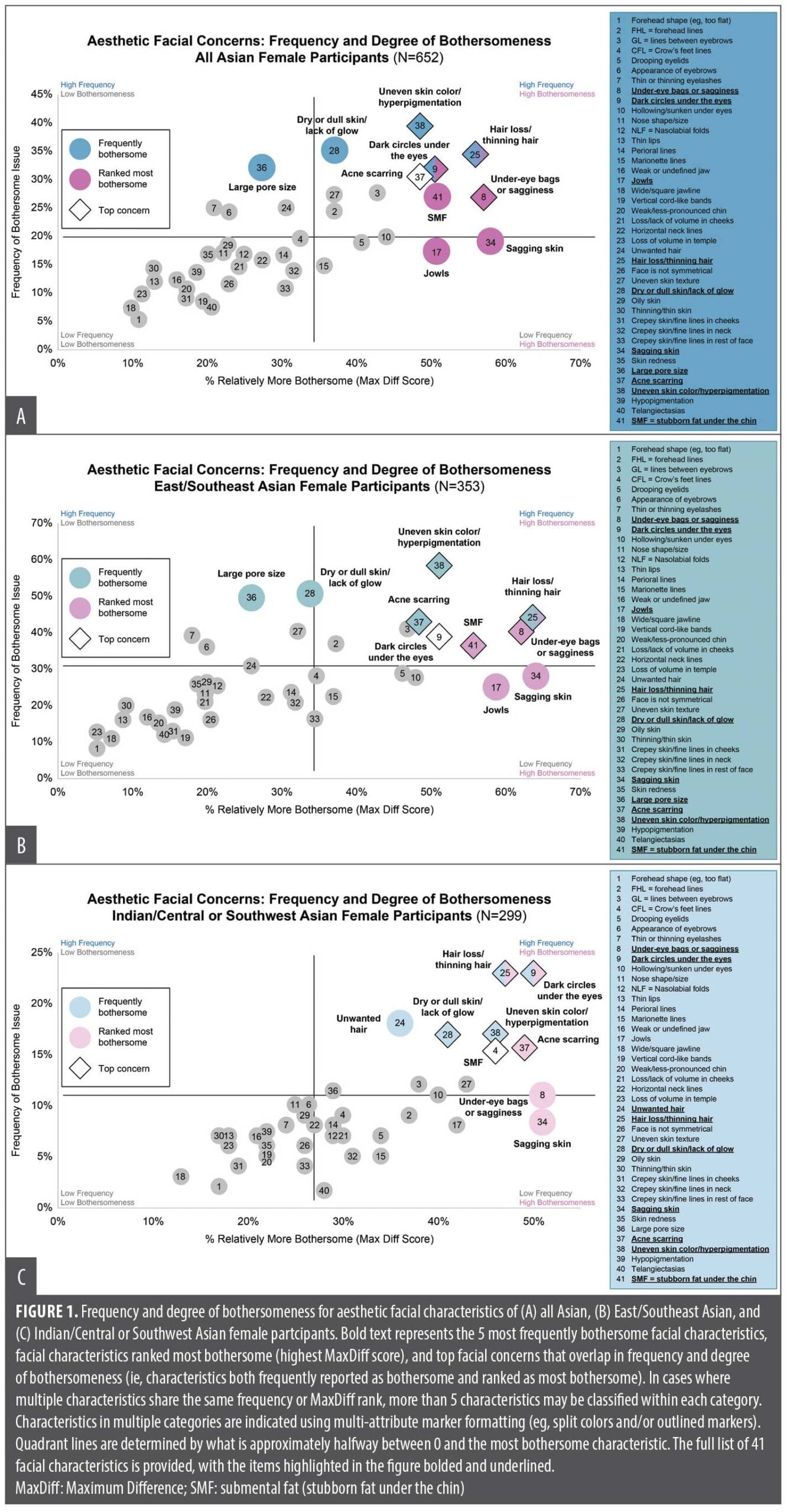
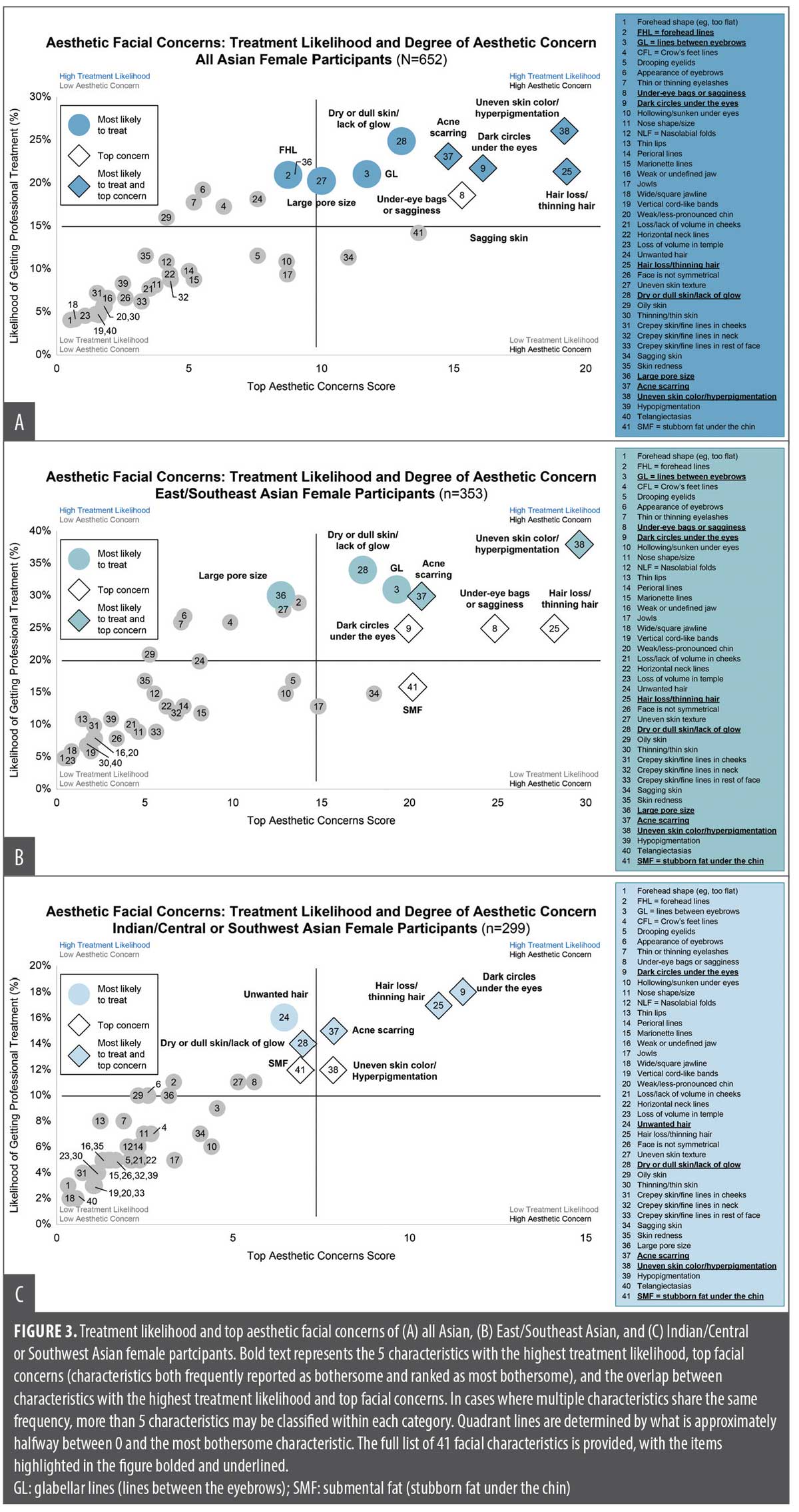
Top facial aesthetic concerns. All Asian female participants. Of the 41 facial characteristics rated, the 5 most frequently bothersome were uneven skin color/hyperpigmentation, dry or dull skin/lack of glow, hair loss/thinning hair, dark circles under the eyes, and large pore size (Figure 1A).
Based on MaxDiff scaling used to rank the degree of bothersomeness of the 41 facial characteristics, the 5 most bothersome were sagging skin (58%); under-eye bags or sagginess (57%); hair loss/thinning hair (56%); and dark circles under the eyes (51%), jowls (51%), and stubborn fat underneath the chin (51%; equivalent rankings; Figure 1A). The top 5 facial aesthetic concerns (ie, characteristics most frequently reported and ranked as most bothersome) were hair loss/thinning hair and uneven skin color/hyperpigmentation (equivalent rankings), dark circles under the eyes, and under-eye bags or sagginess and acne scarring (equivalent rankings; Figure 1A).
Among the top facial aesthetic concerns, acne scarring, stubborn fat underneath the chin, and dull skin/lack of glow were common concerns for Generation Z/young millennial and older millennial participants, whereas sagging skin and jowls were common concerns for the Generation X and 58+ groups (Table 2). The top 5 most frequently bothersome and most bothersome facial characteristics across generations are presented in Supplemental Table 2 and Supplemental Table 3.
East/Southeast Asian female participants. Of the 41 facial characteristics rated, the 5 most frequently bothersome were uneven skin color/hyperpigmentation, dry or dull skin/lack of glow, large pore size, hair loss/thinning, and acne scarring (Figure 1B).
Based on MaxDiff scaling, the 5 most bothersome were hair loss/thinning (64%) and sagging skin (64%; equivalent rankings), under-eye bags or sagginess (62%), jowls (59%), and stubborn fat underneath the chin (56%; Figure 1B). The top 5 facial aesthetic concerns were uneven skin color/hyperpigmentation, hair loss/thinning hair, under-eye bags or sagginess, acne scarring, and stubborn fat underneath the chin and dark circles under the eyes (equivalent rankings; Figure 1B).
Indian/Central or Southwest Asian female participants. Of the 41 facial characteristics rated, the 5 most frequently bothersome were dark circles under the eyes and hair loss/thinning hair (equivalent rankings), unwanted hair, and dry or dull skin/lack of glow and uneven skin color/hyperpigmentation (equivalent rankings; Figure 1C).
Based on MaxDiff scaling, the 5 most bothersome were sagging skin (51%) and under-eye bags or sagginess (51%; equivalent rankings), dark circles under the eyes (50%), acne scarring (49%), and hair loss/thinning hair (47%; Figure 1C). The top 5 facial aesthetic concerns were dark circles under the eyes, hair loss/thinning hair, acne scarring and uneven skin color/hyperpigmentation (equivalent rankings), and dry or dull skin/lack of glow and stubborn fat underneath the chin (equivalent rankings; Figure 1C).
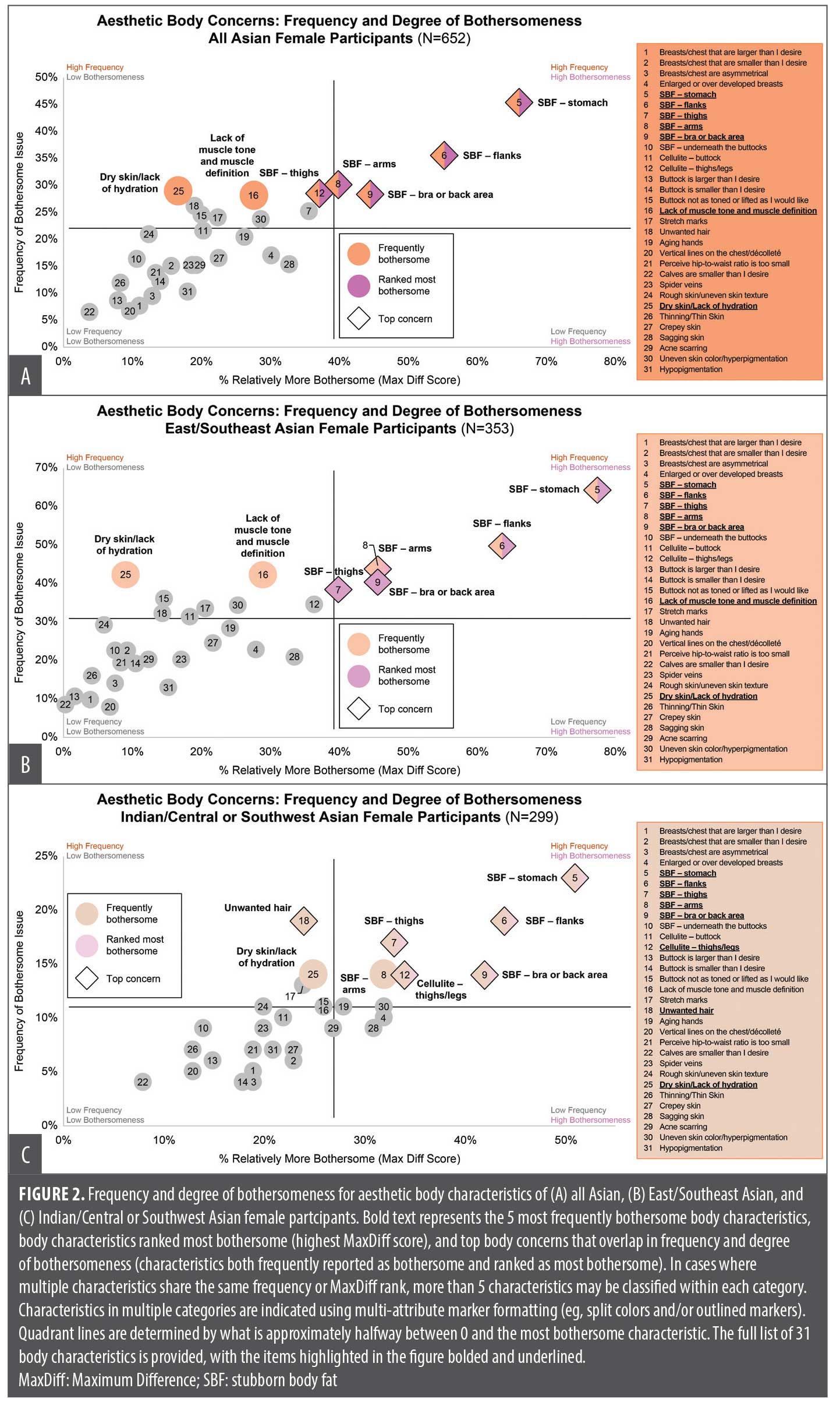
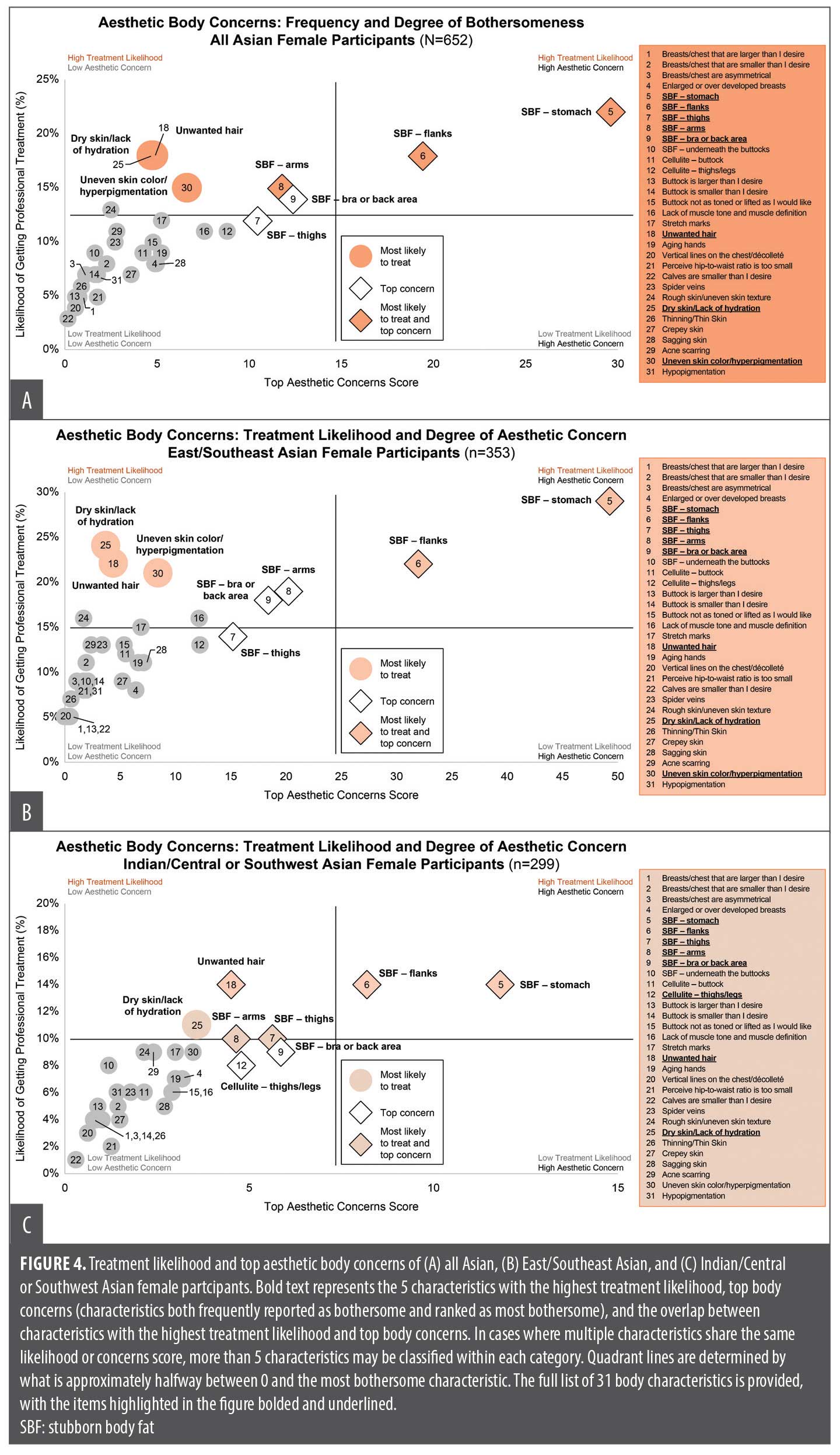
Top body aesthetic concerns. All Asian female participants. Of the 31 body characteristics rated, the 5 most frequently bothersome were stubborn fat around the stomach; stubborn fat on the flanks (sides); stubborn fat in the arms; dry skin/lack of hydration; and stubborn fat in the thighs, stubborn fat in the bra or back area, and lack of muscle tone and muscle definition (equivalent rankings; Figure 2A).
Based on MaxDiff scaling, the 5 most bothersome body characteristics were stubborn fat around the stomach (65%), the flanks (55%), in the bra or back area (44%), in the arms (40%), and in the thighs (37%; Figure 2A). The top 5 body aesthetic concerns (ie, characteristics most frequently reported and ranked as most bothersome) were stubborn fat around the stomach, stubborn fat on the flanks, stubborn fat in the bra or back area, and stubborn fat in the arms and in the thighs (equivalent rankings; Figure 2A).
Among the top body aesthetic concerns, stubborn fat around the stomach, on the flanks, and in the arms were common concerns across age groups, whereas sagging skin and aging hands were common concerns for the 58+ age group (Table 2). The top 5 most frequently bothersome and most bothersome body characteristics across generations are presented in Supplemental Table 2 and Supplemental Table 3.
East/Southeast Asian female participants. Of the 31 body characteristics rated, the 5 most frequently bothersome were stubborn fat around the stomach, stubborn fat in the flanks, stubborn fat in the arms, and dry skin/lack of hydration and lack of muscle tone and muscle definition (equivalent rankings; Figure 2B).
Based on MaxDiff scaling, the 5 most bothersome body characteristics were stubborn fat around the stomach (77%), stubborn fat in the flanks (64%), stubborn fat in the bra or back area (46%) and in the arms (46%; equivalent rankings), and stubborn fat in the thighs (40%; Figure 2B). The top 5 body aesthetic concerns were stubborn fat around the stomach, stubborn fat on the flanks, stubborn fat in the arms, stubborn fat in the bra or back area, and stubborn fat in the thighs (Figure 2B).
Indian/Central or Southwest Asian female participants. Of the 31 body characteristics rated, the 5 most frequently bothersome were stubborn fat around the stomach; stubborn fat on the flanks and unwanted hair (equivalent rankings); stubborn fat in the thighs; and cellulite in the thighs/legs, dry skin/lack of hydration, stubborn fat in the arms, and stubborn fat in the bra or back area (equivalent rankings; Figure 2C).
Based on MaxDiff scaling, the 5 most bothersome body characteristics were stubborn fat in the stomach (51%), stubborn fat in the flanks (44%), stubborn fat in the bra or back area (42%), cellulite in the thighs/legs (34%), and stubborn fat in the thighs (33%; Figure 2C). The top 5 body aesthetic concerns were stubborn fat around the stomach; stubborn fat on the flanks; stubborn fat in the bra or back area and in the thighs (equivalent rankings); and stubborn fat in the arms, cellulite in the thighs/legs, and unwanted hair (equivalent rankings; Figure 2C).
Treatment likelihood of facial and body characteristics. All Asian female participants. The 5 most likely facial characteristics participants would seek professional treatment for within the next year were uneven skin color/hyperpigmentation; dry or dull skin/lack of glow; acne scarring; dark circles under the eyes; and hair loss/thinning hair, frown lines/lines between eyebrows (glabellar lines), large pore size, and forehead lines (equivalent rankings; Figure 3A; plotted against the top facial concerns). The top facial aesthetic concerns largely overlapped with the facial characteristics participants would seek professional treatment for within the next year, except for under-eye bags or sagginess, which was a top concern less likely to be treated (Figure 3A).
The 5 most likely body characteristics participants would seek professional treatment for within the next year were stubborn fat around the stomach; unwanted hair, stubborn fat on the flanks, and dry skin/lack of hydration (equivalent rankings); and uneven skin color/hyperpigmentation and stubborn fat in the arms (equivalent rankings; Figure 4A; plotted against the top body concerns). The top body aesthetic concerns largely overlapped with the body characteristics participants would seek professional treatment for within the next year, except for stubborn body fat in the thighs and bra or back area, which were top concerns less likely to be treated (Figure 4A).
East/Southeast Asian female participants. The 5 most likely facial characteristics participants would seek professional treatment for within the next year were uneven skin color/hyperpigmentation, dry or dull skin/lack of glow, frown lines/lines between eyebrows, acne scarring, and large pore size (Figure 3B; plotted against the top facial concerns). The top facial aesthetic concerns had minimal overlap with the facial characteristics participants would seek professional treatment for within the next year, where uneven skin color/hyperpigmentation and acne scarring were the only characteristics that were a top concern most likely to be treated (Figure 3B).
The 5 most likely body characteristics participants would seek professional treatment for within the next year included stubborn fat around the stomach, dry skin/lack of hydration, unwanted hair, stubborn fat on the flanks, and uneven skin color/hyperpigmentation (Figure 4B; plotted against the top facial concerns). The top body aesthetic concerns had minimal overlap with the body characteristics participants would seek professional treatment for within the next year, where stubborn body fat in the stomach and flanks were the only characteristics that were a top concern most likely to be treated (Figure 4B).
Indian/Central or Southwest Asian female participants. The 5 most likely facial characteristics participants would seek professional treatment for within the next year were dark circles under the eyes, hair loss/thinning hair, unwanted hair, acne scarring, and dry or dull skin/lack of glow (Figure 3C; plotted against the top facial concerns). The top facial aesthetic concerns largely overlapped with the facial characteristics participants would seek professional treatment for within the next year, except for uneven skin color/hyperpigmentation and stubborn fat under the chin, which were top concerns less likely to be treated (Figure 3C).
The 5 most likely body characteristics participants would seek professional treatment for within the next year included stubborn fat around the stomach, stubborn fat on the flanks, and unwanted hair (equivalent rankings); dry skin/lack of hydration; and stubborn fat in the arms and stubborn fat in the thighs (equivalent rankings; Figure 4C; plotted against the top facial concerns). The top body aesthetic concerns largely overlapped with the body characteristics participants would seek professional treatment for within the next year, except for cellulite in the thighs/legs and stubborn body fat in the bra or back area, which were top concerns less likely to be treated (Figure 4C).
Degree of interest in aesthetic treatments. All Asian female participants. The top 10 aesthetic treatments of interest for Asian female participants are presented in Figure 5, along with the percentages of participants in the overall female population who reported interest in these 10 treatments. Of the 48 aesthetic treatments presented (Supplemental Table 1), facials at a spa or doctor’s office were the top ranked treatment. Other top ranked treatments included nonsurgical fat reduction, professional-grade skincare, nonsurgical skin tightening, neurotoxins (referred to as “wrinkle-relaxing facial injections” in the survey), hydradermabrasion, microdermabrasion, dermal fillers, laser hair removal, and tummy tuck/abdominoplasty (Figure 5).
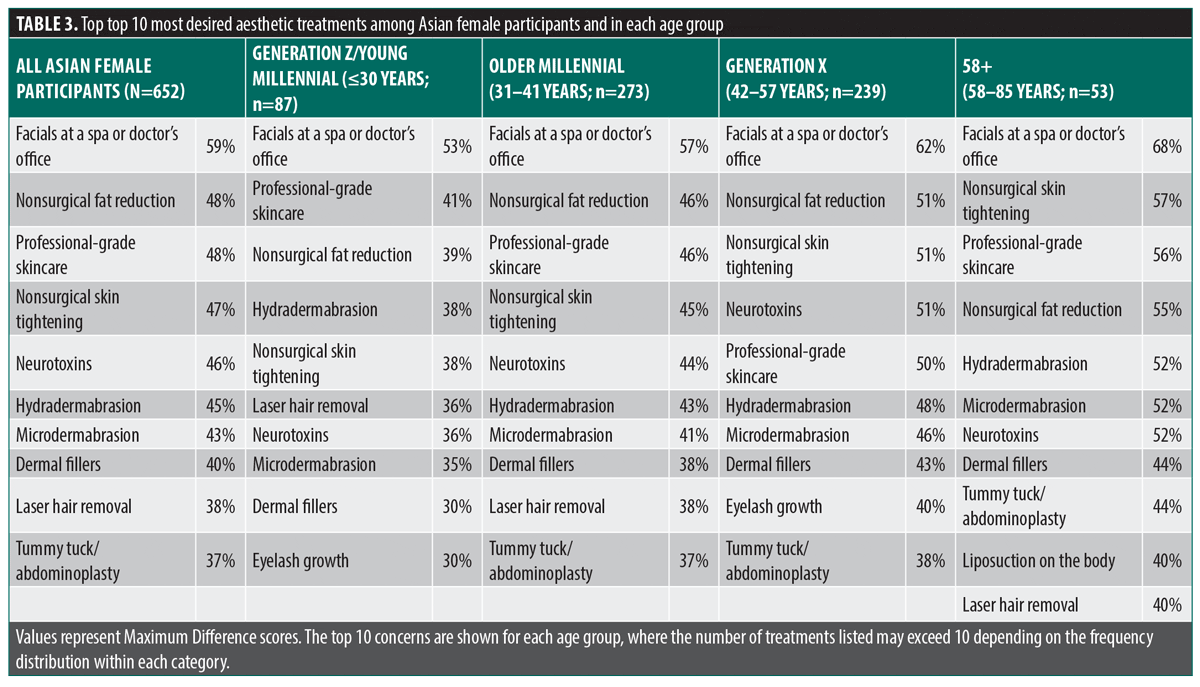
The top 10 treatments of interest among all Asian female participants were generally similar across East/Southeast Asian and Indian/Central or Southwest Asian Female participants (Figure 5) and across age groups (Table 3). Facials at a spa or doctor’s office were ranked as the top treatment of interest in all age categories, and most of the other top treatments were the same across generations, with some variations in ranking between professional-grade skincare, nonsurgical skin tightening, hydradermabrasion, neurotoxins, laser hair removal, microdermabrasion, dermal fillers, eyelash growth, and tummy tuck/abdominoplasty (Table 3).
East/Southeast Asian female participants. Of the 48 aesthetic treatments presented (Supplemental Table 1), facials at a spa or doctor’s office were the top ranked treatment (Figure 5). Interest in eyelash growth was included in the top 10 treatments for East/Southeast Asian female participants but not in the all Asian participant group.
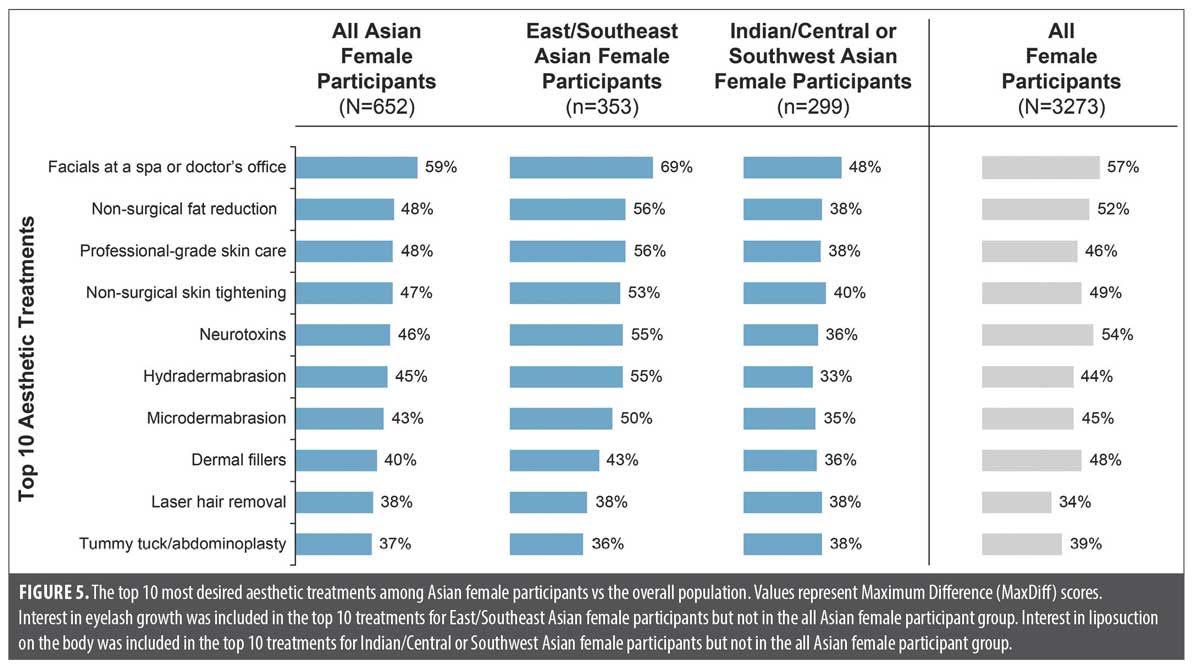
Indian/Central or Southwest Asian female participants. Of the 48 aesthetic treatments presented (Supplemental Table 1), facials at a spa or doctor’s office were the top ranked treatment for Indian/Central or Southwest Asian female participants (Figure 5). Interest in liposuction on the body was included in the top 10 treatments for Indian/Central or Southwest Asian female participants but not in the all Asian participant group.
Discussion
In this analysis from a large US study, skin quality, eye area, hair-related, and fat distribution concerns were observed across Asian female participants overall, with broadly similar concerns between East/Southeast and Indian/Central or Southwest Asian participants. Across groups, uneven skin color/hyperpigmentation, dry or dull skin/lack of glow, and hair loss/thinning hair were the most frequently bothersome facial concerns, with acne scarring and unwanted hair being more prominent in the East/Southeast and Indian/Central or Southwest Asian subgroups, respectively. MaxDiff rankings showed the most bothersome facial issues were sagging (although not among the most commonly reported concerns, it was highly bothersome when present) followed by under-eye bags or sagginess, hair loss/thinning, and dark circles under the eyes across groups, with acne scarring being more prominent in the Indian/Central or Southwest Asian subgroup. Top facial aesthetic concerns of hair loss/thinning, uneven skin color/hyperpigmentation, dark circles under the eyes, and acne scarring were reported across all Asian female participants. Generational trends followed a clear progression, where younger Asian female participants were more concerned with facets of skin quality and female participants in the 58+ age group were more concerned with sagginess and lines.
Stubborn fat and dry skin/lack of hydration were the dominant body concerns across all Asian female participants and generations. MaxDiff rankings confirmed stubborn body fat to be the most bothersome and top aesthetic concern across all Asian females as well as in the East/Southeast and Indian/Central or Southwest subgroups. There was large overlap between top aesthetic concerns and the characteristics most likely to be professionally treated within the next year, except for East/Southeast Asian female participants, where most concerns (eg, stubborn body fat in the bra or back area, arms, and thighs) did not correspond to treatments most likely to be pursued. In general, Asian female participants were most likely to seek professional treatment for uneven skin color/hyperpigmentation (face and body), dry/dull skin, acne scarring, dark circles, hair loss/thinning, frown and forehead lines, and stubborn body fat, with unwanted hair also prioritized for the body.
Finally, treatment interest showed strong cross-group alignment, with facials, nonsurgical fat reduction, professional-grade skincare, nonsurgical skin tightening, neurotoxins, hydradermabrasion, microdermabrasion, dermal fillers, and laser hair removal consistently ranked among the top desired treatments regardless of age, with minor subgroup preferences such as eyelash growth treatments appearing among East/Southeast and liposuction appearing among Indian/Central or Southwest Asian female participants. Although rankings were generally similar between subgroups, the overall percentages were lowest in the Indian/Central or Southwest Asian group.
Although only 6.7% of the US population in 2024 identified as Asian, the survey presented herein had 17.6% of participants identifying as Asian.22 When considered in the broader context of all female participants,15 Asian female responses showed both overlap and divergence from the overall female population. Across both groups, skin quality and stubborn fat in the stomach and flanks were of similar concern. Asian female participants placed relatively greater emphasis on hyperpigmentation, hair loss/thinning, and stubborn arm fat, whereas the broader female population was more concerned with upper facial wrinkles and stubborn bra or back fat. In alignment with these aesthetic concerns, treatment intentions for facials and nonsurgical fat reductions were desired among the entire cohort of female participants as well as Asian female participants, but female participants overall were more interested in wrinkle-relaxing facial injections and Asian female participants specifically expressed stronger interests in professional-grade skincare. These findings indicate shared universal concerns alongside distinct ethnic priorities, underscoring the need for culturally tailored consultations.
Consistent with the top concerns of Asian American female participants presented in a prior MaxDiff study,1 the current Asian female cohort was most frequently bothered by uneven skin tone/hyperpigmentation, dark circles under the eyes, and large pore size. The present findings extend those observations by showing a broader distribution of concerns, especially higher levels of bothersomeness related to hair loss/thinning and dry or dull skin/lack of glow that were not emphasized in the previous study.1 Participants in both studies indicated strong interest in minimally invasive treatments, though the current cohort demonstrated a greater interest in topical and professional facial therapies (eg, facials at a spa or doctor’s office, professional-grade skincare), whereas the previous cohort1 primarily prioritized skin-resurfacing treatments (eg, microdermabrasion, laser skin resurfacing). The study authors note the treatment trends reported here are also commonly observed in their aesthetic dermatology practices. These comparisons suggest that although aesthetic priorities among Asian women have remained relatively consistent over time, evolving perceptions of aesthetic skincare services and skincare may reflect increasing aesthetic awareness, broader availability, or shifting cultural preferences within the US-based Asian female population.
Together with earlier literature demonstrating heightened susceptibility to pigmentary scarring responses, these findings reinforce the importance of early, evidence-based counseling for Asian patients, such as focusing on skin quality (even skin tone and smooth skin), use of topical depigmenting agents, careful energy-based device selection, and appropriate hair restoration modalities.1,2,7,23–26 Consultation strategies should be subgroup sensitive, as East/Southeast Asian women may be more receptive to noninvasive, skin-focused interventions, whereas Indian/Central or Southwest Asian women may seek body contouring solutions. Tailoring consultations accordingly may improve satisfaction and outcomes, reinforcing recommendations from previous consensus statements advocating culturally aware aesthetic medicine.2,24,26–30
This analysis of Asian female participants in the study has several notable strengths, including a large sample size comprising only Asian female participants and use of MaxDiff methodology to capture relative priorities more accurately than traditional rating scales with reduced response bias. Similar analyses have focused on the face, with limited data on aesthetic concerns and treatment interests related to the body; this study captured comprehensive coverage of facial and body concerns to create a holistic view of an individual’s aesthetic priorities. Several limitations must also be acknowledged. Although subgroup analyses were conducted, further stratification by country of origin, generation, and acculturation status may yield additional nuance. MaxDiff methodology, though robust in revealing relative priorities, does not measure absolute willingness to undergo treatment or financial/access barriers, which remain important determinants of real-world uptake. The study was conducted in the US, and findings may not be generalizable to other regions. Although the survey was opened to members of the transgender and nonbinary communities, responses from members of these groups were limited. Future iterations of the survey should ensure adequate representation and feedback from these groups as aesthetic interests and the aesthetic patient continue to evolve.
Conclusion
Asian women in the US represent a growing and diverse segment of the aesthetic market, and their preferences reflect mostly shared priorities with some subgroup-specific differences. In light of these findings, aesthetic practitioners may improve treatment satisfaction by first addressing primary skin quality concerns, particularly pigmentary changes and dullness, and introducing noninvasive treatment plans with appropriate consideration for this population.
As Asian women continue to represent an expanding patient population, culturally informed and subgroup-sensitive consultations are essential. Approaches that prioritize safety, skin physiology, and aesthetic preferences unique to Asian patients can strengthen the patient-practitioner relationship and facilitate more personalized, effective aesthetic care. This study provides a foundation for such patient-centric, personalized discussions by highlighting the distinct aesthetic concerns and treatment interests of Asian women in the US.
Supplemental Materials
Disclosures
Dr. Chiu is an advisory board consultant for Allergan, Galderma, Merz, and Evolus and clinical trial investigator for Allergan and Merz. Dr. Rahman is an advisory board member for Allergan Aesthetics. Dr. Munavalli is an investigator for Allergan Aesthetics. Dr. Moradi is an investigator for Allergan Aesthetics. Dr. Sadeghpour is a consultant/advisory board member for Allergan Aesthetics. Drs. Ashourian, Zheng, and Sondergaard are full-time employees of AbbVie and may hold AbbVie stock. Dr. Ibrahim has no relevant conflicts of interest.
Acknowledgments
Writing and editorial assistance was provided to the authors by Jessica Brunquell, PhD of Peloton Advantage, an OPEN Health company, and was funded by AbbVie Inc. The authors would like to acknowledge the supplement co-sponsor Research Execute Learn LLC (Randy Long and Drew Minko) for their assistance with the survey design, distribution, collection of data, and analysis of the results.
References
- Chiu A, Mariwalla K, Hui-Austin A, et al. Understanding the female Asian American facial aesthetic patient. J Drugs Dermatol. 2019;18(7):633–641.
- Liew S, Wu WTL, Chan HH, et al. Consensus on changing trends, attitudes, and concepts of Asian beauty. Aesthetic Plast Surg. 2020;44(4):1186–1194.
- Lin L, Horowitz J. How Americans are thinking about aging. Pew Research Center. 2025. Accessed 13 Nov 2025. https://www.pewresearch.org/wp-content/uploads/sites/20/2025/11/ST_2025.11.06_aging_report.pdf
- American Society for Dermatologic Surgery. 2025 ASDS consumer survey on cosmetic dermatologic procedures. 2025. Accessed 25 July 2025.https://www.asds.net/medical-professionals/practice-resources/consumer-survey-on-cosmetic-dermatologic-procedures
- McKenzie S, Wang J, Mora Hurtado AC, et al. Cosmetic injectables in skin of color: a review of uses, safety, and effectiveness of neuromodulators and dermal fillers. J Cosmet Dermatol. 2024;23(7):2345–2360.
- Quiñonez RL, Agbai ON, Burgess CM, Taylor SC. An update on cosmetic procedures in people of color. Part 1: scientific background, assessment, preprocedure preparation. J Am Acad Dermatol. 2022;86(4):715–725.
- Fabi SG, Park JY, Ho WWS, et al. Aesthetic considerations for treating the Asian patient: thriving in diversity international roundtable series. J Cosmet Dermatol. 2023;22(6):1805–1813.
- Narurkar V, Shamban A, Sissins P, et al. Facial treatment preferences in aesthetically aware women. Dermatol Surg. 2015;41(suppl 1):S153–S160.
- Jagdeo J, Keaney T, Narurkar V, et al. Facial treatment preferences among aesthetically oriented men. Dermatol Surg. 2016;42(10):1155–1163.
- Maisel A, Waldman A, Furlan K, et al. Self-reported patient motivations for seeking cosmetic procedures. JAMA Dermatol. 2018;154(10):1167–1174.
- Kim MM, Byrne PJ. Facial skin rejuvenation in the Asian patient. Facial Plast Surg Clin North Am. 2007;15(3):381–386, vii.
- Cui H, Zhao H, Xu H, et al. An innovative approach for facial rejuvenation and contouring injections in Asian patients. Aesthet Surg J Open Forum. 2021;3(2):ojaa053.
- Krogstad JM, Im C. Key facts about Asians in the U.S. 2025. Accessed 13 Nov 2025. https://www.pewresearch.org/short-reads/2025/05/01/key-facts-about-asians-in-the-us/
- Mühlbacher AC, Kaczynski A, Zweifel P, Johnson FR. Experimental measurement of preferences in health and healthcare using best-worst scaling: an overview. Health Econ Rev. 2016;6(1):2.
- Zeidler K, Chiu A, Sadeghpour M, et al. Demographic survey of aesthetic interests & concerns (MOSAIC): US survey study of facial and body aesthetic concerns and treatment interests across diverse populations, methodology and results for female participants by age. J Clin Aesthet Dermatol. 2026;19(8 Suppl 2):5–16.
- Fabi S, Beer J, Bharti G, et al. Demographic survey of aesthetic interests and concerns (MOSAIC): US survey study of facial and body aesthetic concerns and treatment interests of Hispanic and Latina women. J Clin Aesthet Dermatol. 2026;19(8 Suppl 2):38–46.
- Alexis A, Boyd C, Burgess C, et al. Demographic survey of aesthetic interests and concerns (MOSAIC): US survey study of facial and body aesthetic concerns and treatment interests among Black women. J Clin Aesthet Dermatol. 2026;19(8 Suppl 2):28–37.
- Sherber N, Bharti G, Downie J, et al. Demographic survey of aesthetic interests and concerns (MOSAIC): US survey study of facial and body aesthetic concerns and treatment interests among White women. J Clin Aesthet Dermatol. 2026;19(8 Suppl 2):47–56.
- Ibrahim O, Beer J, Keaney T, et al. Demographic survey of aesthetic interests and concerns (MOSAIC): US survey study of facial and body aesthetic concerns and treatment interests of men. J Clin Aesthet Dermatol. 2026;19(8 Suppl 2):57–65.
- Fabi S, Montes JR, Aguilera SB,et al. Understanding the female Hispanic and Latino American facial aesthetic patient. J Drugs Dermatol. 2019;18(7):623–632.
- Donnelly F. US Census Data: concepts and applications for supporting research. Libr Technol Rep. 2022;58(4):5–37.
- US Census Bureau. QuickFacts United States. 2024. Accessed 24 Mar 2026. https://www.census.gov/quickfacts/fact/table/US/PST045224
- Alotaibi AS. Demographic and cultural differences in the acceptance and pursuit of cosmetic surgery: a systematic literature review. Plast Reconstr Surg Glob Open. 2021;9(3):e3501.
- Park JY, Chen JF, Choi H, et al. Insights on skin quality and clinical practice trends in Asia Pacific and a practical guide to good skin quality from the inside out. J Clin Aesthet Dermatol. 2022;15(6):10–21.
- Davis EC, Callender VD. Postinflammatory hyperpigmentation: a review of the epidemiology, clinical features, and treatment options in skin of color. J Clin Aesthet Dermatol. 2010;3(7):20–31.
- Wu WT, Liew S, Chan HH, et al. Consensus on current injectable treatment strategies in the Asian face. Aesthetic Plast Surg. 2016;40(2):202–214.
- Sundaram H, Huang PH, Hsu NJ, et al. Aesthetic applications of botulinum toxin A in Asians: an international, multidisciplinary, pan-Asian consensus. Plast Reconstr Surg Glob Open. 2016;4(12):e872.
- Liew S, Wu WT, Chan HH, et al. Consensus on changing trends, attitudes, and concepts of Asian beauty. Aesthetic Plast Surg. 2016;40(2):193–201.
- Ahn BK, Kim YS, Kim HJ, et al. Consensus recommendations on the aesthetic usage of botulinum toxin type A in Asians. Dermatol Surg. 2013;39(12):1843–1860.
- Rho NK, Chang YY, Chao YY, et al. Consensus recommendations for optimal augmentation of the Asian face with hyaluronic acid and calcium hydroxylapatite fillers. Plast Reconstr Surg. 2015;136(5):940–956.
From the 2nd Annual RAPIDS Immuno-Dermatology Conference: From Approval to Adoption—Translating Innovation Into Clinical Practice