
J Clin Aesthet Dermatol. 2026;19(10):54–59.
Jacqueline N. Smart, MD; Magdi Elghannam, BS; Sydney E. Rand, MD; E. Michael Powers, MD, MBA; and Jennifer G. Powers, MD, FAAD
Dr. Smart is with the University of Kansas Medical Center, Kansas City, Kansas. Drs. Rand, E. Michael Powers, and Jennifer G. Powers are with the University of Iowa Hospitals and Clinics, Iowa City, Iowa. Dr. Jennifer G. Powers is additionally with the Johns Hopkins School of Medicine, Baltimore, Maryland. Mr. Elghannam is with the University of Maryland School of Medicine, Baltimore, Maryland.
FUNDING: No funding was provided for this article.
DISCLOSURES: The authors have no relevant disclosures.
Abstract: OBJECTIVE: To review the current evidence on the safety of electrosurgery and electrocautery in patients with surgically implanted medical devices undergoing dermatologic surgery, specifically Mohs micrographic surgery (MMS), and to provide updated recommendations for perioperative management. METHODS: A comprehensive literature search was conducted using PubMed, Scopus, Web of Science, and the Cochrane Library in January 2024. Search terms included “pacemaker,” “ICD,” “cochlear implant,” “deep brain stimulator,” “Mohs micrographic surgery,” “electrosurgery,” and “electrocautery.” Inclusion criteria included English-language, peer-reviewed articles, systematic reviews, meta-analyses, randomized controlled trials, and case reports. RESULTS: Evidence supports that dermatologic surgery, including MMS, can be safely performed on patients with pacemakers, implantable cardioverter-defibrillators, deep brain stimulators, and cochlear implants when appropriate precautions are taken. Bipolar electrosurgery is preferred over monopolar devices, and electrocautery carries the lowest risk of electromagnetic interference. Preoperative consultation and postoperative device interrogation are recommended for device-dependent patients. LIMITATIONS: Available evidence is largely based on case reports, small case series, and retrospective reviews. Prospective, controlled studies comparing electrosurgical modalities in patients with implantable devices are lacking. CONCLUSION: Dermatologic surgeons should be familiar with the types of implantable devices their patients may have and the appropriate perioperative precautions. With proper planning and device-specific management, MMS can be performed safely in these patients. KEYWORDS: Mohs micrographic surgery, electrosurgery, electrocautery, pacemaker, implantable cardioverter-defibrillator, deep brain stimulator, cochlear implant
Introduction
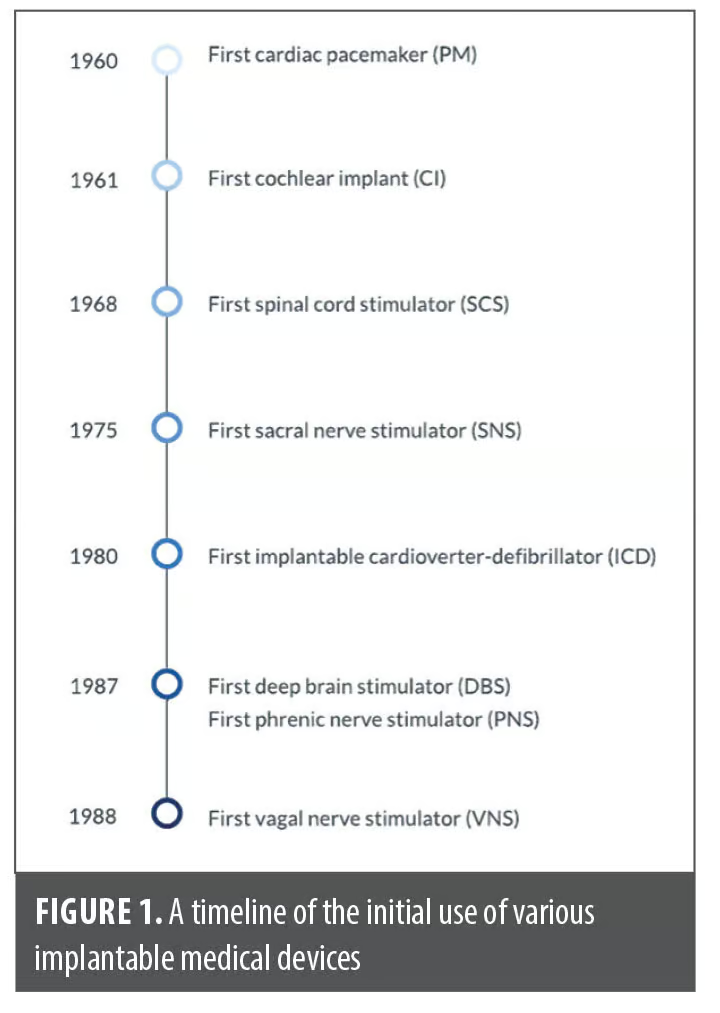
Implanted medical devices are becoming increasingly common in patients who undergo Mohs micrographic surgery (MMS). Approximately 800,000 Americans had an implantable cardioverter-defibrillator (ICD) in 2022, with around 150,000 additional ICDs implanted annually,1 compared to fewer than 400,000 patients with ICDs in 2012.2 Common implantable devices encountered in dermatologic practice include pacemakers (PMs), ICDs, deep brain stimulators (DBSs), and cochlear implants (CIs), all of which have been used in medical practice for many years (Figure 1). Most outpatient dermatologic procedures, including MMS, require an electrosurgical device to achieve hemostasis,3 and performing electrosurgery in patients with implanted devices carries a potential risk of electromagnetic interference (EMI) that may endanger the patient or the device.4
In the past decade, the landscape for implantable devices has shifted dramatically. Advances in device shielding, lead configurations, and programming capabilities have altered the risk profile of EMI during surgery, necessitating an update on current perioperative practices.5 Despite these developments, existing reviews have not comprehensively addressed the full range of implantable devices—cardiac, neurologic, and otologic—within the specific context of dermatologic surgery. The purpose of this review is to provide a comprehensive, device-specific summary of the current evidence on the safety of electrosurgery and electrocautery in patients with surgically implanted medical devices undergoing MMS and to offer practical, evidence-based recommendations for perioperative management in the Mohs unit.
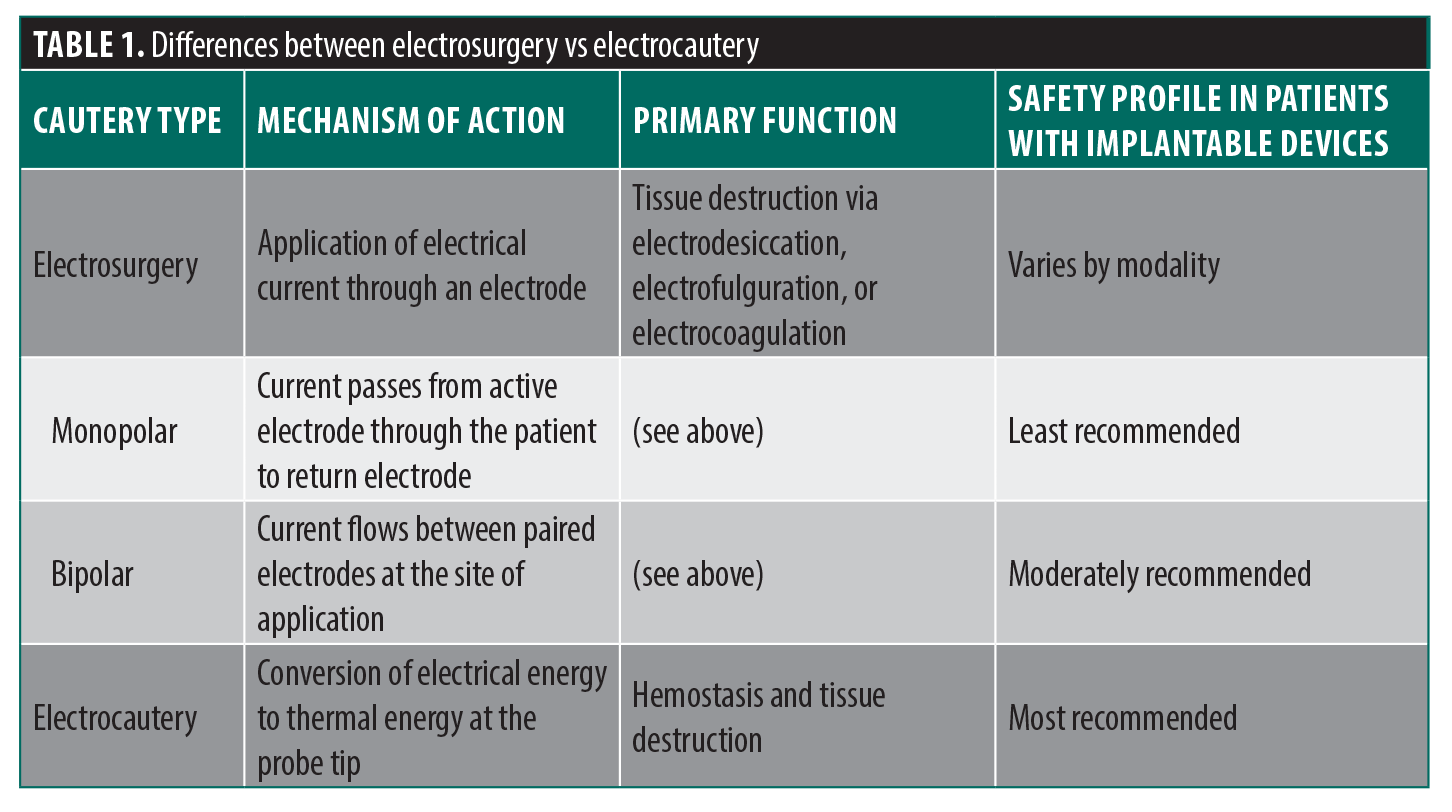
In dermatologic surgery, there are 2 general methods to achieve hemostasis: electrosurgery and electrocautery. Electrosurgery uses a high-frequency electric current to generate heat and is commonly used in dermatologic surgery to destroy tissue and provide hemostasis.6,7 Electrosurgery, also referred to as diathermy, includes electrodesiccation (dehydration of tissue), electrofulguration (use of electric current to destroy abnormal tissue), electrosection (to cut tissue), and electrocoagulation (clotting of blood vessels for the purpose of hemostasis).
These devices are most commonly monopolar (contain 1 electrode) and single-tipped.4 Electricity passes from the generator to the active electrode at the tip, through the patient, to the grounding pad that serves as the return electrode, and back to the generator. The return electrode is an important safety feature that helps to prevent burns and decreases the amount of current that flows outside of the surgical site.8
In bipolar electrosurgery, a specialized forceps device has current flowing between the 2 tines—1 serving as the active electrode and the other as the return electrode.8 Bipolar electrosurgery devices are safer to use in patients with implantable devices than monopolar devices due to the absence of free electrical current that has the potential to pass through the implanted hardware.3,9,10
Hyfrecators work through the emission of low-power, high-frequency alternating-current electrical pulses to achieve hemostasis or destruction through either electrodesiccation or electrofulguration.11 Electrical currents are produced through an electrode that is either monoterminal (current passes to the patient) or biterminal (current passes through the patient back to a second electrode). Electrodesiccation uses monoterminal delivery to apply a high-voltage, low-amperage current directly to the tissue. Electrofulguration creates superficial tissue destruction through a similar method, except that the electrical tip is held just above the tissue to create a spark gap and focus the heat to the skin surface.11
In contrast to electrosurgery, electrocautery does not use an electric current. Hemostasis is achieved by converting electrical energy into thermal energy. When the tip of the device heats up, it allows control of minor blood loss when it comes into contact with tissue.3 Because no current is passed to the patient in electrocautery, it is the safest device for achieving hemostasis in patients with implantable devices (Table 1).
Implantable medical devices. Cardiac. Cardiovascular implantable electronic devices (CIEDs), including PMs and ICDs, are increasingly common in older patients who are also at higher risk for nonmelanoma skin cancers.12 Dermatologic surgeons must therefore be familiar with the risks of electrosurgery in these patients. PMs are typically implanted for bradycardia, sinus node dysfunction, or atrioventricular block, while ICDs prevent sudden death in patients at risk for ventricular arrhythmias.13 Both devices consist of a pulse generator and leads that sense cardiac activity and deliver electrical pulses according to their programming.14
Bipolar PM leads are more resistant to EMI than unipolar leads. Approximately 5% to 10% of patients are PM dependent, meaning they have an inability to intrinsically produce a cardiac rhythm should the PM be inhibited. These patients are especially important to keep in mind during surgery, as they may experience cardiac problems if EMI by an electrosurgery device inhibits the PM.8 Asynchronous pacing refers to a mode of pacing that occurs at a fixed rate and does not sense the patient’s cardiac activity. This mode is rarely used long term. However, it can be used for patients undergoing a surgical procedure or magnetic resonance imaging.15 These modes should be used with caution, as they carry a small risk of ventricular arrhythmias due to pacing during T waves of intrinsic cardiac electrical activity.
ICDs may have transvenous or subcutaneous leads. Transvenous devices, usually placed in the left prepectoral region, carry risks of infection and lead malfunction, whereas subcutaneous ICDs avoid vascular complications by placing the generator in the lateral chest wall and leads along the sternum.15,16 EMI during MMS may inhibit pacing in dependent patients or cause inappropriate arrhythmia detection and subsequent painful shocks to the patient. To reduce this risk, ICDs may be temporarily disabled, though failure to reactivate the device after surgery carries a small but serious risk of sudden death.
DBS. DBSs are used as a treatment for movement disorders, including Parkinson disease (PD), essential tremor, dystonia, and Tourette syndrome, that are refractory to medical treatment.17 For the treatment of PD, which affects 60,000 people annually in the United States, DBSs target and signal the basal ganglia for symptomatic control.5,18 A DBS has 3 parts: the electrical generator device, the electrodes, and the extension leads. The electrical generator device is implanted in the subcutaneous infraclavicular region and sends continuous electrical signals through the insulated extension leads to the electrodes. The leads connect the pulse generator to the electrodes and typically follow a path along the sternocleidomastoid muscle to the parietal scalp.18 Technology in battery design, sensing, and stimulation has recently evolved to improve the efficacy and tolerability of DBSs.19
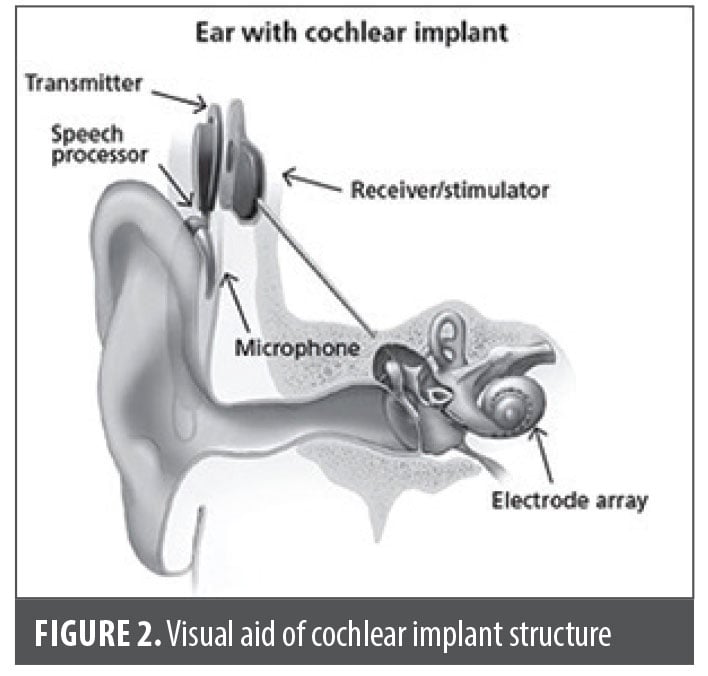
CIs. CIs are devices that are surgically implanted into the mastoid bone, posterior to the ear, used for the treatment of sensorineural hearing loss in pediatric and adult patients.6 CIs consist of 2 parts: 1 that is externally implanted and worn behind the ear, and 1 that is placed in the cochlea, as shown in Figure 2. Sound is detected by the speech processor and is converted into a digital signal. The digital signal is converted to an electrical signal and transmitted to the electrode array in the cochlea. This electrical signal stimulates the auditory nerve, sending a signal to the brain that is interpreted as sound.20 Future designs aim to improve neuronal health and spatial selectivity to reduce the overall power consumption.21
Methods
A comprehensive literature search was conducted using PubMed, Scopus, Web of Science, and the Cochrane Library. Search for articles began in January 2024. Keywords such as “pacemaker,” “ICD,” “cochlear implant,” “deep brain stimulator,” “Mohs micrographic surgery,” “dermatology,” “electrosurgery,” “electrocautery,” and “implant” were used to identify articles of interest. Articles of interest focused on case studies of dermatologic surgeries performed in patients with implantable devices and previous reviews on the use of electrosurgery in patients with implantable devices. Inclusion criteria were articles written in the English language, peer-reviewed articles, systematic reviews, meta-analyses, clinical randomized controlled trials, and case reports related to the use of electrosurgery or electrocautery in patients with an implantable device. Exclusion criteria were non-English publications and non–peer-reviewed articles.
Results
Dermatologic surgery in patients with a PM/ICD. The presence of PMs or ICDs has classically been considered a contraindication to the use of an electrosurgical unit. Although advancements in PMs have reduced EMI, risks of serious complications are still present. Electrosurgery may cause malfunctions of PMs and ICDs through the alteration of rhythm detection by oversensing, inhibiting firing, and triggering rapid firing, which may result in temporary bradycardia or asystole. Further, device reprogramming, battery depletion, and direct damage to the device are also possible consequences of electrosurgery.12,22
In 2011, experts from the Heart Rhythm Society (HRS) and the American Society of Anesthesiologists (ASA) published a consensus on the perioperative management of ICDs and PMs, promoting individualized perioperative management.23 Discussion regarding the type of procedure and risk of EMI should occur between the procedure team and those who regularly monitor the implanted device.23 A systematic review concurred that the patient’s cardiologist should be notified, and it recommended placing the PM in an asynchronous mode with the appropriate programming device.24 A retrospective review of patients with a PM or ICD undergoing dermatologic surgery recommended preoperative evaluation and postoperative device interrogation to mitigate the risks of electrosurgery use during dermatologic surgery. No preoperative or postoperative complications were reported with this preplanning.12
Several studies, however, report a high level of safety with electrosurgical units in dermatologic surgery and, with certain exceptions, the fact that a patient has an ICD should not substantially alter surgery guidelines.8,25 Link15 recognized that deactivating a PM with a magnet will inhibit its ability to sense and respond to cardiac activity. A retrospective cohort study evaluated ICD safety in which 1 cohort underwent their procedure with a standard donut magnet placed directly over the implantable device and a second cohort underwent ICD deactivation preoperatively and reactivation postoperatively by an electrophysiology team. In both cohorts, no EMI or tachyarrhythmia events were detected in postoperative interrogations, including battery status, lead parameters, and arrhythmia logs. There were no intraoperative or postoperative cardiac complications.12 Similarly, a retrospective chart review reported no perioperative cardiac complications or postoperative device abnormalities during or within 30 days of MMS.4 Amin et al4 and Trokoudes et al26 proposed that patients with implanted cardiac devices can undergo outpatient dermatologic surgeries without excessive surgical monitoring.
The HRS/ASA also made the following surgical technique recommendations for performing electrosurgery in patients with implantable devices: use bipolar electrosurgery when possible, minimize monopolar electrosurgery bursts to ≤5 seconds, and direct the current away from the implanted device.23 This was echoed in a systematic review that additionally proposed the use of insulated coagulation forceps and use of electrodesiccation only when superficial tissue is greater than 5 cm from the PM.24 A specific case report described the successful removal of a basal cell carcinoma anatomically overlying a PM device via bipolar electrocoagulation in short bursts and injection of normal saline to physically elevate the tissue above the device.9 The authors acknowledge that while legitimate risks exist for patients who are not PM dependent undergoing electrosurgery, the risk of this procedure would have been greater for a patient who was PM dependent.9
An experimental trial using a collagen-based saline gel was conducted using hyfrecators to determine any potential interference with implantable cardiac rhythm management devices. The hyfrecators were used in both the monoterminal and biterminal modes at normal and maximum levels of power. Hyfrecators caused atrial inhibition in PMs when used 3 cm from the device at maximum power and 1 cm from the device at normal power settings. Ventricular inhibition occurred in PMs when hyfrecators were used <1 cm away or in direct contact with the device. Hyfrecator use did not interfere with ICDs. Hyfrecators were concluded to be safe when used within 5 cm of cardiac devices without intraoperative or postprocedural monitoring.11
Electrosurgery in patients with a DBS. In MMS, a significant number of cases are performed on skin cancers of the head and neck, in the location where DBS extension and lead wires reside.18 Krase et al18 reported the case of a patient with a history of Parkinson disease controlled with a right-sided DBS who was diagnosed with squamous cell carcinoma (SCC) in situ of the right parietal scalp. Preoperatively, a neurosurgical consultation and x-rays were ordered to distinguish the position of the DBS leads in relation to the site of the SCC. During MMS, hemostasis was achieved in short bursts using a low-setting, monopolar biterminal electrodesiccation with a dispersive plate. Granulation was the preferred method for wound closure of the scalp defect to avoid excessive undermining that might lead to increased infection risk or disruption of DBS leads. The patient did not experience any postoperative complications.18
Martinelli et al5 presented the case of a 76-year-old man, with a past medical history of Parkinson disease following DBS placement, who was diagnosed with cutaneous SCC on the left ear. The pulse generator of the DBS was placed in the patient’s left infraclavicular region, with leads placed in the left subthalamic nucleus. During the procedure, a battery-operated, handheld electrocautery device was chosen to minimize potential EMI with the patient’s DBS. MMS was successfully completed without injury to the patient or damage to the DBS.
Electrosurgery in patients with a CI. Generally, surgical procedures employing monopolar cautery in patients with a CI have been avoided due to risks of injury to the implant and to the patient. The theory of this danger involves the implant as the grounding source of the circuit, which could potentially discharge through the hardware and into the cochlea of the patient.27 CI manufacturers encourage a cautious approach to monopolar cautery use in patients with a CI. For example, 1 manufacturer prohibits the use of monopolar electrosurgery in patients with a CI, but bipolar electrosurgery may be used within 3 cm of the device. Additional recommended precautions include removing external hardware before surgery in these patients.24 Literature on this subject, however, has not provided clear evidence that monopolar cautery routinely damages CI function.28
A case series and retrospective chart review by Page et al27 examined postoperative CI function in pediatric patients with a CI who underwent surgery using monopolar cautery.Fifteen of these patients underwent surgery with monopolar cautery, with 7 of those performed above the clavicular area. No patients experienced dysfunction or a decline in CI performance postoperatively.27
Discussion
The findings of this review demonstrate that dermatologic surgery, including MMS, can be performed safely in patients with implantable medical devices when appropriate device-specific precautions are used. However, the optimal perioperative approach remains a topic of ongoing debate, with practices varying considerably across institutions and among individual surgeons.
CIEDs. For patients with PMs or ICDs, the central tension in the literature lies between conservative protocols requiring cardiology consultation and device interrogation vs more streamlined approaches that rely on modern device shielding and careful surgical technique. The 2011 HRS/ASA consensus statement23 advocated for individualized perioperative management with communication between the procedural team and the device-managing physician. Subsequent studies, including the retrospective data from Matzke et al12 and Amin et al,4 reported no complications in large patient cohorts, suggesting that routine preoperative cardiology clearance may not always be necessary for non-device-dependent patients undergoing procedures distant from the device generator. The 2024 British Society for Dermatological Surgery (BSDS)/British Heart Rhythm Society (BHRS) guidance update further supports this evolving perspective, noting that dermatologic procedures generate little clinically relevant EMI and that no adverse incidents have been reported to regulatory authorities over more than a decade of surveillance.25
Despite this reassuring evidence, PM-dependent patients remain a distinct subgroup warranting heightened vigilance. In these individuals, EMI-induced inhibition of pacing could result in hemodynamically significant bradycardia or asystole. For this reason, preoperative consultation with the managing cardiologist or electrophysiologist is recommended to determine whether the device should be programmed to an asynchronous mode or whether a magnet should be placed over the device during the procedure.7,23 The decision to deactivate an ICD carries its own risk; failure to reactivate the device postoperatively could leave the patient unprotected from life-threatening ventricular arrhythmias.12 These considerations underscore the importance of institutional protocols and clear communication pathways.
DBSs. The literature on DBS in dermatologic surgery is limited to case reports and a small number of reviews.5,18,29 The unique anatomic consideration for patients with a DBS is that extension leads typically traverse the sternocleidomastoid region and parietal scalp—precisely the areas where head and neck skin cancers are commonly excised during MMS. Rahimpour et al29 comprehensively reviewed EMI sources affecting DBS systems and emphasized that monopolar electrosurgery poses the greatest theoretical risk of current conduction along DBS leads, potentially causing tissue heating at the electrode-brain interface. Despite these concerns, the available case reports describe successful outcomes when precautions, such as short-burst, low-power bipolar electrosurgery and the use of dispersive electrodes, are used.5,18 Preoperative neurosurgical consultation and imaging to map lead trajectories relative to the planned surgical site are advisable, particularly for scalp lesions.
CIs. For patients with a CI, the historical concern has been that the implant could act as a grounding source during monopolar electrosurgery, potentially discharging current through the cochlea and damaging the auditory nerve or the device itself.27 CI manufacturers have accordingly recommended avoiding monopolar electrosurgery or maintaining a minimum distance of 3 cm when using bipolar devices.24 However, the systematic review by Behan et al28 and the recent multifaceted assessment by Dornhoffer et al30 both concluded that the risk of monopolar electrosurgery-related device damage in CI recipients is nominal. These findings suggest that current manufacturer restrictions may be more conservative than the clinical evidence warrants, though prospective studies are needed before guidelines can be formally revised.
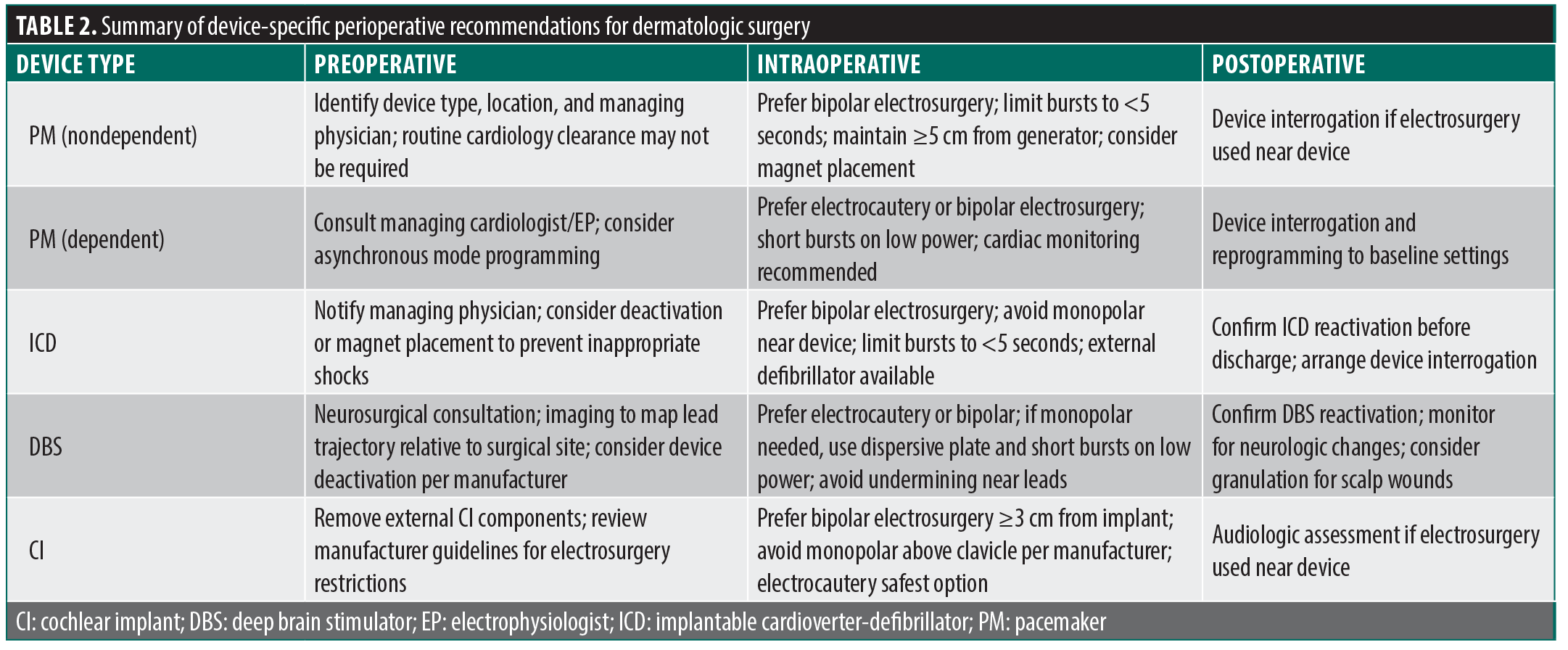
Practical considerations for the Mohs surgeon. From a practical standpoint, when a patient with an implantable device presents for MMS, the dermatologic surgeon should obtain a focused device history, including device type, location of the generator and leads, the patient’s level of device dependence, and the contact information for the managing physician. The surgical site should be evaluated in relation to the device hardware, with particular attention to lesions within 15 cm of the pulse generator. Electrocautery remains the safest hemostatic option across all device types, as it generates no electrical current through the patient. When electrosurgery is required, bipolar devices should be preferred, with bursts limited to <5 seconds and power settings minimized. For patients dependent on a PM and those with ICDs, communication with the managing physician is essential to determine whether device reprogramming or magnet application is indicated. Postoperative device interrogation should be arranged for patients who are device dependent and any patient in whom electrosurgery was used in proximity to the device (Table 2).
Evolving technology and future directions. It is important to recognize that the evidence base for this topic is evolving alongside rapid advancements in both implantable device technology and electrosurgical instrumentation. Modern CIEDs incorporate improved EMI shielding and bipolar lead configurations that are inherently more resistant to external interference than older-generation devices.7,25 Similarly, newer DBS systems use current-controlled stimulation and rechargeable pulse generators that might respond differently to EMI than the voltage-controlled systems described in earlier case reports.19 As these technologies continue to advance, periodic reassessment of perioperative guidelines will be necessary to ensure that clinical practice reflects the actual risk profile of contemporary devices.
Limitations. This review has several limitations. The available evidence is largely composed of case reports, small case series, retrospective chart reviews, and in vitro experimental models. Prospective, controlled studies directly comparing electrosurgical modalities in patients with implantable devices during dermatologic surgery are lacking. Most studies were conducted at single institutions, limiting generalizability. Additionally, the rapid pace of technological advancement in both implantable devices and electrosurgical equipment means that older studies may not fully reflect the safety profiles of current-generation devices. Publication bias toward reporting successful outcomes without complications might also overestimate the safety of electrosurgery in this population. Future prospective, multicenter studies with standardized protocols and larger sample sizes are needed to establish definitive evidence-based guidelines.
Recommendations for clinical practice.
- Prefer bipolar electrosurgery to reduce EMI in patients with PMs or ICDs.
- When possible, monopolar electrosurgical devices should be avoided in patients with implantable medical devices.
- In patients who are not PM dependent or with an ICD, bipolar electrosurgery should be used on low power in short bursts (<5 seconds). Electrosurgery should not be used within 3 cm of the device. Additional surgical techniques, including the injection of saline to elevate the lesion, may be beneficial to further reduce risk.
- Patients who are PM dependent may need more intensive perioperative management, including consultation with the managing physician of the device.
- Patients with a DBS should undergo neurosurgical consultation and imaging; device deactivation is often recommended.
- Patients with a CI should be managed with bipolar devices kept ≥3 cm from hardware.
- When uncertainty exists, consult the managing physician of the device for operative recommendations.
Conclusion
As the prevalence of implantable medical devices continues to rise alongside an aging population at increased risk for skin cancers, dermatologic surgeons will encounter these patients with increasing frequency. This review demonstrates that MMS and other dermatologic surgical procedures can be performed safely in patients with PMs, ICDs, DBSs, and CIs when appropriate precautions are observed. The extent of perioperative management should be individualized based on device type, patient dependence, proximity of the surgical site to device hardware, and the electrosurgical modality used. Bipolar electrosurgery and electrocautery remain the safest hemostatic options, whereas monopolar devices should be used with caution and at appropriate distances from implanted hardware. Multidisciplinary communication between dermatologic surgeons and device-managing physicians remains essential, particularly for patients who are device dependent. As implantable device technology continues to evolve, ongoing education and updated practice guidelines will be critical to ensuring optimal patient safety in the dermatologic surgery setting.
References
- Khanra D, Manivannan S, Mukherjee A, et al. Incidence and predictors of implantable cardioverter-defibrillator therapies after generator replacement—a pooled analysis of 31,640 patients’ data. J Innov Cardiac Rhythm Manage. 2022;13(12):5278–5293.
- Friedman DJ, Parzynski CS, Varosy PD, et al. Trends and in-hospital outcomes associated with adoption of the subcutaneous implantable cardioverter defibrillator in the United States. JAMA Cardiol. 2016;1(8):900–911.
- Voutsalath MA, Bichakjian CK, Pelosi F, et al. Electrosurgery and implantable electronic devices: review and implications for office-based procedures. Dermatol Surg. 2011;37(7):889–899.
- Amin SD, Homan KB, Assar M, et al. Hyfrecation and interference with implantable cardiac devices. Dermatol Surg. 2020;46(5):612–615.
- Martinelli PT, Schulze KE, Nelson BR. Mohs micrographic surgery in a patient with a deep brain stimulator: a review of the literature on implantable electrical devices. Dermatol Surg. 2004;30(7):1021–1030.
- Jeyakumar A, Jackson NM, Givens VB, et al. Does electrocautery damage cochlear implants? Otol Neurotol. 2015;36(4):600–603.
- Howe N, Cherpelis B. Obtaining rapid and effective hemostasis: Part II. Electrosurgery in patients with implantable cardiac devices. J Am Acad Dermatol. 2013;69(5):677.e1–677.e9.
- García Bracamonte B, Rodriguez J, Casado R, Vanaclocha F. Electrosurgery in patients with implantable electronic cardiac devices (pacemakers and defibrillators). Actas Dermosifiliogr. 2013;104(2):128–132.
- Herrmann JL, Mishra V, Greenway HT. Basal cell carcinoma overlying a cardiac pacemaker successfully treated using Mohs micrographic surgery. Dermatol Surg. 2014;40(4):474–477.
- Strickler AG, Shah P, Bajaj S, et al. Preventing and managing complications in dermatologic surgery: procedural and postsurgical concerns. J Am Acad Dermatol. 2021;84(4):895–903.
- Weyer C, Siegle R, Eng G. Investigation of hyfrecators and their in vitro interference with implantable cardiac devices. Dermatol Surg. 2012;38(11):1843–1848.
- Matzke TJ, Christenson LJ, Christenson SD, et al. Pacemakers and implantable cardiac defibrillators in dermatologic surgery. Dermatol Surg. 2006;32(9):1155–1162.
- van Dijk VF, Boersma LV. The subcutaneous implantable cardioverter defibrillator in 2019 and beyond. Trends Cardiovasc Med. 2020;30(6):378–384.
- Mulpuru SK, Madhavan M, McLeod CJ, et al. Cardiac pacemakers: function, troubleshooting, and management: part 1 of a 2-part series. J Am Coll Cardiol. 2017;69(2):189–210.
- Link MS. Modes of cardiac pacing: nomenclature and selection. UpToDate. 2023. Accessed 08 Jan 2024. https://www.uptodate.cn/contents/modes-of-cardiac-pacing-nomenclature-and-selection
- Abdin A, Aktaa S. Subcutaneous ICD for more and transvenous ICD for few?! Clin Res Cardiol. 2022;111(5):475–478.
- Malek N. Deep brain stimulation in Parkinson’s disease. Neurol India. 2019;67(4):968–978.
- Krase JM, Kasoff WS, DuPont JP. Mohs micrographic surgery of the scalp in a patient with a deep brain stimulator. Dermatol Surg. 2021;47(3):412–414.
- Krauss JK, Lipsman N, Aziz T, et al. Technology of deep brain stimulation: current status and future directions. Nat Rev Neurol. 2021;17(2):75–87.
- Cochlear implants explained. Otolaryngology–Head & Neck Surgery, Washington University School of Medicine St. Louis. 2024. Accessed 08 Jan 2024. https://oto.wustl.edu/patient-care/ear-hearing/cochlear-implant-program/implants-explained/
- Mitchell-Innes A, Saeed SR, Irving R. The future of cochlear implant design. Adv Otorhinolaryngol. 2018;81:105–113.
- Riordan AT, Gamache C, Fosko SW. Electrosurgery and cardiac devices. J Am Acad Dermatol. 1997;37(2 Pt 1):250–255.
- Crossley GH, Poole JE, Rozner MA, et al. The Heart Rhythm Society/American Society of Anesthesiologists expert consensus statement on the perioperative management of patients with implantable defibrillators, pacemakers and arrhythmia monitors: facilities and patient management: executive summary. Heart Rhythm. 2011;8(7):1114–1154.
- Tripathi SV, Hurst EA. Pacemakers, deep brain stimulators, cochlear implants, and nerve stimulators: a review of common devices encountered in the dermatologic surgery patient. Dermatol Surg. 2019;45(10):1228–1236.
- James ML, Wright B, Thomas HE, et al. Management of cardiac implantable electronic devices around the time of dermatological procedures requiring electrosurgery: an important guidance update. Clin Exp Dermatol. 2024;49(4):403–405.
- Trokoudes D, Gopinath B, Bashir S. Mohs micrographic surgery with magnet suspension of implantable cardioverter defibrillators. Skin Health Dis. 2024;4(1):e331.
- Page JC, Chapel AC, Silva RC, et al. Monopolar cautery use in pediatric cochlear implant users. Otolaryngol Head Neck Surg. 2023;168(3):478–483.
- Behan J, Higgins S, Wysong A. Safety of cochlear implants in electrosurgery: a systematic review of the literature. Dermatol Surg. 2017;43(6):775–783.
- Rahimpour S, Kiyani M, Hodges SE, Turner DA. Deep brain stimulation and electromagnetic interference. Clin Neurol Neurosurg. 2021;203:106577.
- Dornhoffer JL, Haller T, Lohse CM, et al. Risk of monopolar electrosurgery in cochlear implant recipients is nominal: evidence to guide clinical practice. Otolaryngol Head Neck Surg. 2024;170(2):1089–1097.
From the 2nd Annual RAPIDS Immuno-Dermatology Conference: From Approval to Adoption—Translating Innovation Into Clinical Practice