
J Clin Aesthet Dermatol. 2026;19(10):38–41
Vincent Doan, BSN; Minisha Kanakarajan-McKinney, MD; and Peter Lio, MD
Mr. Doan is with Lincoln Memorial University, DeBusk College of Osteopathic Medicine, Knoxville, Tennessee. Dr. Kanakarajan-McKinney is with Trinity Health Oakland Hospital, Pontiac, Michigan. Dr. Lio is with the Department of Dermatology, Northwestern University Feinberg School of Medicine, Chicago, Illinois.
FUNDING: No funding was provided for this article.
DISCLOSURES: Dr. Lio reports being on the speaker’s bureau for AbbVie, Arcutis, Galderma, Hyphens Pharma, Incyte, La Roche-Posay/L’Oréal, Lilly, Pfizer, Pierre-Fabre Dermatologie, Regeneron/Sanofi Genzyme, and Verrica; reports consulting/advisory boards for Alphyn Biologics, AbbVie, Almirall, Amyris, Apogee, Arcutis, Astria Therapeutics, Boston Skin Science, Bristol Myers Squibb, Burt’s Bees, Castle Biosciences, Codex Labs, Concerto Biosci, Dermavant, Galderma, Kenvue, LEO Pharma, Lilly, Lipidor, L’Oréal, Merck, Micreos, MyOR Diagnostics, Pelthos Therapeutics, Phyla, Regeneron/Sanofi Genzyme, Sibel Health, Skinfix, Soteri Skin, Stratum Biosciences, Sun Pharma, Theraplex, Thimble Health, UCB, Unilever, Verdant Scientific, Verrica, and Yobee Care; and reports stock options with Alphyn Labs, Codex Labs, Concerto Biosci, Soteri Skin, Stratum Biosciences, Thimble, Yobee Care, and Verdant Scientific. In addition, Dr. Lio has a patent pending for a Theraplex product with royalties paid and is a board member and scientific advisory committee member emeritus of the National Eczema Association. The remaining authors have no relevant conflicts of interest.
Abstract: OBJECTIVE: To evaluate fragrance safety in atopic dermatitis (AD), with a focus on regulatory definitions, labeling practices, allergen exposure, and the clinical implications of synthetic and natural fragrance ingredients. METHODS: A structured PubMed and Google Scholar search for relevant articles on clinical implications of fragrance and scented ingredients in AD was conducted using the search terms “fragrance,” “atopic dermatitis,” “contact dermatitis,” “essential oils,” “botanicals,” and “sensitive skin.” Regulatory guidance from the United States Food and Drug Administration, International Nomenclature of Cosmetic Ingredients, and the National Eczema Association was also reviewed. RESULTS: Fragrances are complex mixtures of natural and synthetic compounds and are a common cause of allergic contact dermatitis in both adults and children. Terms such as “unscented,” “fragrance-free,” or “no fragrance added” remain poorly standardized and may mislead patients. Additionally, natural compounds are not inherently “safe,” as they can trigger adverse reactions. LIMITATIONS: Inconsistent product labeling, variability in product formulations, and limited patch testing panels impede allergen identification. CONCLUSION: Optimizing patient outcomes requires standardized fragrance labeling, exploring naturally scented ingredients, and greater product transparency. Keywords: Atopic dermatitis, eczema, fragrance, contact dermatitis, allergy
Introduction
Atopic dermatitis (AD), or eczema, is a common chronic inflammatory skin disorder marked by intense itching and recurrent eczematous lesions, with severity varying among individuals.1,2 AD follows a relapsing course and arises from a multifaceted pathogenesis involving genetic predisposition, compromised skin barrier function, immune dysfunction, and environmental triggers.1,2 Patients with AD often face psychological and social challenges, including quotidian concerns about body odor and the desire to use fragranced products for personal and cultural reasons.3 Research has shown that fragrances can influence mood and evoke memories, even impacting the central nervous system and skin function.4 Despite these benefits, fragrance use poses a significant risk for patients with AD due to its potential to trigger allergic reactions and skin irritation.5 Based on current literature and clinical practices surrounding fragrance use in AD, exploring fragrance safety may benefit patients who value pleasant scents without triggering irritation, allergic contact dermatitis (ACD), or contact urticaria (CU).5,6
This literature review aims to address fragrance safety by examining current regulatory guidelines, misconceptions in product labeling, and harmful fragrance additives. While standard dermatologic advice recommends complete fragrance avoidance due to high allergenicity, there is a growing need for more detailed and individualized clinical recommendations.2,5,6 Thoroughly defining fragrance and addressing gaps in product labeling practices can help clinicians and patients make more informed decisions.
A structured literature review was conducted to evaluate the definitions, classifications, and clinical implications of fragrance in the context of AD and sensitive skin. Given the focus on clinical relevance and regulatory concepts rather than quantitative synthesis, a narrative review approach was used. A comprehensive search of Google Scholar and PubMed was performed for articles published between April 2014 and April 2025. Search terms included combinations of “fragrance,” “perfume,” “essential oils,” “botanical extracts,” “sensitive skin,” “atopic dermatitis,” “contact dermatitis,” and “fragrance allergy.” This review adhered to Preferred Reporting Items for Systematic Reviews and Meta-Analyses (PRISMA) principles for transparency in literature identification and selection, although it was not designed as a full systematic PRISMA review.7 Additionally, guidelines from the United States (US) Food and Drug Administration (FDA), International Nomenclature of Cosmetic Ingredients (INCI), National Eczema Association (NEA), and European Commission were reviewed for regulatory context.
Results
Defining fragrance: legal, chemical, and practical perspectives. FDA and INCI definitions.The FDA and INCI system offer key regulatory frameworks for the classification and labeling of fragrance ingredients in cosmetic products.8,9 According to the FDA, fragrance is a complex blend of natural and synthetic chemicals used to create a distinct scent or mask the odor of other ingredients in a wide range of products.8,9 The FDA requires that fragrances be listed on the product label, but they can be listed collectively as “fragrance” or “parfum” without disclosing the individual components.8,9 The INCI system standardizes ingredient naming across cosmetic products and similarly defines fragrance as a complex mixture of odor-producing substances.10 These can include essential oils, synthetic aromatic compounds, and other volatile components that contribute to a product’s scent profile.10 These definitions are crucial for understanding the regulatory framework surrounding the labeling and safety evaluation of products containing fragrances.
Despite FDA and INCI requirements, products marketed as “fragrance-free” or “unscented” may still include masking agents that suppress the odor of other ingredients and contain substances that may still act as allergens or irritants for sensitive individuals.6,11 Supporting this concern, a 2021 study analyzing cosmetic products found that several items labeled “fragrance-free” contained known sensitizers, including linalool, limonene, and geraniol.12 This limited transparency presents a challenge for patients with fragrance sensitivity or conditions such as AD who depend on clear labeling to avoid potential allergens.
NEA guidelines. The NEA developed strict criteria for fragrance-free products under its Seal of Acceptance Program to help individuals with eczema avoid common irritants and allergens.13 The NEA criteria specify that products must not contain added fragrances, including masking agents that can obscure odors but still provoke allergic reactions.13 This distinction is important, as “unscented” products may still include such masking fragrances, potentially misleading consumers with sensitivities. Additionally, qualifying products must be free from chemical UV filters, formaldehyde releasers, cannabidiol, and ingredients listed on the NEA’s Ecz-clusion List.13 These recommendations align with standard dermatologic guidance, which advises fragrance avoidance in sensitive skin and AD due to its high potential for allergenicity, misleading labeling, and the irritant nature of many natural fragrance compounds.
Fragrance mix allergens. The prevalence of ACD to both synthetic and nonsynthetic (natural) fragrance ingredients ranges from 0.8% to 2.6% based on recent studies.14 It is now estimated that between 1% and 4.5% of the general population has a fragrance allergy, affecting millions of people.15 Fragrance mix allergens, particularly those found in Fragrance Mix I and II, are among the most frequent causes of ACD in both adults and children.16 These mixes include established synthetic and nonsynthetic sensitizers such as eugenol, isoeugenol, and geraniol.17,18 However, the range of known fragrance allergens is expanding, with additional agents such as hydroxyisohexyl 3-cyclohexene carboxaldehyde, citral, and Evernia prunastri (oakmoss) also implicated in sensitization.17,18 Accurate diagnosis of fragrance allergy primarily relies on patch testing with standard patch testing series that incorporate Fragrance Mix I and Fragrance Mix II.18 However, studies have shown that limiting testing to these core mixes can miss a significant number of cases.19,20 To enhance detection, supplemental testing with individual fragrance ingredients or an expanded fragrance series is often necessary.19 The American Academy of Allergy, Asthma, and Immunology (AAAAI) and American College of Allergy, Asthma and Immunology (ACAAI) also emphasize the need for patch testing with both mixes and individual components to improve detection rates.21
Product labeling inconsistencies. The terms “fragrance,” “scent,” and “odor” are related but distinct terms that are often used interchangeably, with unique implications in the context of ACD.6 “Fragrance” is described as a mixture of natural and synthetic chemicals that are added to personal and household items to impart a pleasant smell or mask unpleasant odors. According to the literature, fragrances are widely known to cause allergic skin reactions such as ACD or CU.5,6 Numerous personal and household products may use the term “scent” to indicate formulations containing naturally-derived chemicals or fragrance mixtures that evoke a pleasant aroma.6 “Scent” is not a term that is typically used when discussing allergens but, as described, it can refer to a substance capable of causing an allergic skin reaction.6 Furthermore, “odor” is a sensory term rarely used in allergen labeling and refers to the olfactory detection of volatile chemical compounds, which can be pleasant, neutral, or unpleasant.6 Using these terms interchangeably can confuse consumers about potential allergens within products or substances.
The terms “unscented,” “fragrance-free,” or “no fragrance added” can also be misleading and are frequently found on product labels. The AAAAI and ACAAI note that even “unscented” products can include compounds that provoke allergic responses.21 Unscented products are made to have no noticeable odor; however, they may still contain masking agents that cover the smell of other ingredients, which serve as hidden allergens.19 In contrast, products labeled “no fragrance added” do not contain any fragrance ingredients, including masking agents, although a mild scent from the base ingredients may still be present.6,21 It is recommended that bland or “fragrance-free” moisturizers be used among patients with AD to reduce allergen exposure and support skin barrier function.6,21
Despite advances in allergy testing and current regulatory guidelines, effective management remains challenging due to inadequate labeling practices.8,9,13 Regulations in the US and many other regions do not require disclosure of individual fragrance components, as these formulations are considered proprietary trade secrets.6,11,22 This lack of transparency complicates allergen avoidance and limits patient education. To address this concern, the American Academy of Dermatology (AAD) recommends identifying and listing common fragrance allergens in all types of products, including cosmetics, prescription medications, and over-the-counter drugs.15 Brands are encouraged to start working with regulatory agencies and industry partners to improve ingredient transparency and labeling practices.15 These gaps demonstrate a need for stronger regulatory oversight and more detailed labeling requirements to support the identification and prevention of fragrance-induced inflammation.6,11,22
The risk of “natural”: context matters. The perception that “natural” equates to “safe” is a common misconception that should be explored when considering fragrance safety.23,24 A product’s natural origin does not guarantee its safety. Natural compounds can still cause toxicity, trigger adverse reactions, or interact with other medications.24 These risks are especially concerning when the composition and concentration of the product are not standardized or properly regulated.23,24 Examples of “natural” products are essential oils, hydrosols, and whole botanicals, which differ markedly in their chemical profiles and potential for adverse effects.24–27
Essential oils are highly concentrated volatile compounds that are especially prone to oxidation and must be stored properly.25,26 Exposure to light, heat, or air can speed up the oxidation process, leading to the formation of sensitizing byproducts and increasing the risk of skin irritation.26 The likelihood of adverse effects also depends on concentration and levels of natural active agents.26 In contrast, hydrosols are water-based distillates that contain lower concentrations of active compounds, typically resulting in a lower risk of adverse effects.27 Their gentle composition and low potential for irritation make them appealing for use in sensitive skin and AD, where barrier impairment and increased skin reactivity are key issues.27,28 Whole botanicals have also been used as adjuncts in the management of AD. Their anti-inflammatory and barrier-supporting effects help reduce itching, redness, and disease severity.29,30
The safety and effectiveness of “natural” dermatologic agents depend heavily on the context in which they are used. Factors such as product type, formulation, storage conditions, and concentration all play a critical role.23,24 Furthermore, many natural products lack standardization and regulatory oversight, as previously mentioned. This can result in variability in their composition and potency, making it more difficult to assess their safety accurately.23,24 This highlights the importance of careful evaluation and thorough patient counseling.
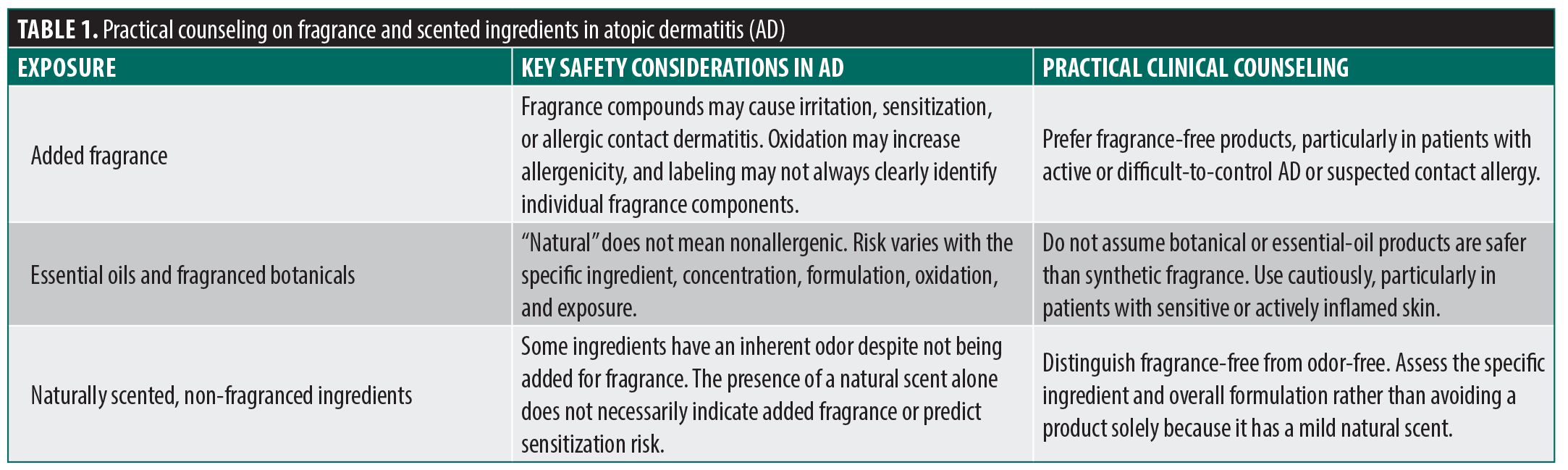
Key safety considerations and clinical recommendations for fragrance and naturally-scented ingredients are summarized in Table 1.
Discussion
Strict avoidance of added fragrance, particularly synthetic fragrances and essential oils, remains the safest approach for individuals with AD.14,23,24 However, this strategy may not always align with patient preferences. As such, dermatology providers are encouraged to balance clinical caution with individualized, evidence-based recommendations that integrate patient values and support shared decision-making.
Several key limitations and gaps continue to pose challenges for both clinicians and patients. Variations in product quality, formulations, and ingredient concentrations complicate the interpretation of results and their broad application.11,22 Labeling terminology also lacks standardization, even within current regulatory guidelines.8,9,13,15 Common terms such as “fragrance,” “scent,” “odor,” “fragrance-free,” “unscented,” and “no fragrance added” are often used interchangeably despite distinct definitions.6,15,21 This contributes to patient confusion and complicates clinical counseling. Furthermore, standard patch testing protocols rely on a limited set of fragrance mixes, which may fail to detect sensitization to newer or less commonly-used fragrance components.6,19 As a result of the ambiguity in labeling and interpretation of fragrances and the high prevalence of ACD caused by fragrances, there has been a growing movement toward fragrance-free environments in healthcare settings and offices. The AAAAI and AAD encourage the use of fragrance-free (not merely “unscented”) products for allergic patients and the creation of fragrance-free environments in healthcare settings and public spaces, respectively.6,15,21
Ongoing efforts are needed to address fragrance labeling inconsistencies and limited ingredient transparency in personal and cosmetic products. Future research should prioritize clinical trials on naturally-scented, low-risk ingredients, optimize patch testing protocols, and establish a clinical algorithm or risk-based model to standardize fragrance guidance. In addition, patients should be empowered to make informed decisions by learning how to read ingredient labels, identifying trusted product certifications such as the NEA’s Seal of Acceptance™, and recognizing early signs of both irritant and allergic reactions.13 Addressing these concerns can aid in allowing patients with AD the option to enjoy pleasant scents while minimizing the risk of skin inflammation.
Conclusion
Managing fragrance exposure in AD and sensitive skin requires an evidence-based and patient-centered approach. While completely avoiding fragrance remains the safest option, it is important to offer personalized guidance that addresses fragrance safety and balances clinical risk with each patient’s preferences. Improving regulatory labeling standards, advocating for greater product transparency, and educating patients are fundamental to minimizing risk and helping individuals with AD make informed choices.
References
- Sidbury R, Alikhan A, Bercovitch L, et al. Guidelines of care for the management of atopic dermatitis in adults with topical therapies. J Am Acad Dermatol. 2023;89(1):e1–e20.
- Waldman AR, Ahluwalia J, Udkoff J, et al. Atopic dermatitis. Pediatr Rev. 2018;39(4):180–193.
- Gochnauer H, Valdes-Rodriguez R, Cardwell L, Anolik RB. The psychosocial impact of atopic dermatitis. Adv Exp Med Biol. 2024;1447:69–81.
- Angelucci FL, Silva VV, Dal Pizzol C, et al. Physiological effect of olfactory stimuli inhalation in humans: an overview. Int J Cosmet Sci. 2014;36(2):117–123.
- Rastogi S, Patel KR, Singam V, Silverberg JI. Allergic contact dermatitis to personal care products and topical medications in adults with atopic dermatitis. J Am Acad Dermatol. 2018;79(6):1028–1033.e6.
- Fonacier L, Bernstein DI, Pacheco K, et al; American Academy of Allergy, Asthma & Immunology; American College of Allergy, Asthma & Immunology; Joint Council of Allergy, Asthma & Immunology. Contact dermatitis: a practice parameter-update 2015. J Allergy Clin Immunol Pract. 2015;3(3 Suppl):S1–S39.
- Page MJ, McKenzie JE, Bossuyt PM, et al. The PRISMA 2020 statement: an updated guideline for reporting systematic reviews. BMJ. 2021;372:n71.
- Katz LM, Lewis KM, Spence S, Sadrieh N. Regulation of cosmetics in the United States. Dermatol Clin. 2022;40(3):307–318.
- Office of the Commissioner. Fragrances in Cosmetics. U.S. Food and Drug Administration. 28 Feb 2022. Accessed 22 May 2025. https://www.fda.gov/cosmetics/cosmetic-ingredients/fragrances-cosmetics
- Bennike NH, Oturai NB, Müller S, et al. Fragrance contact allergens in 5588 cosmetic products identified through a novel smartphone application. J Eur Acad Dermatol Venereol. 2018;32(1):79–85.
- Mays D, Friedman A, Kennedy J, et al. Non-adherence to labeling standards can misrepresent safety of ingredients in cosmetic cleansers. J Drugs Dermatol. 2023;22(1):98–100.
- Lu CH, Fang MC, Chen YZ, et al. Quantitative analysis of fragrance allergens in various matrixes of cosmetics by liquid-liquid extraction and GC-MS. J Food Drug Anal. 2021;29(4):700–708.
- Seal of Acceptance™ Criteria. National Eczema Association. Accessed 22 May 2025. https://nationaleczema.org/product-directory/about-nea-seal-of-acceptance/
- Diepgen TL, Ofenloch R, Bruze M, et al. Prevalence of fragrance contact allergy in the general population of five European countries: a cross-sectional study. Br J Dermatol. 2015;173(6):1411–1419.
- American Academy of Dermatology. Position statement on the chemical identity of fragrances. Published 24 Oct 1998. Accessed 22 May 2026. https://fliphtml5.com/zzjr/qxpv/Position_Statement_on_The_Chemical_Identity_of_Fragrances_
- Botvid S, Bennike NH, Simonsen AB, et al. Contact sensitization to fragrance mix I and fragrance mix II among European dermatitis patients: a systematic review. Contact Dermatitis. 2024;91(3):177–185.
- Sánchez-Pujol MJ, Docampo-Simón A, Mercader P, et al. Frequency of sensitization to the individual fragrances of fragrance mix I and II according to the factors included in the MOAHLFA index. Contact Dermatitis. 2021;84(6):395–406.
- Mowitz M, Svedman C, Zimerson E, et al. Simultaneous patch testing with fragrance mix I, fragrance mix II and their ingredients in southern Sweden between 2009 and 2015. Contact Dermatitis. 2017;77(5):280–287.
- Reeder MJ. Allergic contact dermatitis to fragrances. Dermatol Clin. 2020;38(3):371–377.
- Bennike NH, Zachariae C, Johansen JD. Non-mix fragrances are top sensitizers in consecutive dermatitis patients – a cross-sectional study of the 26 EU-labelled fragrance allergens. Contact Dermatitis. 2017;77(5):270–279.
- Chu DK, Schneider L, Asiniwasis RN, et al; AAAAI/ACAAI JTF Atopic Dermatitis Guideline Panel, Patient Groups: Global Parents for Eczema Research, National Eczema Association, Evidence in Allergy Group, AAAAI/ACAAI Joint Task Force on Practice Parameters. Atopic dermatitis (eczema) guidelines: 2023 American Academy of Allergy, Asthma and Immunology/American College of Allergy, Asthma and Immunology Joint Task Force on Practice Parameters GRADE- and Institute of Medicine-based recommendations. Ann Allergy Asthma Immunol. 2024;132(3):274–312.
- Chou M, Mikhaylov D, Strugar TL. Common allergens present in personal care products: identification, diagnosis, and management. Semin Cutan Med Surg. 2018;37(4):254–262.
- Hadeler EK, Maderal AD. Drug interactions of natural supplements in dermatology: a review. Int J Dermatol. 2021;60(10):1183–1189.
- Gaston TE, Mendrick DL, Paine MF, et al. “Natural” is not synonymous with “safe”: toxicity of natural products alone and in combination with pharmaceutical agents. Regul Toxicol Pharmacol. 2020;113:104642.
- Barbaud A, Kurihara F, Raison-Peyron N, et al; Dermato-Allergology Group of the French Society of Dermatology (DAG). Allergic contact dermatitis from essential oil in consumer products: mode of uses and value of patch tests with an essential oil series. Results of a French study of the DAG (Dermato-Allergology group of the French Society of Dermatology). Contact Dermatitis. 2023;89(3):190–197.
- Vora LK, Gholap AD, Hatvate NT, et al. Essential oils for clinical aromatherapy: a comprehensive review. J Ethnopharmacol. 2024;330:118180.
- Jakubczyk K, Tuchowska A, Janda-Milczarek K. Plant hydrolates – antioxidant properties, chemical composition and potential applications. Biomed Pharmacother. 2021;142:112033.
- Almeida HHS, Fernandes IP, Amaral JS, et al. Unlocking the potential of hydrosols: transforming essential oil byproducts into valuable resources. Molecules. 2024;29(19):4660.
- Silverberg NB. Selected active naturals for atopic dermatitis: atopic dermatitis part 1. Clin Dermatol. 2017;35(4):383–386.
- Hussain Z, Thu HE, Shuid AN, et al. Phytotherapeutic potential of natural herbal medicines for the treatment of mild-to-severe atopic dermatitis: a review of human clinical studies. Biomed Pharmacother. 2017;93:596–608.
From the 2nd Annual RAPIDS Immuno-Dermatology Conference: From Approval to Adoption—Translating Innovation Into Clinical Practice