
J Clin Aesthet Dermatol. 2026;19(8):66–81.
Mona Sadeghpour, MD; Vivian Bucay, MD; Cheryl Burgess, MD, FAAD; Andrew Alexis, MD; Sabrina Fabi, MD; Michelle Henry, MD; Gilly Munavalli, MD; Zakia Rahman, MD; Agnesa Avanesian, PhD; Alda Karic, PharmD; Nazanin Ashourian, PhD; Sara Sangha, PhD; and Birgitte Sondergaard, PhD
Dr. Sadeghpour is with SkinMed Institute, Pittsburgh, Pennsylvania. Dr. Bucay is with Center for Dermatology and Aesthetics, San Antonio, Texas. Dr. Burgess is with Center for Dermatology and Dermatologic Surgery, Washington, District of Columbia. Dr. Alexis is with Weill Cornell Medicine, New York, New York. Dr. Fabi is with Cosmetic Laser Dermatology, San Diego, California. Dr. Henry is with Skin & Aesthetic Surgery of Manhattan, New York, New York. Dr. Munavalli is with Dermatology, Laser & Vein Specialists of the Carolinas, Charlotte, North Carolina. Dr. Rahman is with Department of Dermatology, Stanford University School of Medicine, Stanford, California. Drs. Avanesian, Karic, Ashourian, Sangha, and Sondergaard are with Allergan Aesthetics, an AbbVie company, Irvine, California.
FUNDING: Funding for this supplement was provided by Allgeran Aesthetics, an AbbVie company, and Research Execute Learn.
Abstract: OBJECTIVE: Growing interest in aesthetic medicine highlights the need to understand aesthetic concerns beyond traditionally studied groups. This survey examined face and body skin quality concerns and treatment interests among a diverse group of aesthetically inclined adults in the United States (US). METHODS: This online survey enrolled participants aged 22 to 85 years who self-identified as aesthetically inclined (ie, cared about improving their facial and/or body appearance and willing to seek professional treatment). Participants evaluated 14 facial and 12 body skin quality characteristics, indicating those they had and found bothersome and those they were most likely to treat within the next year. Maximum Difference scaling ranked relative bothersomeness of facial and body characteristics and distinguished preferences among 14 skin quality treatments. RESULTS: In total, 3,974 participants completed the survey. Some skin quality concerns, (eg, sagging skin; uneven skin color/hyperpigmentation) were universal across sex, age, and race and ethnicity. Generation Z/young millennial and older millennial participants were most likely to treat acne scars and stretch marks, while Generation X and 58+ focused on treating sagging skin. Acne scarring was a top concern among Indian/Central or Southwest Asian participants, while cellulite on the buttocks was prioritized by Hispanic/Latina participants. The most desired skin quality treatments included facials, microdermabrasion, and laser hair removal. LIMITATIONS: Survey data may be subject to self-reporting bias. CONCLUSION: This represents the largest US survey to date assessing facial and body skin quality concerns and treatment interests across diverse populations. The findings support personalized consultation approaches that consider distinct aesthetic needs of diverse individuals. KEYWORDS: Skin quality, aesthetic medicine, aesthetic treatments, diversity, fillers, toxins, survey, Maximum Difference Scaling
Introduction
Skin quality, a collection of attributes that include visual, mechanical, and topographical properties of the skin, plays a major role in subjective human attractiveness.1–3 While beauty standards vary widely between genders, ethnicities, and cultures, the desire for healthy, flawless skin is nearly universal.2,4 Skin quality is thus an important factor in individuals’ decisions to seek aesthetic treatment and the specific aesthetic treatments they desire.1,5,6
Recently developed skin quality frameworks suggest that aesthetic procedures targeting skin quality should aim to achieve skin that appears undamaged, glowing, firm, and even in both tone and texture.1,2 Achieving these results requires a multimodal aesthetic treatment approach and defined outcome parameters that can be tracked over time.1,7 A broad range of aesthetic treatments for improving skin quality are currently available, but determining the most appropriate treatment requires consideration of a patient’s unique aesthetic needs, including those related to their age and racial and/or ethnic background.
Prior survey research in aesthetically inclined adults from different racial and ethnic backgrounds (Asian, Black, Hispanic/Latino) supports a consistent desire to look youthful and good for one’s age.8–10 However, the survey respondents expressed concern with distinct facial skin quality characteristics that varied by self-reported racial and ethnic background, such as heightened concern with oily skin in Black female respondents,8 bags under the eyes in Hispanic/Latina female respondents,9 and large pore size in Asian female respondents.10 Differences in skin quality concerns among diverse patient populations underscore the need for a comprehensive understanding of their unique aesthetic preferences and can help healthcare providers achieve optimal treatment plans and aesthetic outcomes.
To elucidate the skin quality concerns of diverse individuals, the present study aimed to identify how aesthetic interests and concerns related to skin quality for the face and body differ by race and ethnicity, age, and sex. We previously reported data on the aesthetic concerns and treatment interests of female respondents from different age groups/generations.11 As the second in a series, this manuscript aims to detail the aesthetic concerns and interest in professional aesthetic treatments in male and female respondents from different generations and racial and ethnic backgrounds, with an emphasis on skin quality.
Methods
Study design. This study was conducted through an anonymous online survey administered by Research Learn Execute between February 25, 2022, and April 5, 2022. All participants were blinded to the sponsoring company before beginning the survey. The survey included questions that aimed to understand skin quality characteristics of the face and body considered most bothersome, skin quality characteristics of the face and body with the highest likelihood of treatment, and the aesthetic treatments for skin quality that participants were most interested in receiving.
Methodology. To determine bothersome facial and body skin quality concerns, participants were first presented with 41 facial and 31 body characteristics and asked to select those they both had and found bothersome. From these, 14 facial and 12 body skin quality characteristics were identified for further analysis. All characteristics were determined based on prior research and consultation with subject matter experts (eg, aesthetic dermatologists, plastic surgeons in United States [US]).
The frequency of each skin quality characteristic being reported as bothersome for a respective group was determined by the percentage of participants who had and were bothered by each characteristic. Additionally, Maximum Difference (MaxDiff) scaling was used to determine the degree of bothersomeness of each characteristic. The MaxDiff methodology involved presenting participants with characteristics in randomized sets of 5 and asking them to select the most and least bothersome characteristics in each set, producing a relative ranking for each characteristic, expressed as a percentage from 0% to 100%, indicating how often a characteristic was chosen as the most bothersome (MaxDiff Score). Further details on the MaxDiff methodology are presented in Zeidler et al.11 Skin quality characteristics that were both frequently reported as bothersome and had high MaxDiff scores were considered top concerns.
To determine the skin quality characteristics participants most wanted to treat, participants were asked to choose from the same list of facial and body characteristics and to indicate which they were likely to have professionally treated within the next year. The proportion of participants indicating they “probably will” or “definitely will” seek treatment for specific skin quality characteristics was calculated and compared to the top skin quality concerns identified previously.
To determine participants’ interest in receiving specific aesthetic treatments related to skin quality, participants were asked about their likelihood of receiving specific facial or body treatments, including 14 treatments related to skin quality (48 total), from a professional within the next year. MaxDiff scaling was applied to participant responses to determine their relative ranking for each respective group.
This survey study adhered to the EphMRA Code of Conduct and the International Code of Marketing and Social Research Practice. Participants were informed about data collection and privacy measures, including the anonymization of responses and the option to withdraw from the survey at any time. Completion of the survey required participants to provide informed consent by agreeing to these terms.
Participants. Full details on participant eligibility are available in Zeidler et al.11 Briefly, eligible participants were adults (aged 22–85 years) in the US who were aesthetically inclined (ie, expressed interest in enhancing their facial and/or body appearance and were willing to pursue professional treatments). All participants in this study self-reported their age, racial or ethnic background, and sex/gender. For sex/gender, participants were asked to select that with which they most identify. For racial and ethnic data, participants were asked to select the description that best captures their race/origin (American Indian/Alaskan Native; Southeast/East Asian; Asian Indian; Central/Southwest Asian; Black or African American; Hispanic, Latino, or Spanish; Middle Eastern; Pacific Islander; or White). Additionally, participants had the option to select multiracial and to specify other race or origins.
Statistical analysis. All analyses were performed using weighted totals to account for demographic distributions within the US population. Comparisons between race/ethnicity groups and age/generation groups were conducted against the overall participant population weighted by race/ethnicity and age/generation, respectively, based on 2022 US Census data.12
Results
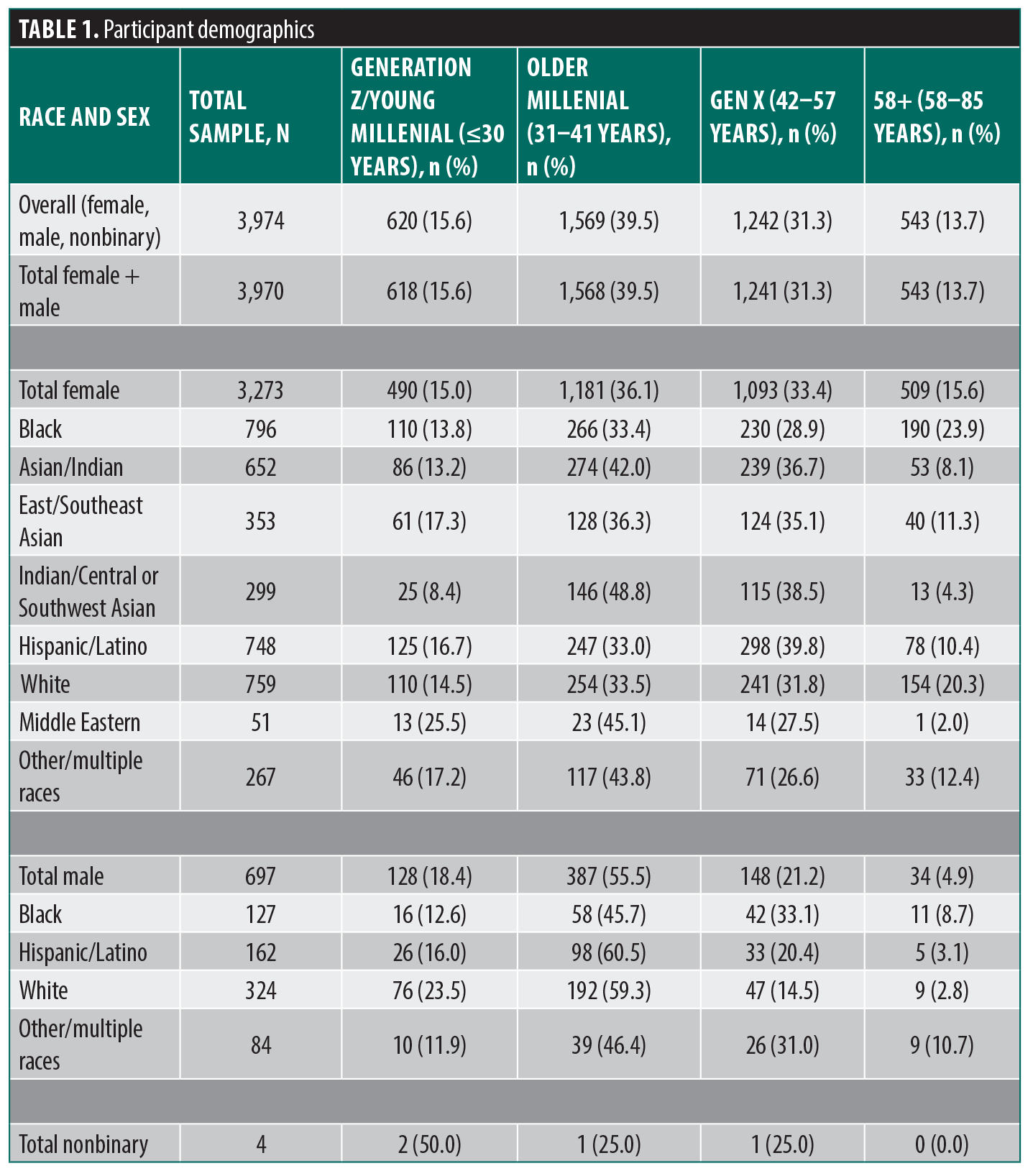
Patient demographics. A total of 3,974 participants met the inclusion criteria and completed the survey. Of these, the majority self-identified as female (82.4%; n=3,273), followed by male (17.5%; n=697) and nonbinary (0.1%; n=4; Table 1). Three respondents self-identified as transgender men and were included in the male analyses, while 4 identified as transgender women and were included in the female analyses. Due to the limited number of nonbinary participants, their data are only reflected in the demographic summaries. The age distribution of participants revealed 15.6% (n=620) were Generation Z/young millennial (aged ≤30 years), 39.5% (n=1,569) were older millennial (31–41 years), 31.2% (n=1,242) were Generation X (42–57 years), and 13.7% (n=543) were 58+ (58–85 years).
Participants’ racial and ethnic identification included 17.6% (n=700) Asian, comprising East/Southeast Asian (n=392) and Indian/Central or Southwest Asian (n=308); 23.2% (n=923) Black or African American; 22.9% (n=910) Hispanic/Latino; 27.3% (n=1,084) White; 1.3% (n=52) Middle Eastern; and 7.7% (n=305) multiracial/other (Table 1).
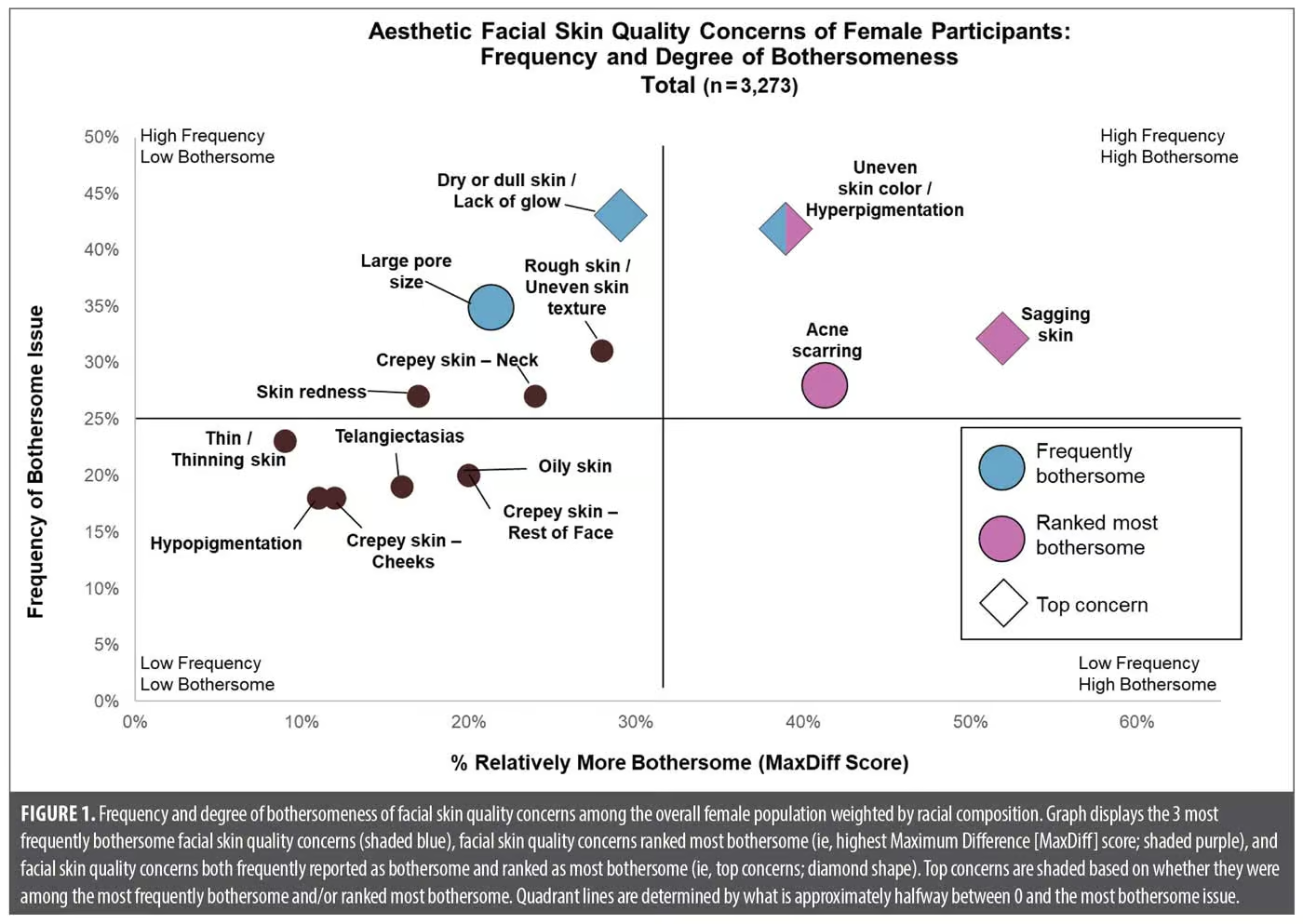
Top facial skin quality concerns of female participants. Frequency of bothersome facial skin quality concerns. Of the 14 facial skin quality concerns, the ones reported as bothersome most frequently by female participants overall were dry or dull skin/lack of glow, uneven skin color/hyperpigmentation, and large pore size. Dry or dull skin/lack of glow and uneven skin color/hyperpigmentation were consistently reported by female participants. There were noticeable subgroup differences in the frequency of large pore size based on race (Supplemental Table 1) and generational cohort (Supplemental Table 2).
Degree of bothersomeness of facial skin quality concerns. MaxDiff scaling was applied to rank the degree of bothersomeness of these facial skin quality characteristics. The facial skin quality characteristics ranked most bothersome by female participants overall were sagging skin (52%), acne scarring on the face (41%), and uneven skin color/hyperpigmentation (39%; Supplemental Table 3). These same characteristics were ranked most bothersome by female participants from every racial background and generation, with sagging skin ranked progressively more bothersome across each consecutive generation (Supplemental Table 4).
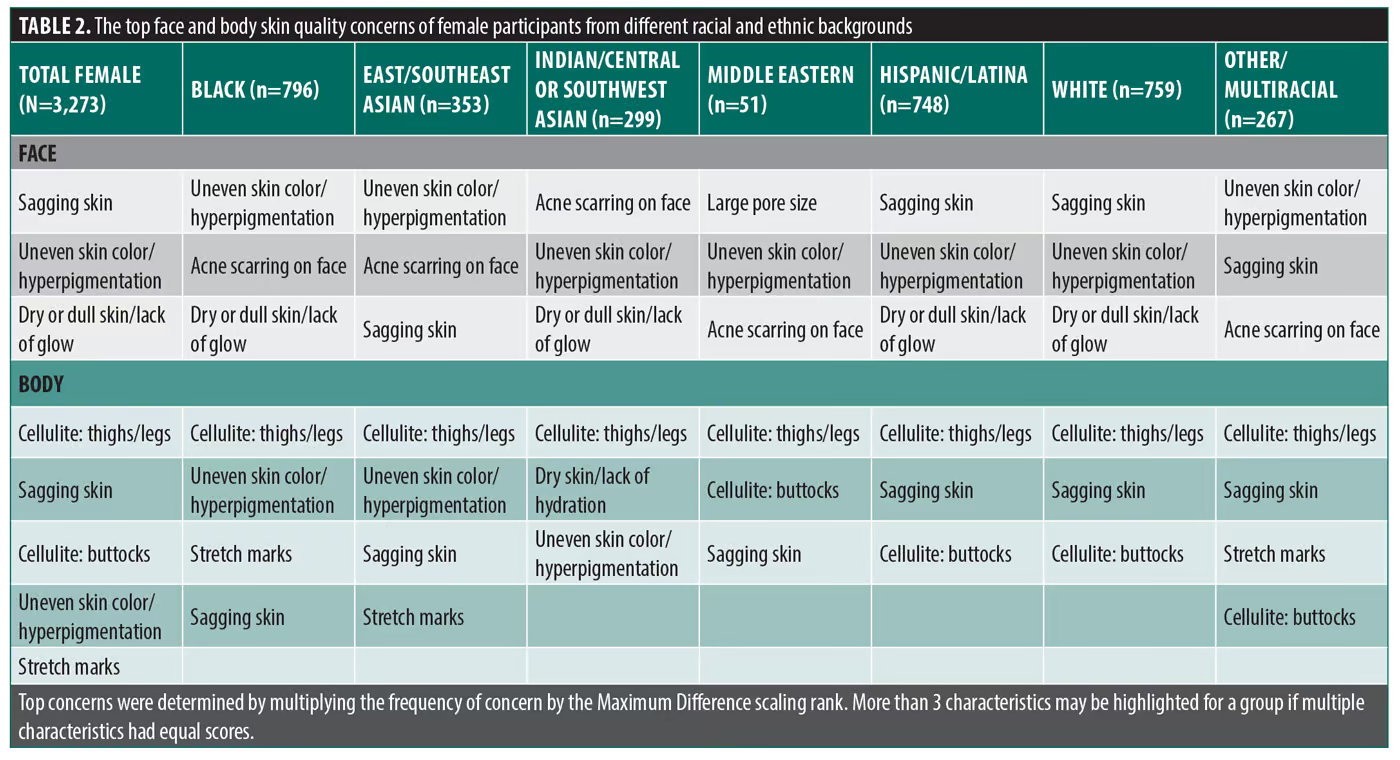
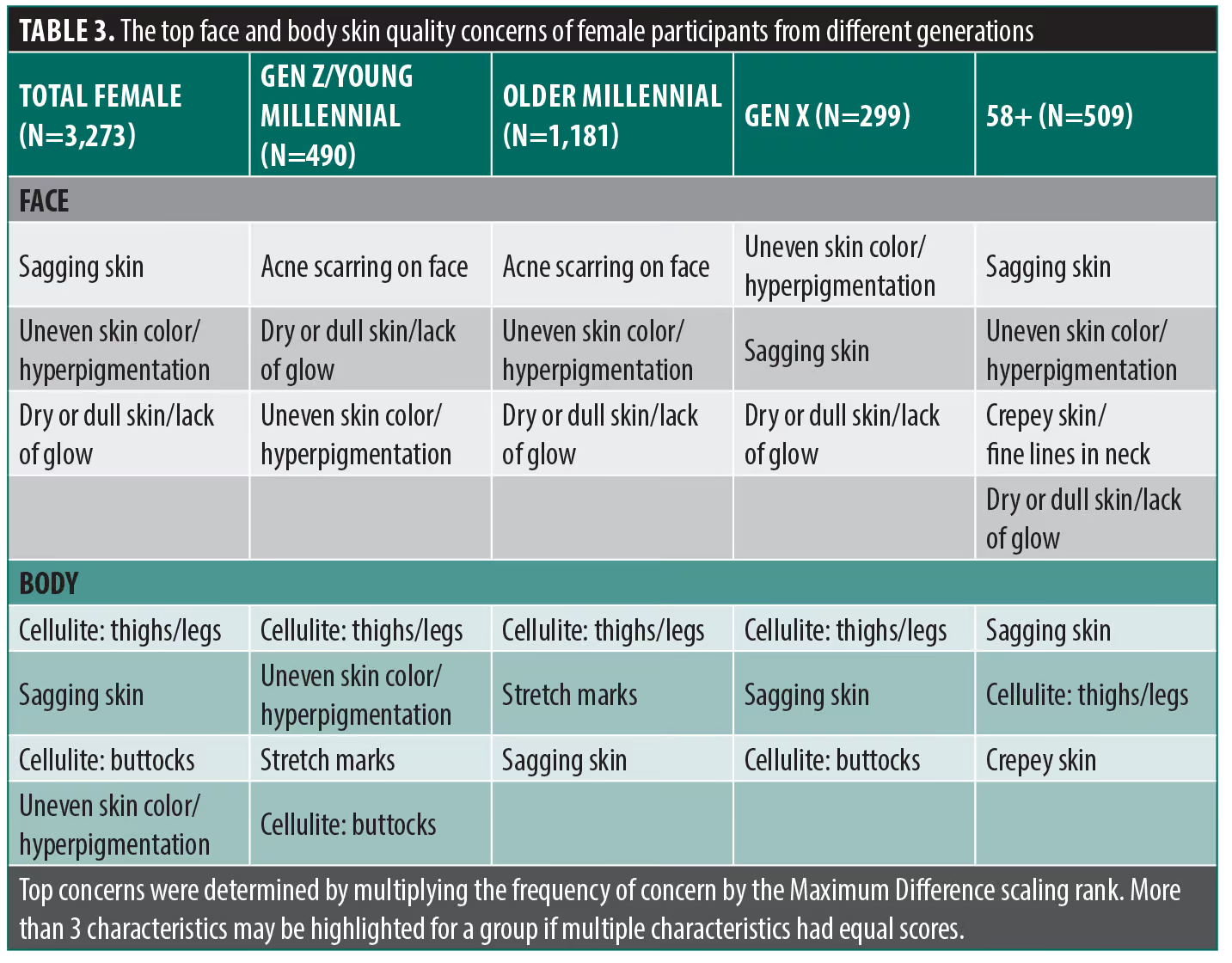
Top facial skin quality concerns (frequency of concern × degree of bothersomeness). Considered together, the top facial skin quality concerns (ie, skin quality characteristics most frequently reported and ranked as most bothersome) of female participants overall were sagging skin, uneven skin color/hyperpigmentation, and dry or dull skin/lack of glow (Figure 1). These skin quality characteristics remained the top concerns of female participants across both racial and generational demographics (Table 2, Table 3). Uneven skin color/hyperpigmentation was a top concern for every demographic group, but there was variation in the other top facial skin quality concerns. Black, East/Southeast Asian, Indian/Central or Southwest Asian, Middle Eastern, and multiracial/other female participants considered acne scarring on the face among their top concerns (Table 2), as did Generation Z/young millennial and older millennial female participants (Table 3). Middle Eastern female participants were the only group to consider large pore size a top concern (Table 2), and 58+ female participants were the only group to consider crepey skin/fine lines in the neck a top concern (Table 2).
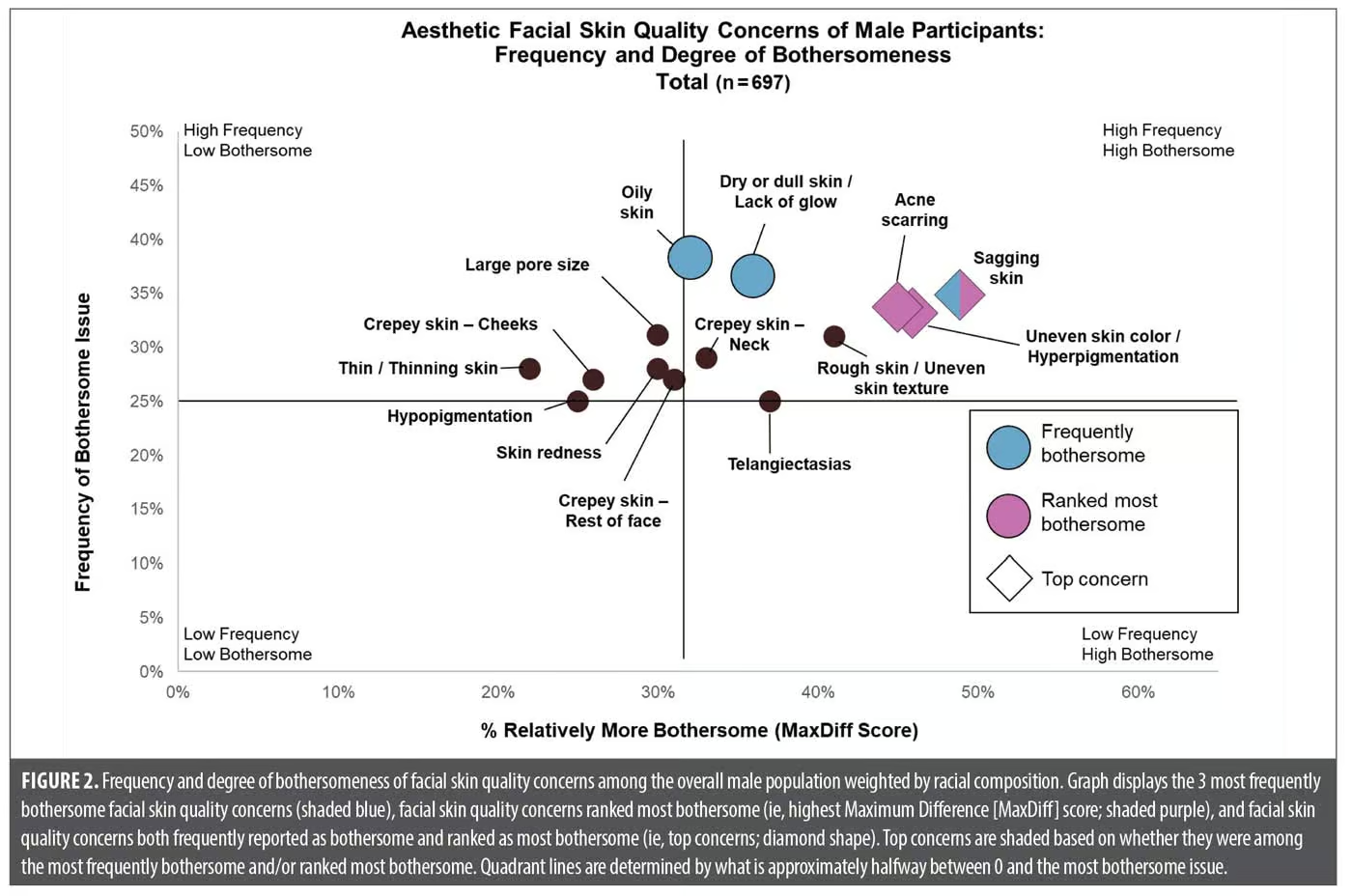
Top facial skin quality concerns of male participants. Frequency of bothersome facial skin quality concerns. Among male participants overall, oily skin, dry or dull skin/lack of glow, and sagging skin were the most frequent facial skin quality concerns (Supplemental Table 5). Oily skin was among the most frequently bothersome characteristics for male participants of every racial background. Sagging skin was a frequent concern of Hispanic/Latino and White male participants, while Black and multiracial/other male participants were more bothered by acne scarring on the face. Complete details on the facial skin quality concerns of male participants across racial groups are presented in Supplemental Table 5, and details on intergenerational differences between male participants are presented in Supplemental Table 6.
Degree of bothersomeness of facial skin quality concerns. When analyzed by MaxDiff scaling, the overall male population ranked sagging skin (49%), uneven skin color/hyperpigmentation (46%), and acne scarring on the face (45%) as the most bothersome facial skin quality characteristics, with similar results when weighted by generation. Sagging skin and acne scarring on the face were ranked among the most bothersome characteristics by male participants from every racial background, while acne scarring and uneven skin color/hyperpigmentation were among the most bothersome concerns across generations. Full details on differences across racial demographics are presented in Supplemental Table 7, and comparisons by generation are presented in Supplemental Table 8.
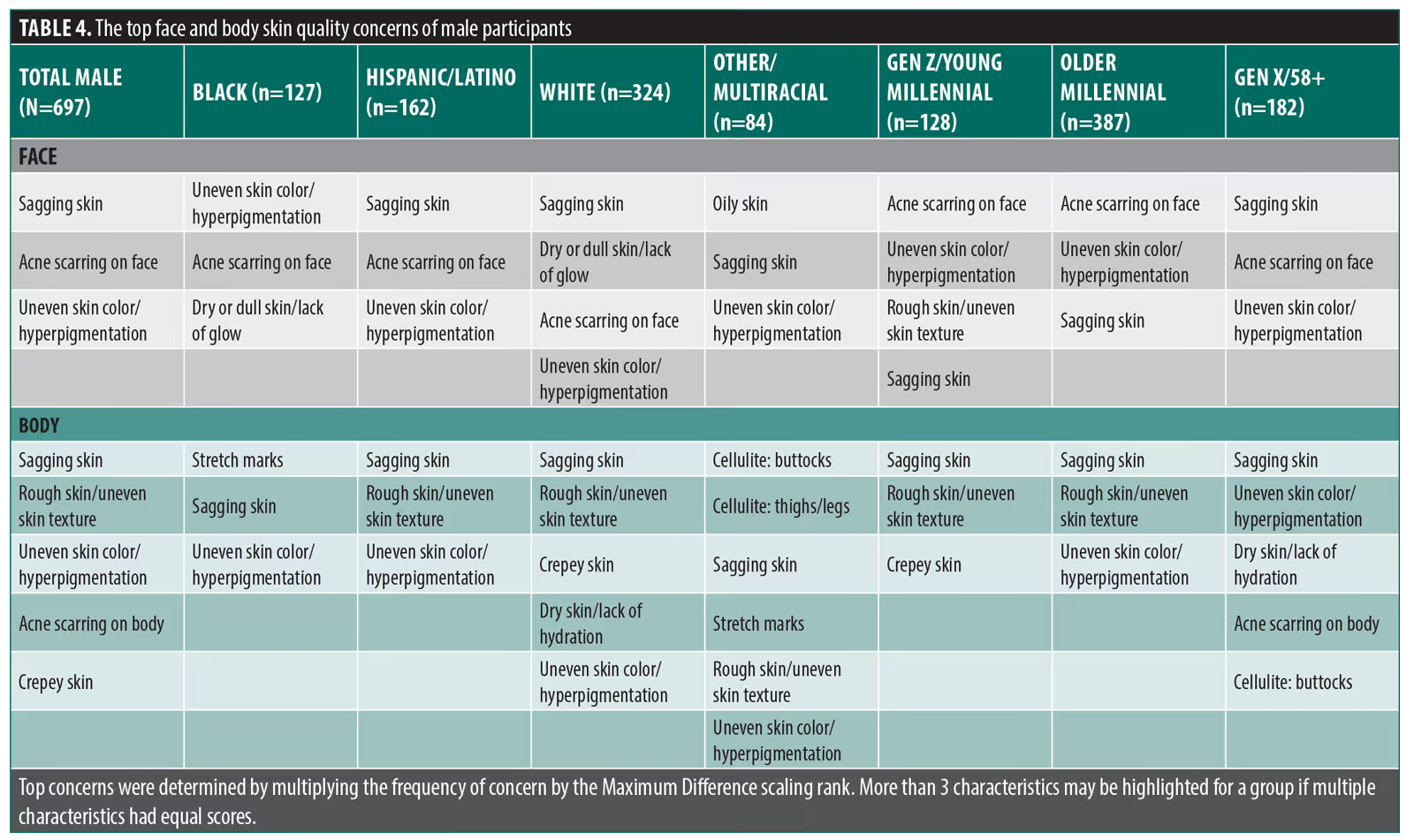
Top facial skin quality concerns (frequency of concern × degree of bothersomeness). Taken together, the top facial skin quality concerns of male participants overall were sagging skin, acne scarring on the face, and uneven skin color/hyperpigmentation (Figure 2). Acne scarring on the face was a universal top concern. Sagging skin was a top concern to every group except Black and Generation Z/young millennial male participants, who instead considered dry or dull skin/lack of glow and rough skin/uneven skin texture to be top concerns, respectively (Table 4). Uneven skin color/hyperpigmentation was also broadly concerning to male participants, except the multiracial/other race group, who considered oily skin a top concern.
Top body skin quality concerns of female participants. Frequency of bothersome body skin quality concerns. The most frequently bothersome body skin quality characteristics for female participants overall were cellulite on the thighs/legs, dry skin/lack of hydration, and cellulite on the buttocks. Cellulite on the thighs/legs was among the most frequently bothersome skin quality characteristics for female participants from every racial background. Dry skin/lack of hydration was among the most frequently bothersome characteristics for every group except Middle Eastern female participants, who were more frequently bothered by stretch marks, and Hispanic/Latina female participants, who were bothered by both dry skin/lack of hydration and stretch marks. Cellulite on the buttocks was less consistent across racial groups (see Supplemental Table 9). Similar patterns were evident for female participants across generations (Supplemental Table 10).
Degree of bothersomeness of body skin quality concerns. MaxDiff scaling revealed that cellulite on the thighs/legs (39%), sagging skin (37%), and uneven skin color/hyperpigmentation (23%) were ranked among the most bothersome body skin quality characteristics by female participants overall. Cellulite on the thighs/legs and sagging skin were consistently ranked among the most bothersome concerns, but there was greater variation in the degree of bothersomeness of uneven skin color/hyperpigmentation across racial groups (see Supplemental Table 11).
When analyzed across generations, female participants overall ranked sagging skin (39%), cellulite on the thighs/legs (38%), and uneven skin color/hyperpigmentation (23%) as the most bothersome body skin quality concerns. Complete details on the most bothersome skin quality characteristics by generation are presented in Supplemental Table 12.
Top body skin quality concerns (frequency of concern × degree of bothersomeness). Taken together, the top body skin quality concerns of female participants overall were cellulite in the thighs/legs, sagging skin, and, of equal concern, cellulite in the buttocks and uneven skin color/hyperpigmentation (Figure 3). Stretch marks were also a top concern of the overall female population weighted by race but not when weighted by generation (Table 3).
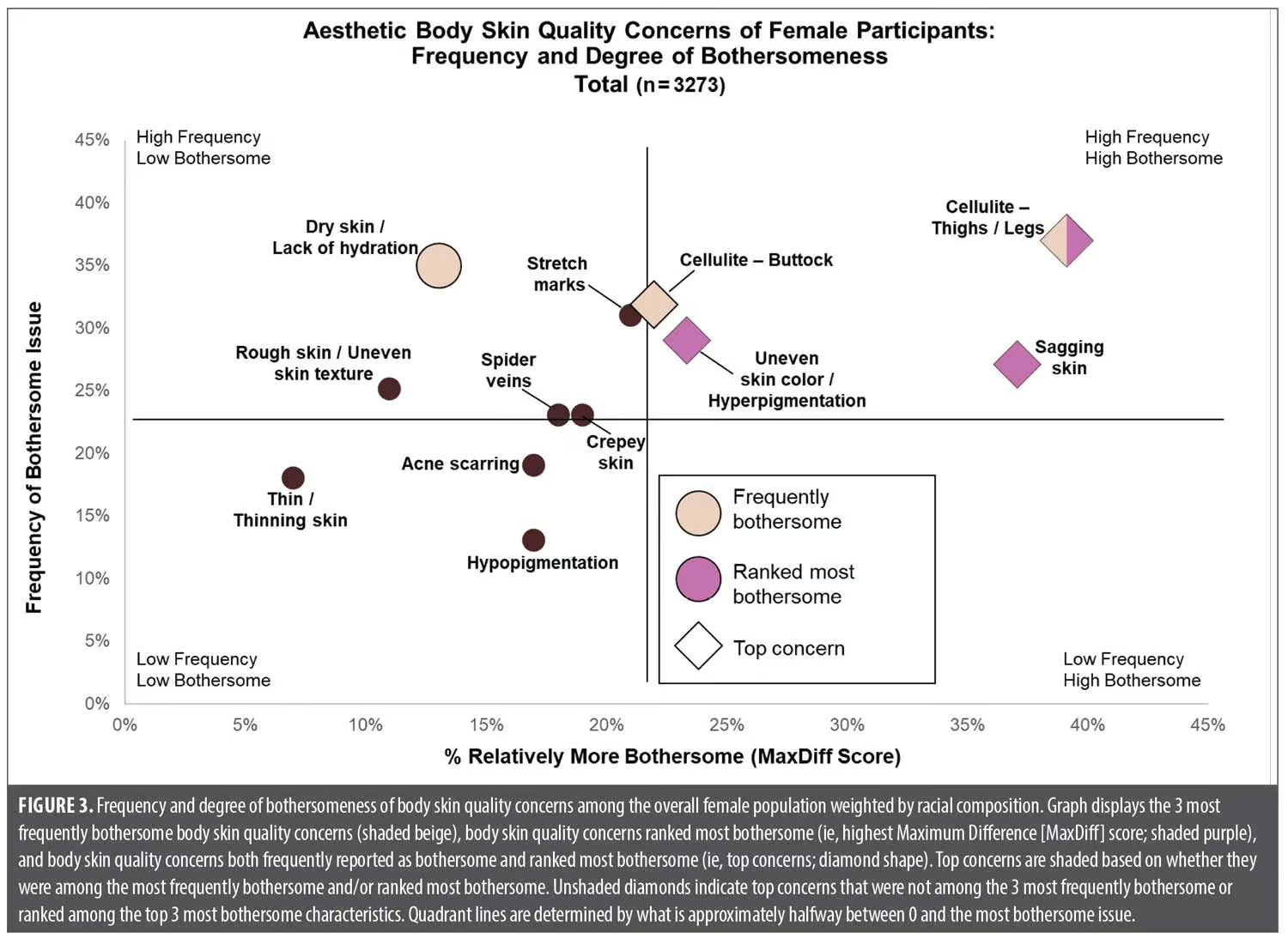
Cellulite in the thighs/legs was a top concern for every demographic group, and sagging skin was a top concern for every demographic group except Generation Z/young millennial (Table 3). Cellulite in the buttocks was more variable, representing a top concern of Middle Eastern, Hispanic/Latina, White, and multiracial/other female participants (Table 2) as well as Generation Z/young millennial and Generation X female participants (Table 3). Black, East/Southeast Asian, and Indian/Central or Southwest Asian female participants considered uneven skin color/hyperpigmentation and stretch marks as top concerns over cellulite on the buttocks, while multiracial/other and older millennial female participants were more concerned with stretch marks (Table 2). Female participants from the 58+ group were the only group to consider crepey skin a top concern (Table 3).
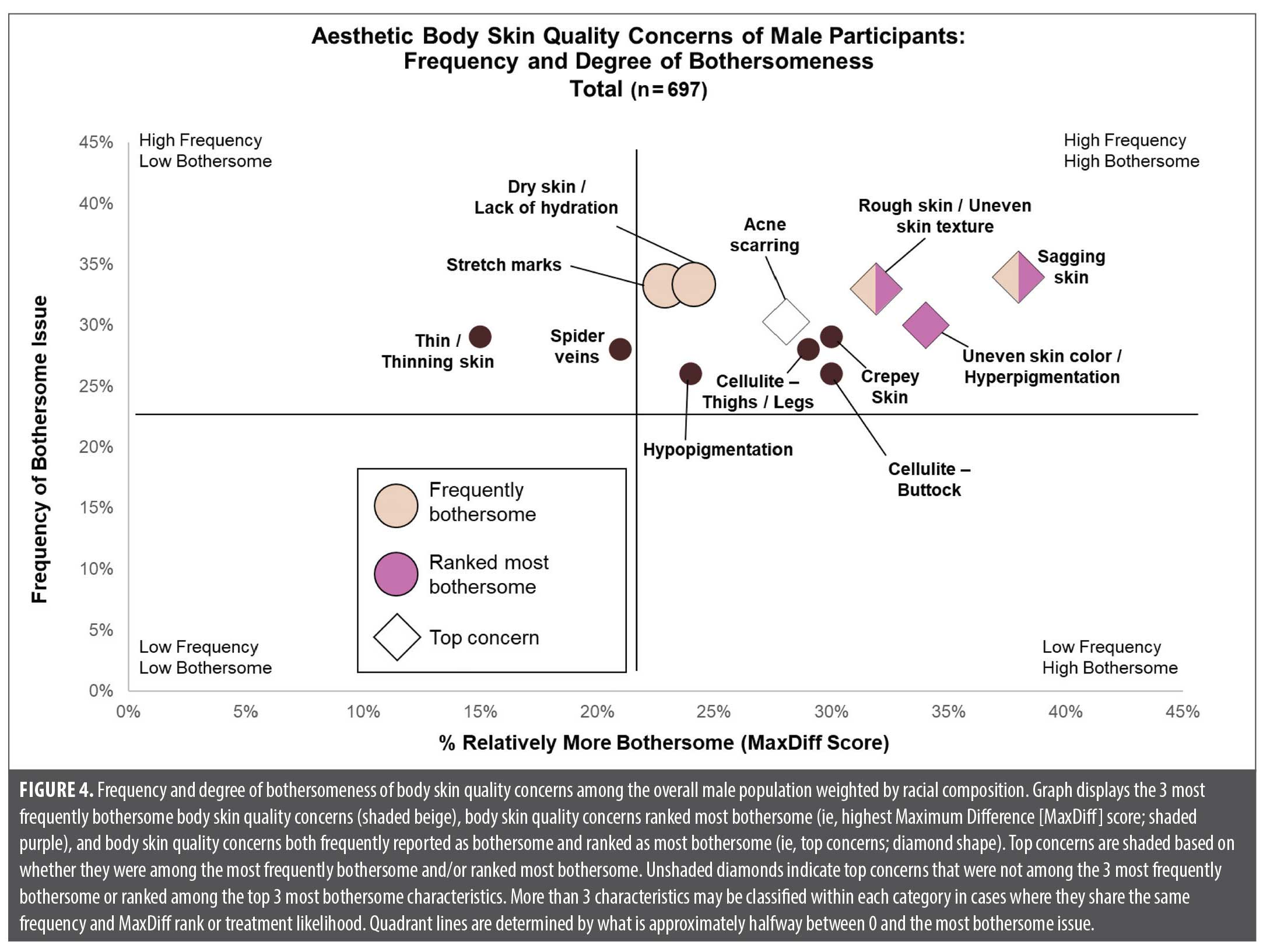
Top body skin quality concerns of male participants. Frequency of bothersome body skin quality concerns. For the overall male population, the most frequently bothersome body skin quality characteristics were sagging skin, dry skin/lack of hydration, stretch marks, and rough skin/uneven skin texture, with similar results when the overall population was weighted by generation. Sagging skin was a frequently bothersome characteristic for every racial group except Black male participants, who were more frequently bothered by acne scarring on the face, and multiracial/other race male participants, who were more frequently bothered by cellulite on the buttocks. Complete details on the most frequently bothersome body skin quality concerns of male participants across racial groups are presented in Supplemental Table 13, and details on intergenerational differences are presented in Supplemental Table 14.
Degree of bothersomeness of body skin quality concerns. MaxDiff scaling revealed that sagging skin (38%), uneven skin color/hyperpigmentation (34%), and rough skin/uneven skin texture (32%) were ranked the most bothersome body skin quality characteristics by male participants overall, with sagging skin ranked among the most bothersome characteristics by participants from every racial background (Supplemental Table 15).
When examined across generations, the body skin quality characteristics ranked most bothersome were sagging skin (36%), uneven skin color/hyperpigmentation (34%), and cellulite in the thighs (30%), with sagging skin ranked among the most bothersome characteristics by participants from every generation. Further details on the most bothersome body skin quality concerns by generation are presented in Supplemental Table 16.
Top body skin quality concerns (frequency of concern × degree of bothersomeness). The top body skin quality concerns of male participants were sagging skin, rough skin/uneven skin texture, and uneven skin color/hyperpigmentation (Figure 4). Sagging skin and uneven skin color/hyperpigmentation were top concerns for every demographic group. Rough skin/uneven skin texture was a top concern for every demographic group except for Black male participants, who instead considered stretch marks a top concern (Table 4). White male participants were equally as concerned by crepey skin and dry skin/lack of hydration as uneven skin color/hyperpigmentation, and multiracial/other race male participants were equally concerned by stretch marks and cellulite on the thighs/legs and buttocks as uneven skin color/hyperpigmentation.
Considered by generation, the top body skin quality concerns of male participants overall were sagging skin, uneven skin color/hyperpigmentation and, of equal concern, rough skin/uneven skin texture, acne scarring on the body, and crepey skin (Table 4). Sagging skin was a top concern across every generation. Generation Z/young millennial male participants considered crepey skin a top concern over uneven skin color/hyperpigmentation. Male participants from the combined Generation X/58+ group considered acne scarring on the body, cellulite on the buttocks, and dry skin/lack of hydration top concerns over rough skin/uneven skin texture.
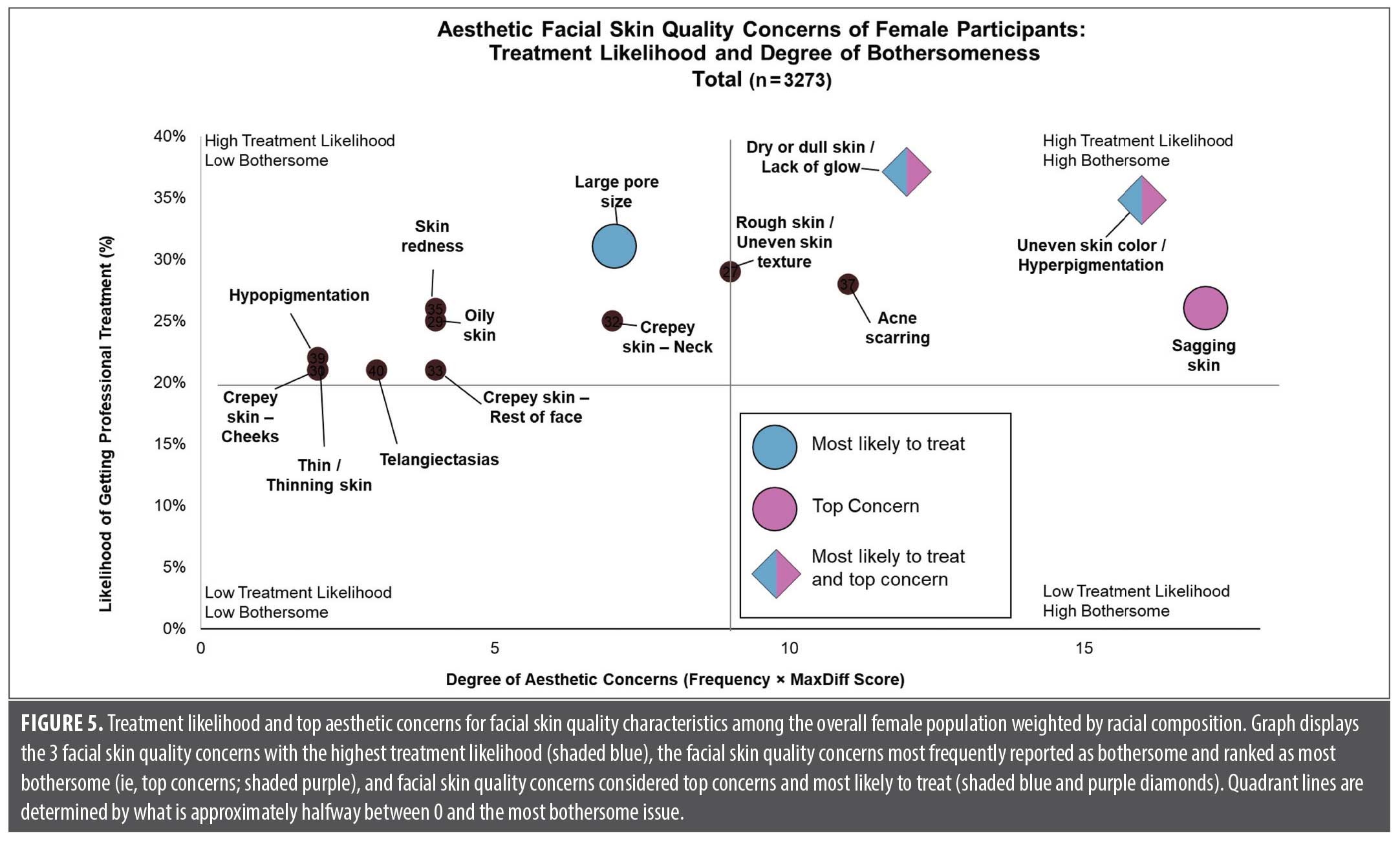
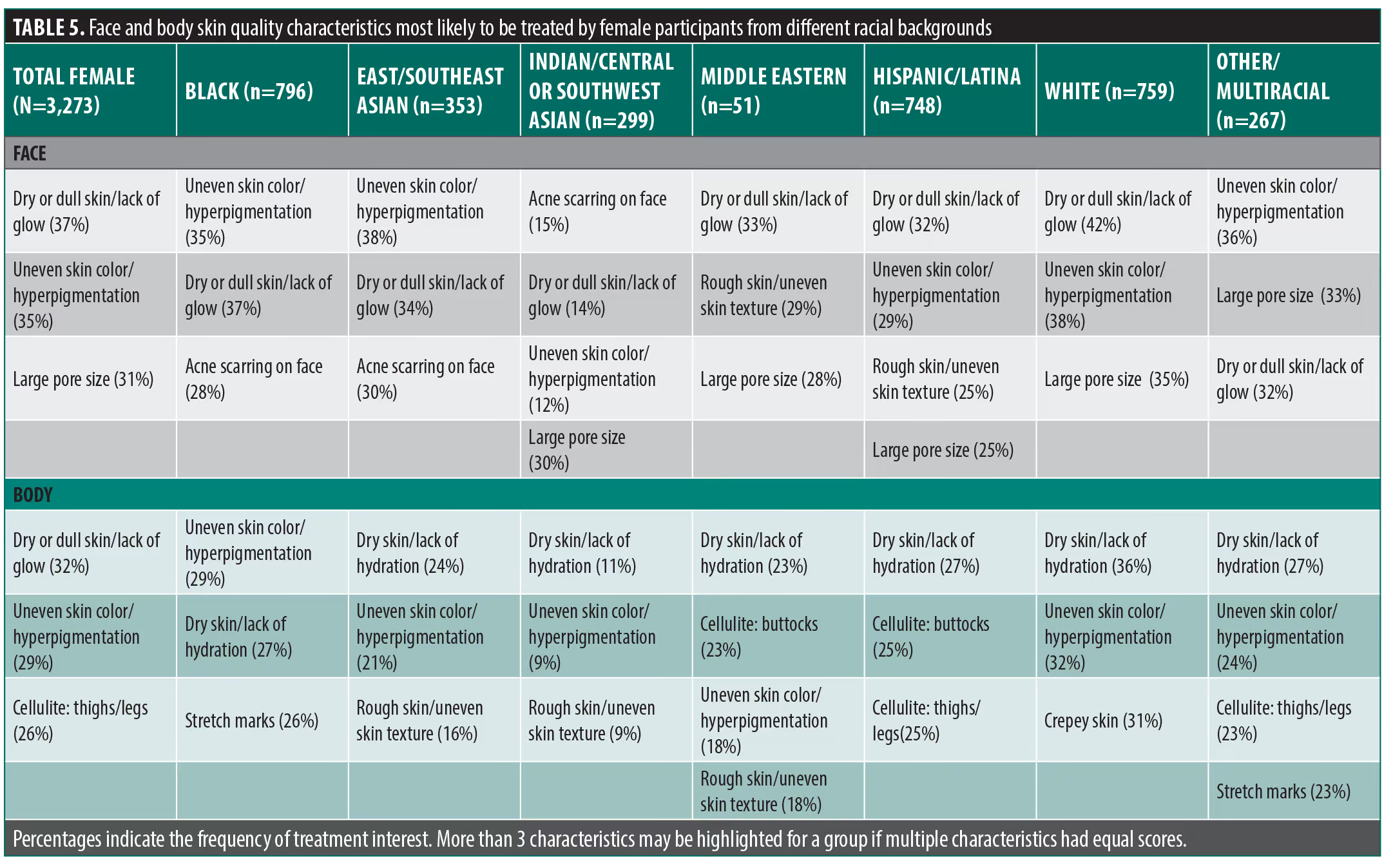
Skin quality characteristics most likely to be treated by female participants. Facial skin quality characteristics. When asked which facial skin quality characteristics they were most likely to have professionally treated within the next year, female participants overall expressed greatest interest in treating dry or dull skin/lack of hydration, uneven skin color/hyperpigmentation, and large pore size (Figure 5). Female participants from every racial background expressed high levels of interest in treating dry or dull skin/lack of hydration (Table 5). Interest in treating uneven skin color/hyperpigmentation was similarly high, but Middle Eastern female participants were more likely to treat rough skin/uneven skin texture. The likelihood of treating large pore size was more variable. Black and Indian/Central or Southwest Asian female participants were more likely to treat acne scarring on the face than large pore size, while East/Southeast Asian female participants were equally likely to treat both, and Hispanic/Latina female participants were equally likely to treat large pore size and rough skin/uneven skin texture.
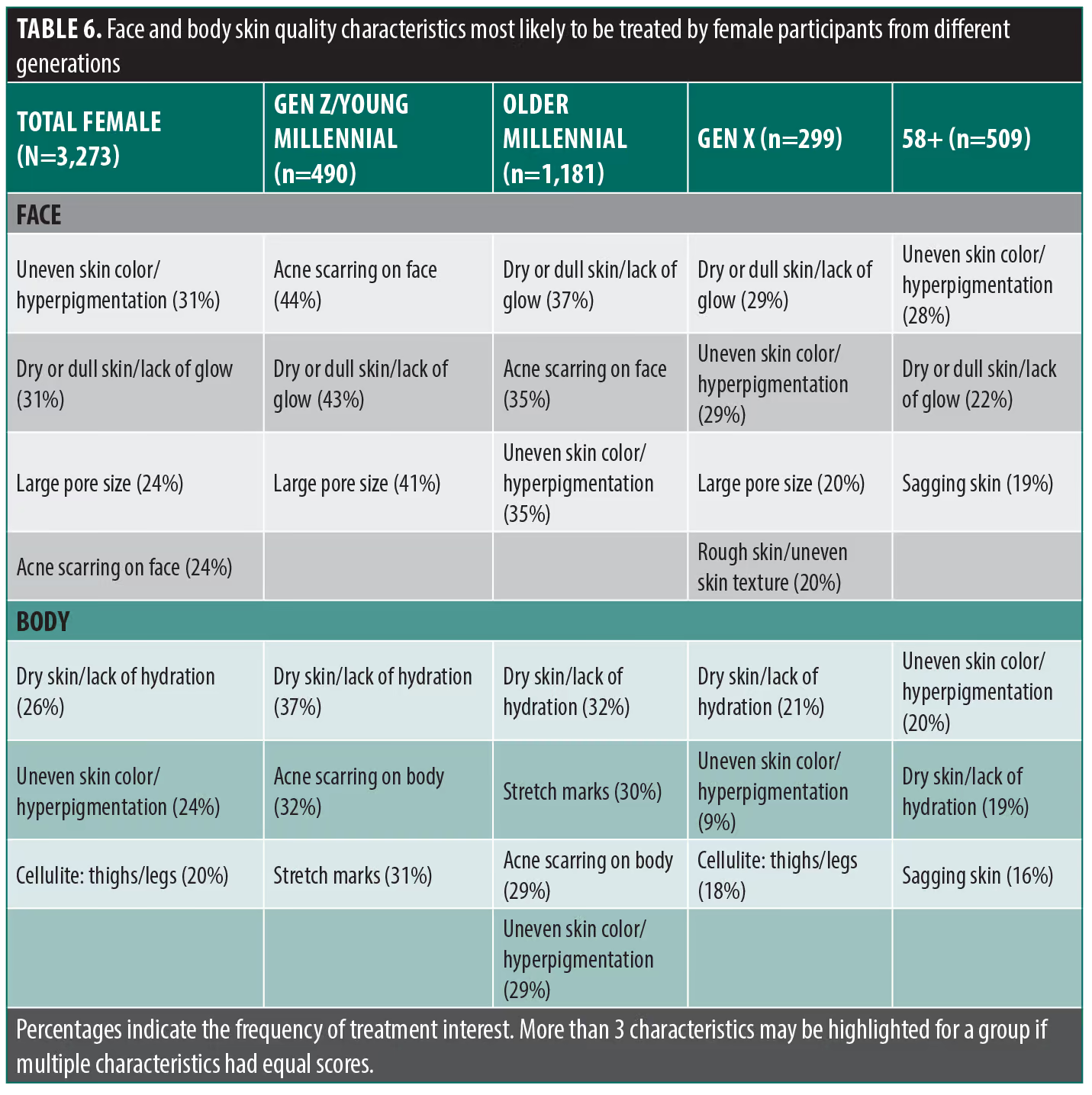
When weighted by generation, female participants overall had the same preferences for treating dry skin/lack of hydration, uneven skin color/hyperpigmentation, and large pore size (Table 6). Dry skin/lack of hydration was a universal treatment interest. Uneven skin color/hyperpigmentation was similarly popular, but Gen Z/young millennials were more likely to treat acne scarring on the face, and older millennials were equally as likely to treat acne scarring on the face, which they also prioritized over treating large pore size. Gen X female participants were equally likely to treat large pore size and rough skin/uneven skin texture, while the 58+ group was more likely to treat sagging skin than large pore size.
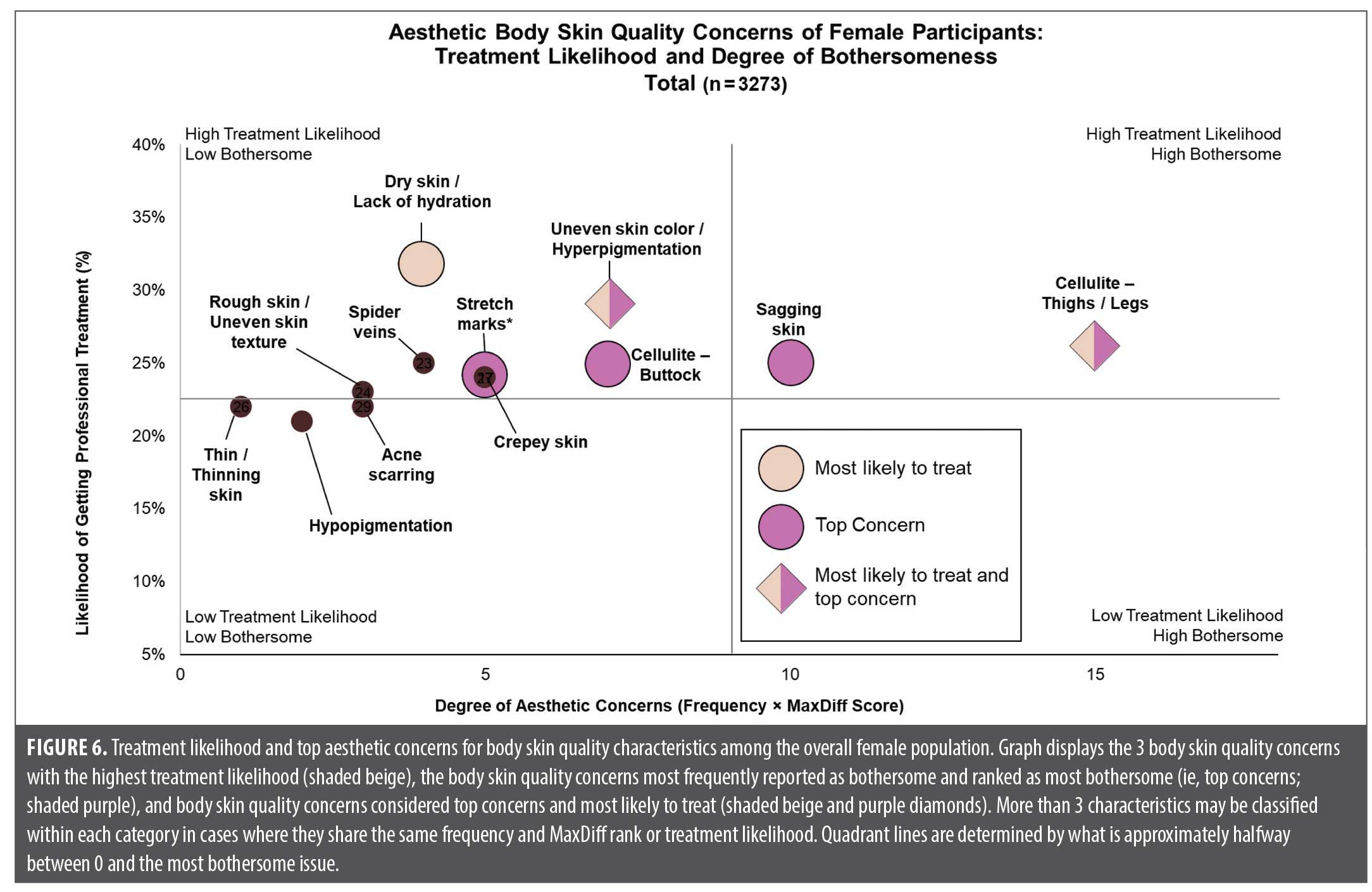
Body skin quality characteristics. When asked which body skin quality characteristics they were most likely to have professionally treated within the next year, female participants consistently expressed greatest overall interest in treating dry or dull skin/lack of hydration, uneven skin color/hyperpigmentation, and cellulite in the thighs/legs (Figure 6). Interest in treating dry or dull skin/lack of hydration was universal, and female participants from every racial background expressed interest in treating uneven skin color/hyperpigmentation except Hispanic/Latina female participants, who were more interested in treating cellulite on the buttocks (Table 5). Additionally, Indian/Central or Southwest Asian female participants were equally as likely to treat acne scarring on the body as uneven skin color/hyperpigmentation. Interest in treating cellulite on the thighs/legs was specific to Hispanic/Latino and multiracial/other race groups, while Black and Indian/Central or Southwest Asian female participants expressed greater interest in treating stretch marks, East/Southeast Asian and Middle Eastern participants expressed greater interest in treating rough skin/uneven skin texture; and White participants expressed greater interest in treating crepey skin.
When analyzed across generations, dry skin/lack of hydration, uneven skin color/hyperpigmentation, and cellulite in the thighs were again considered the most likely body skin quality characteristics to be professionally treated by female participants overall (Table 6). Dry or dull skin/lack of hydration was likely to be treated by every demographic group. Generation Z/young millennial participants were more likely to treat acne scarring on the body than uneven skin color/hyperpigmentation, and older millennial participants expressed equal likelihood of treating each. Female participants from these younger generations were also more likely to treat stretch marks than cellulite on the thighs/legs, and the 58+ group was more likely to treat sagging skin than cellulite in the thighs/legs.
Skin quality characteristics most likely to be treated by male participants. Facial skin quality characteristics. The facial skin quality characteristics that male participants were most likely to have professionally treated were oily skin, dry or dull skin/lack of hydration, and sagging skin (Figure 7). Interest in treating oily skin was universal. Hispanic/Latino male participants prioritized treating large pore size over dry or dull skin/lack of hydration and were equally likely to treat sagging skin and uneven skin color/hyperpigmentation (Table 7). Multiracial/other race participants were most likely to treat uneven skin color/hyperpigmentation and rough skin/uneven skin texture. White male participants were the only group to consider treating crepey skin/fine lines in the neck a top interest.
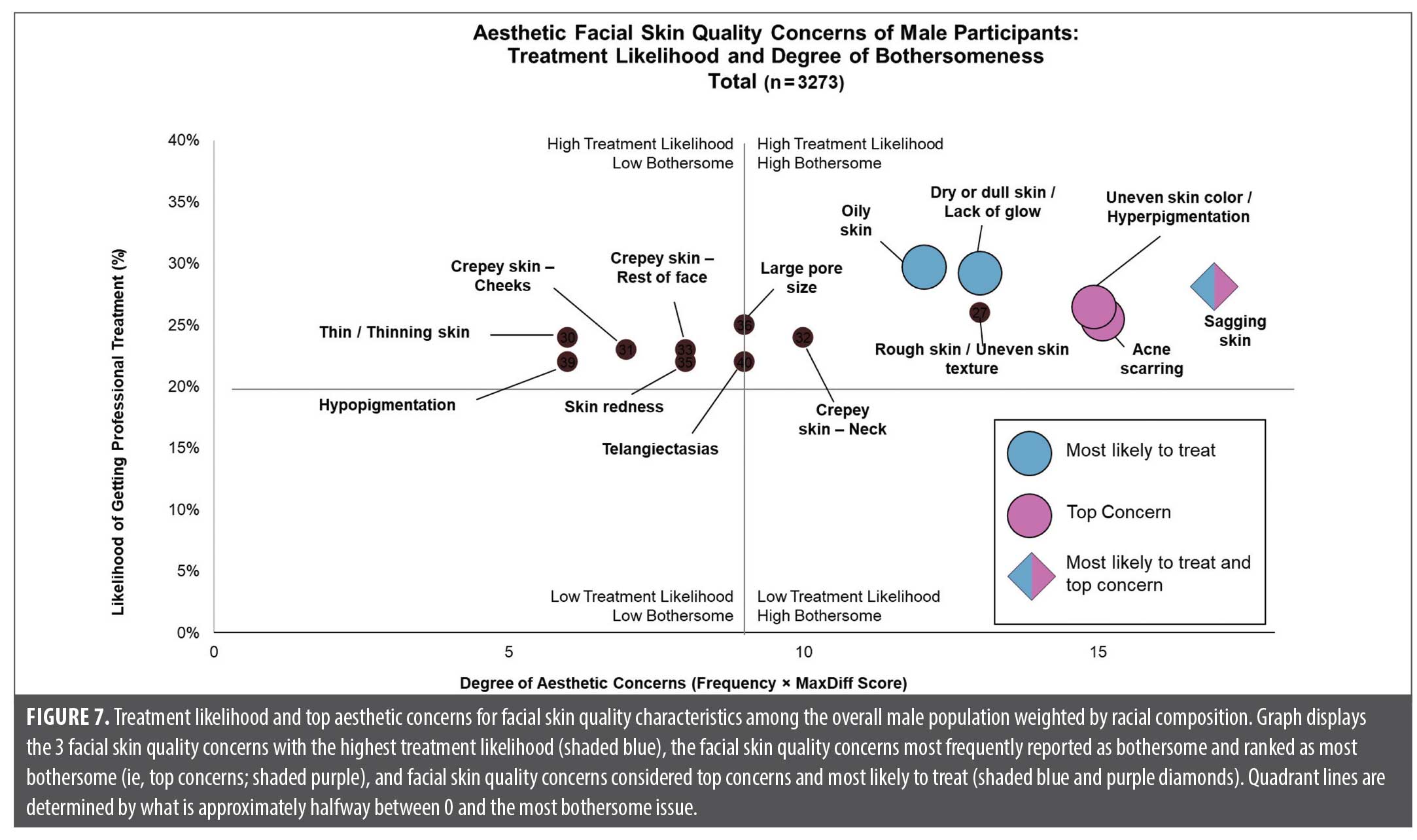
When weighted by generation, the overall population of male participants was again most likely to treat oily skin, dry or dull skin/lack of glow, and sagging skin, with oily skin remaining a universal treatment interest across generations (Table 7). Sagging skin was also prioritized for treatment by most male participants. The Generation Z/young millennial group expressed equal interest in treating sagging skin and thinning skin, crepey skin/fine lines on the face, and rough skin/uneven skin texture, and older millennials were equally likely to treat uneven skin color/hyperpigmentation and sagging skin. Additionally, Generation Z/young millennial male participants were the only group to express high interest in treating acne scarring on the face.
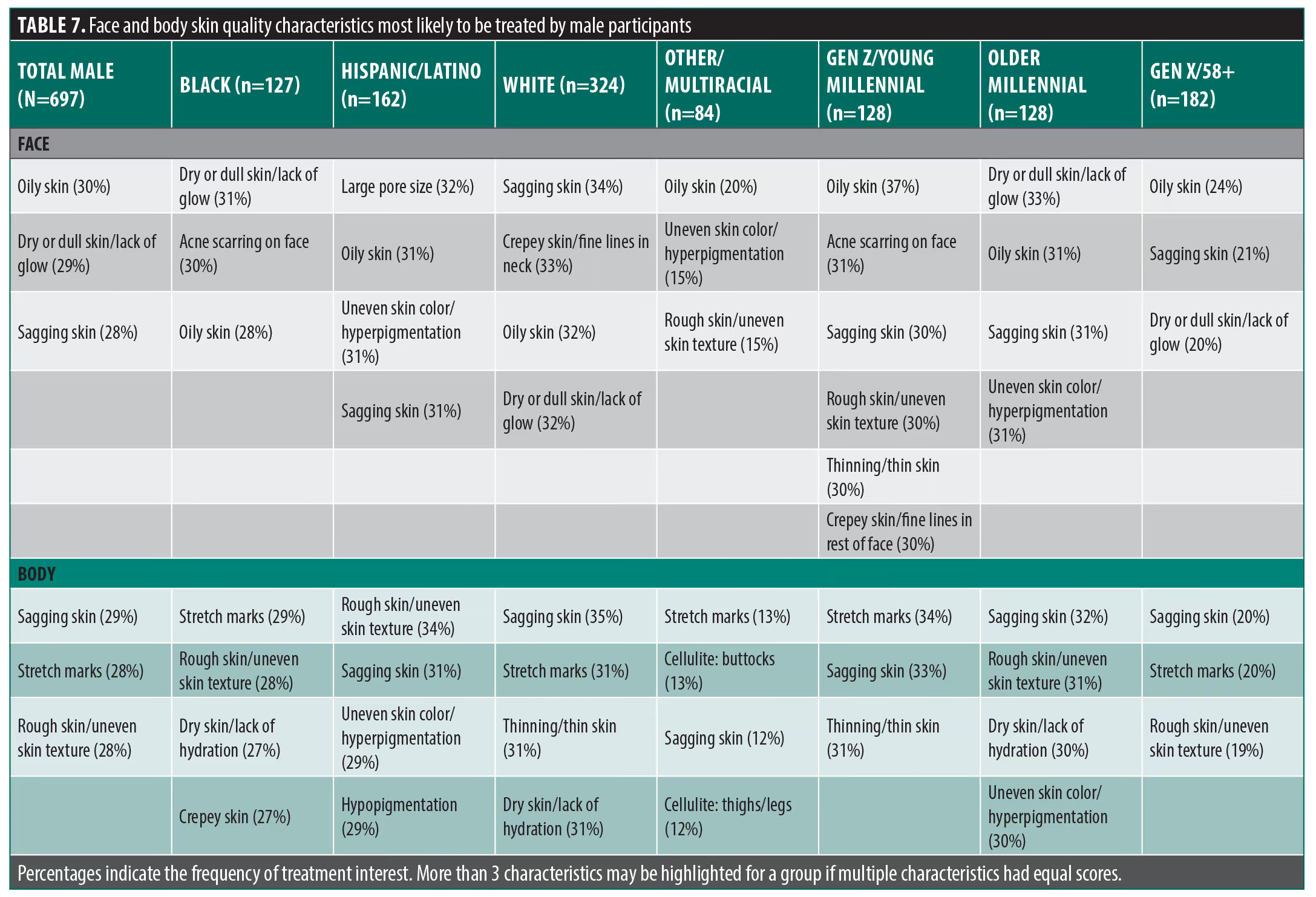
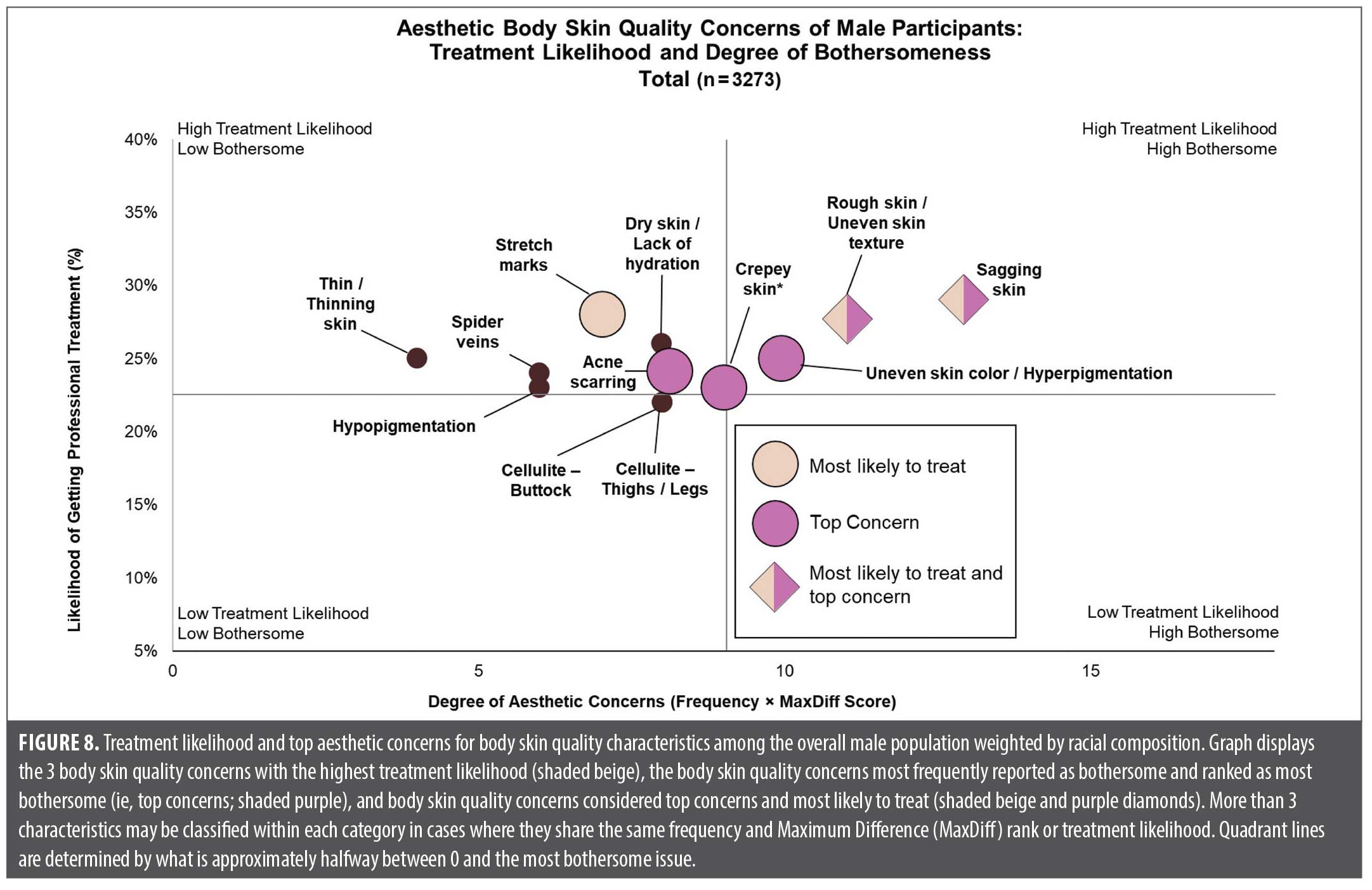
Body skin quality characteristics. The body skin quality characteristics most likely to be treated by male participants overall were sagging skin, stretch marks, and rough skin/uneven skin texture (Figure 8). Sagging skin was a treatment interest of male participants of every racial background except Black male participants, who expressed greater interest in treating dry skin/lack of hydration and crepey skin (Table 7). Most groups expressed strong interest in treating stretch marks, but Hispanic/Latino participants were more interested in treating uneven skin color/hyperpigmentation. Both Black and Hispanic/Latino male participants expressed interest in treating rough skin/uneven skin texture, but White male participants were most interested in treating dry skin/lack of hydration and thin/thinning skin, and multiracial/other male participants were more interested in treating cellulite on the buttocks and thighs/legs than rough skin/uneven skin texture.
Considered by generation, sagging skin was universally prioritized for treatment, while stretch marks were prioritized by every generation but older millennial, who were more interested in receiving treatment for dry skin/lack of hydration and uneven skin color/hyperpigmentation (Table 7). Additionally, Gen Z/young millennial male participants were the only group to express interest in treating thin/thinning skin.
Degree of interest in skin quality treatments.
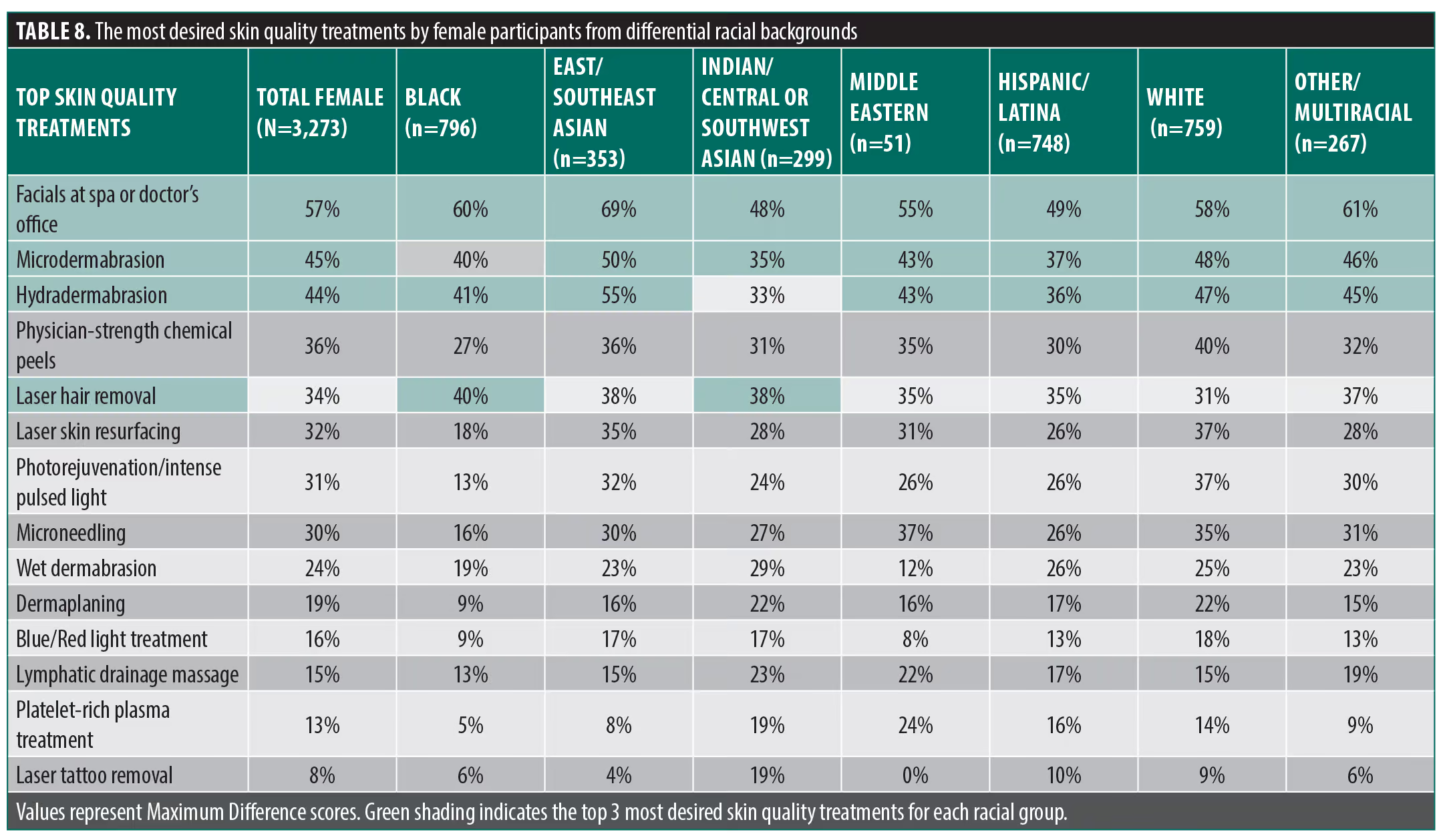
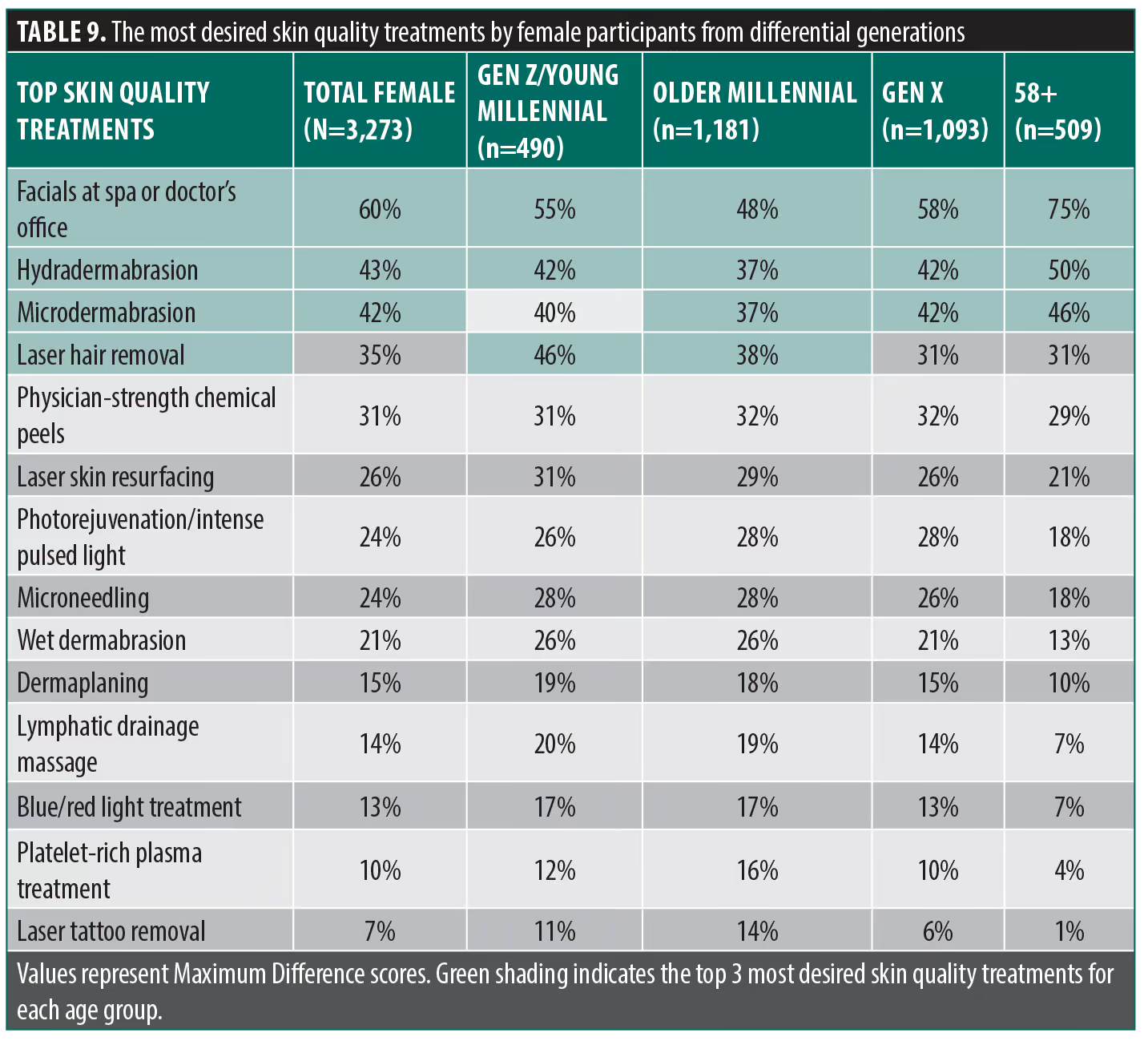
Female participants. To determine interest in specific skin quality treatments, MaxDiff scaling was applied to participant responses on their likelihood of receiving a professionally administered treatment from a list of 48 treatment options, of which 14 were related to skin quality (Table 8, Table 9). Female participants overall expressed greatest interest in receiving facials at a spa or doctor’s office (57%), microdermabrasion (45%), and hydradermabrasion (44%), with similar results when weighted by generational composition. These skin quality treatments were ranked among the most interesting by every demographic group with few exceptions. Black female participants ranked laser hair removal equally appealing as microdermabrasion (40% each), while Generation Z/young millennial ranked laser hair removal (46%) most appealing. Hydradermabrasion was ranked highly by every group except Indian/Central or Southwest Asian and older millennial female participants, who ranked laser hair removal (38% for both groups) as more appealing.
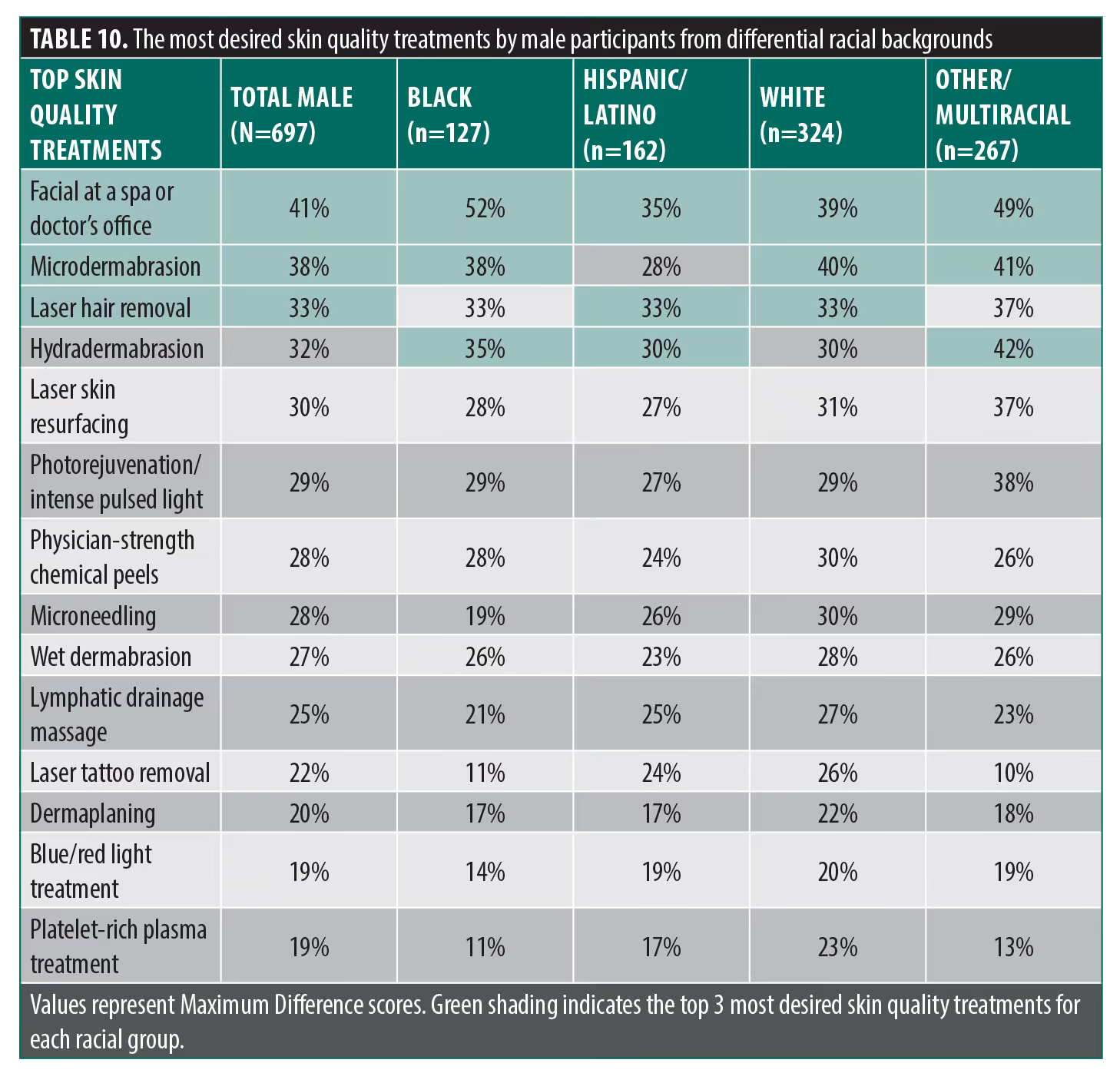
Male participants. In response to the same skin quality treatment options, male participants ranked facials at a spa or doctor’s office (41%), microdermabrasion (38%), and laser hair removal (33%) as the most appealing aesthetic treatments (Table 10, Table 11). Male participants from every racial background ranked facials at a spa or doctor’s office and microdermabrasion as top treatment interests, except Hispanic/Latino participants, who ranked hydradermabrasion (30%) more appealing than microdermabrasion. Interest in laser hair removal was specific to certain demographic groups, with Black (35%) and multiracial/other (42%) male participants ranking hydradermabrasion as more appealing.
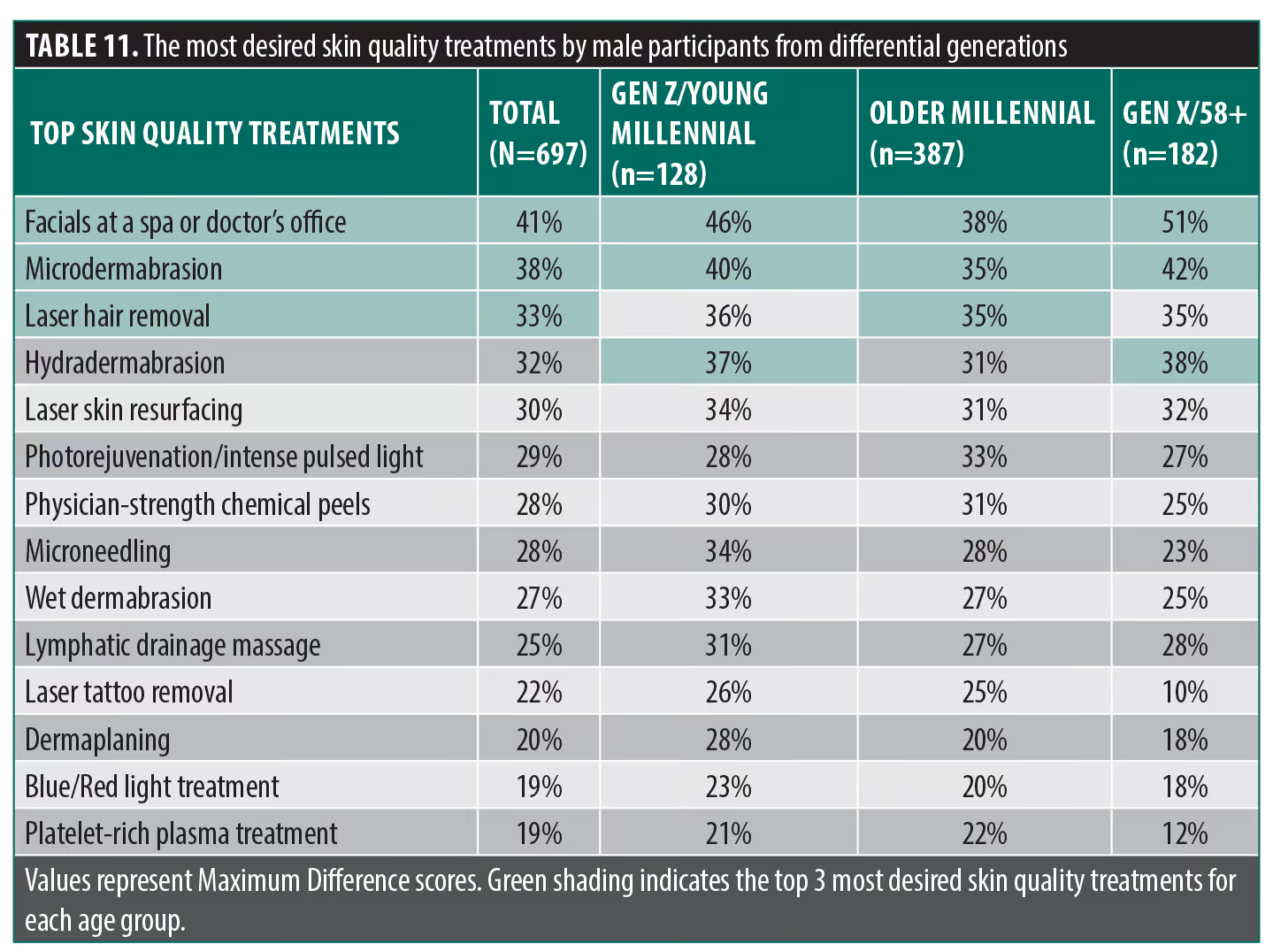
When analyzed by generation, male participants ranked facials at a spa or doctor’s office (47%), microdermabrasion (40%), laser hair removal (36%), and hydradermabrasion (36%) as the most appealing aesthetic treatments. Male participants from every generation ranked facials at a spa or doctor’s office and microdermabrasion among the top treatments of interest. Only older millennial male participants ranked laser hair removal among their treatments of greatest interest, with Generation Z/young millennial (37%) and the Generation X/58+ groups (38%) ranking hydradermabrasion as more appealing.
Discussion
This study presents a detailed evaluation of skin quality concerns and treatment interests among aesthetically inclined adults in the US, highlighting nuanced differences across sex, age, and racial and ethnic backgrounds. By leveraging MaxDiff scaling, we provide refined insight into the priorities that drive individuals’ pursuit of aesthetic treatments for both facial and body skin quality, expanding upon prior research that primarily focused on more limited populations or broad facial aesthetic concerns.
Consistent with prior reports, our results reaffirm the nearly universal desire for skin that appears healthy, glowing, and youthful.1–4,13 Dry or dull skin/lack of glow and uneven skin color/hyperpigmentation emerged as top facial skin quality concerns for female participants of nearly every demographic group, underscoring the widespread importance of skin vitality and tone. Sagging skin was also a top concern of female participants from most racial backgrounds, except Black, Indian/Central or Southwest Asian, and Middle Eastern. Instead, female participants from these racial backgrounds, along with younger female participants (Generation Z/young millennial and older millennial), were more concerned with acne scarring on the face, revealing both generational and racial background-specific priorities.
For male participants, sagging skin was a top facial skin quality concern across every demographic group except for Black men. Dry or dull skin/lack of glow and oily skin were also top concerns, but their relative bothersomeness varied with age and background. The universal concern with acne scarring across male demographics, alongside uneven skin color/hyperpigmentation and rough skin/uneven texture, suggests that optimal skin quality is broadly valued among men, albeit with unique nuances compared to women.14–16
For body skin quality concerns, female participants consistently named cellulite in the thighs/legs and sagging skin as top concerns, irrespective of age or racial background, while cellulite on the buttocks and uneven skin color/hyperpigmentation were top concerns of specific demographic groups. Additionally, stretch marks emerged as a top concern when the total female population was weighted by racial composition. Cellulite on the buttocks was a top concern for Middle Eastern, Hispanic/Latina, and White as well as Generation Z/young millennial and Generation X female participants, while stretch marks and uneven skin color/hyperpigmentation were prioritized by Black, Indian/Central or Southwest Asian, and older millennial female participants, echoing previously reported concerns particular to racial and ethnic backgrounds.8–10,17 For male participants, sagging skin, rough skin/uneven texture, and uneven skin color/hyperpigmentation were top body skin quality concerns across most demographic groups. Black and multiracial/other male participants uniquely considered stretch marks a top concern, and White male participants uniquely considered crepey skin on the body a top concern. Notably, sagging skin was a top concern among older adults, which may reflect both age-related and perceived skin aging trends.6,18
While top concerns provide insight into subjective priorities, our analysis also revealed notable patterns between participants’ top skin quality concerns and the concerns they prioritized for treatment. Across sex, race, and age, some facial skin quality concerns—such as dry or dull skin and uneven skin color/hyperpigmentation—mirrored the priorities for seeking aesthetic intervention. However, acne scarring and sagging skin, which were top facial skin quality concerns and highly bothersome to multiple demographic groups, were prioritized differently for treatment based on sex of the participants. Both male and female participants considered sagging skin a top facial skin quality concern, but only male participants indicated high likelihood of treating this characteristic within the next year. Similarly, acne scarring on the face, a top concern of male participants overall, was only prioritized for treatment by younger generations (Generation Z/young millennial), whereas female participants from multiple racial backgrounds and generations indicated a high likelihood of treating acne scarring within the next year. These findings highlight nuanced facial skin quality treatment interests of men and women that may be shaped by factors such as perceived efficacy, accessibility, social stigma, or personal risk-benefit assessments.6,19,20
Patterns in the relationship between body skin quality concerns and treatment interests also emerged. While female participants were consistently concerned with cellulite on the thighs/legs and buttocks, their interest in treating these concerns was comparably low. Similarly, sagging skin and uneven skin color/hyperpigmentation were concerning body skin quality issues to male and female participants alike; however, only male participants expressed a strong interest in treating sagging skin on the body, while female participants were more interested in treating uneven skin color/hyperpigmentation. This disconnect between reported concern and treatment interest highlights the complexity of aesthetic decision-making, suggesting that high subjective bother does not always translate to actionable treatment desire or that there may not be perceived solutions to target those concerns. For clinicians, bridging the gap between reported concerns and treatment priorities may require a deeper understanding of the underlying drivers, barriers, and expectations unique to each individual and demographic group. By incorporating these nuanced insights into practice, clinicians can better anticipate patient motivations and hesitations, enabling more precise and effective guidance during consultations.
Skin quality treatments such as facials at a spa or doctor’s office, microdermabrasion, hydradermabrasion, and laser hair removal had near-universal appeal among both female and male participants. These findings emphasize the enduring popularity of foundational, minimally invasive skin treatments and reflect the multimodal approach advocated in contemporary skin quality frameworks.1,2 While some variation exists (eg, the higher preference for laser hair removal among Black and younger participants), the overall consistency in treatment interests underscores the broad recognition of skin quality in aesthetic self-care and clinical practice. Additionally, the greater interest in facials among female participants compared to male participants parallels previously established gender trends in both skincare behavior and aesthetic treatment.16
A few limitations should be noted. Laser hair removal was noted as one of the most desired aesthetic skin quality treatments, but unwanted body hair was not included among skin quality concerns. We previously reported that unwanted hair on the face was a frequent concern of female participants overall, while unwanted body hair was a top concern of Generation Z/young millennial female participants.11 Including unwanted facial and body hair as options for skin quality concerns may have changed the outcomes of some results reported here. Cellulite was also reported as a frequent body skin quality concern of multiracial/other male participants, which may represent a limitation in patient understanding, since cellulite rarely occurs in healthy men.21 While the survey collected data from almost 4,000 individuals, some male demographic groups had relatively few participants. Increasing the sample size of specific male demographics (eg, Asian; Generation Z/young millennial) could provide further granularity to the skin quality characteristics and treatment interests of a broader range of men. As described previously,11 the low number of nonbinary and transgender participants, who may have nuanced skin quality concerns and interests, also restricts generalizability to those specific demographic groups.22 Additionally, it is possible that certain skin quality concerns or treatment interests were not captured in this survey or that individual interpretations of each skin quality attribute may have varied across participants.
Conclusion
The results of this study build upon prior research to provide a holistic view of aesthetic facial and body concerns and interests and add critical context to the evolving understanding of skin quality in aesthetic medicine. By elucidating the top concerns and treatment interests related to facial and body skin quality among diverse US adults and highlighting the influence of sex, race and ethnicity, and age, these findings offer actionable insights for personalized, patient-centric care. Enhanced awareness of these nuances can facilitate more effective consultation, treatment planning and, ultimately, improved patient satisfaction and outcomes in clinical aesthetic practice.
Supplemental Materials
Acknowledgments
The authors would like to acknowledge the supplement cosponsor Research Execute Learn LLC (Randy Long and Drew Minko) for their assistance with the survey design, distribution, collection of data, and analysis of the results. Medical writing support was provided to the authors by Graham Kaplan, PhD, of AbbVie Inc., and funded by AbbVie Inc.
Disclosures
Dr. Sadeghpour is a consultant for AbbVie Inc. Dr. Burgess is a principal investigator for Allergan Aesthetics, an AbbVie company, and Merz. Dr. Alexis has received grants or research funding from AbbVie, Almirall, Amgen, Arcutis, Castle Biosciences, Caudalie, Dermavant, Galderma, Genentech, Incyte, LEO Pharma, and Takeda; served on advisory boards or as a consultant for AbbVie, Almirall, Alphyn, Alumis, Amgen, Apogee BioPharm, Arcutis, BauschHealth, Beiersdorf Inc., Boehringer Ingelheim, Botanix Pharmaceuticals, Bristol Myers Squibb, Canfield Scientific, Castle Biosciences, Dermavant, Dermsquared, Galderma, Genentech, HairDays, Incyte, Janssen Scientific Affairs, Johnson & Johnson, LEO Pharma, Lilly, L’Oréal, Novartis, Oruka Therapeutics, Pfizer, RBC Consultants, Regeneron, Sanofi, Sanofi Genzyme, Sanofi/Regeneron, Symrise, UCB, and VeraDermics Inc.; served as a speaker for Aerolase, Johnson & Johnson, L’Oréal, Sanofi/Regeneron, and Scientis; received royalties from Elsevier, Springer, UpToDate, Inc. (Wolters Kluwer Health), and Wiley-Blackwell; and received equipment from Aerolase. Dr. Munavalli is an investigator for Allergan Aesthetics, an AbbVie company. Drs. Avanesian, Karic, Sondergaard, Ashourian, and Sangha are employees of AbbVie Inc. and may own company stock or options. The remaining authors have no relevant conflicts of interest.
References
- Goldie K, Kerscher M, Fabi SG, et al. Skin quality – a holistic 360° view: consensus results. Clin Cosmet Investig Dermatol. 2021;14:643–654.
- Humphrey S, Brown SM, Cross SJ, Mehta R. Defining skin quality: clinical relevance, terminology, and assessment. Dermatol Surg. 2021;47(7):974–981.
- Humphrey S, Jones D, Yong A, et al. Establishing a vocabulary for skin quality: working toward consensus skin attribute definitions from the patient and physician perspective. Dermatol Surg. 2026;52(7):678–684.
- Fink B, Grammer K, Thornhill R. Human (homo sapiens) facial attractiveness in relation to skin texture and color. J Comp Psychol. 2001;115(1):92–99.
- Carruthers J, Burgess C, Day D, et al. Consensus recommendations for combined aesthetic interventions in the face using botulinum toxin, fillers, and energy-based devices. Dermatol Surg. 2016;42(5):586–597.
- Fabi S, Alexiades M, Chatrath V, et al. Facial aesthetic priorities and concerns: a physician and patient perception global survey. Aesthetic Surg J. 2021;42(4):NP218–NP229.
- Martschin C, Bahhady R, Li J, et al. Development and validation of a novel holistic skin quality assessment scale. J Cosmet Dermatol. 2025;24(1):e16615.
- Alexis A, Boyd C, Callender V, et al. Understanding the female African American facial aesthetic patient. J Drugs Dermatol. 2019;18(9):858–866.
- Fabi S, Montes JR, Aguilera SB, et al. Understanding the female Hispanic and Latino American facial aesthetic patient. J Drugs Dermatol. 2019;18(7):623–632.
- Chiu A, Mariwalla K, Hui-Austin A, et al. Understanding the female Asian American facial aesthetic patient. J Drugs Dermatol. 2019;18(7):633–641.
- Zeidler K, Chiu A, Sadeghpour M, et al. Demographic survey of aesthetic interests & concerns (MOSAIC): US survey study of facial and body aesthetic concerns and treatment interests across diverse populations, methodology and results for female participants by age. J Clin Aesthet Dermatol. 2026;19(8 Suppl 2):5–16.
- Donnelly F. US Census data: concepts and applications for supporting research. Libr Technol Rep. 2022;58(4):5–37.
- Goodman GJ, Armour K, Ong D, et al. An absence of imperfections: a proposed framework for defining, assessing, and achieving skin glow. J Cosmet Dermatol. 2024;23(1):161–171.
- Handler MZ, Goldberg DJ. Cosmetic concerns among men. Dermatol Clin. 2018;36(1):5–10.
- Yanes DA, Keaney TC. Refining male injectables in aesthetics. Clin Dermatol. 2022;40(3):256–258.
- Keaney TC, Anolik R, Braz A, et al. The male aesthetic patient: facial anatomy, concepts of attractiveness, and treatment patterns. J Drugs Dermatol. 2018;17(1):19–28.
- Alexis AF, Grimes P, Boyd C, et al. Racial and ethnic differences in self-assessed facial aging in women: results from a multinational study. Dermatol Surg. 2019;45(12):1635–1648.
- Fabi S, McDaniel D, Allenby J, et al. Improving body skin quality: evidence-based development of topical treatment and survey of current options. J Drugs Dermatol. 2022;21(6):653–658.
- Foppiani JA, Kim E, Weidman A, et al. Preferences and barriers of male patients seeking aesthetic procedures. Aesthetic Plast Surg. 2024;48(7):1465–1472.
- Pearlman RL, Wilkerson AH, Cobb EK, et al. Factors associated with likelihood to undergo cosmetic surgical procedures among young adults in the United States: a narrative review. Clin Cosmet Investig Dermatol. 2022;15:859–877.
- Gabriel A, Chan V, Caldarella M, et al. Cellulite: current understanding and treatment. Aesthetic Surg J Open Forum. 2023;5:ojad050.
- Cattelan L, Dayan S, Aguilera SB, et al. A review of aesthetic considerations for treating the transgender patient. Dermatol Surg. 2024;50(12S):S191–S200.
From the 2nd Annual RAPIDS Immuno-Dermatology Conference: From Approval to Adoption—Translating Innovation Into Clinical Practice