
J Clin Aesthet Dermatol. 2026;19(9):67–72.
Nicole Werpachowski, DO; Lyudmyla Susla, DO; Milana Stein, DO; and Karan Lal, DO, FAAD
Dr. Werpachowski is with Lenox Hill Hospital, Northwell Health, New York, New York. Dr. Susla is with HCA Orange Park Medical Center, Orange Park, Florida. Dr. Stein is with HCA Florida Westside Hospital, Plantation, Florida. Dr. Lal is with Affiliated Dermatology, Scottsdale, Arizona.
Abstract: BACKGROUND: Skin quality declines with intrinsic aging, environmental damage, and oxidative stress. Loss of skin firmness, a hallmark of aging, results from collagen degradation and fibroblast dysfunction, weakening the extracellular matrix (ECM). This leads to increased laxity and wrinkle formation, known as dermatoporosis. Creatine, a naturally occurring compound essential for cellular energy metabolism, has emerged as a potential agent for improving skin firmness. OBJECTIVE: To examine the effects of topical and oral creatine supplementation on skin firmness, focusing on cellular mechanisms and clinical evidence. METHODS: A literature search was conducted in March 2025 using PubMed, Google, and Google Scholar. Studies investigating creatine’s effects on the integumentary system were reviewed and summarized. RESULTS: While clinical studies on creatine’s effects on skin firmness are limited, in vivo and in vitro research suggest that topical creatine enhances skin elasticity and firmness while providing photoprotective benefits. These effects appear to be achieved with minimal risk when used at recommended doses. Although no direct studies on oral creatine’s impact on skin firmness were found, its systemic absorption and demonstrated benefits in other physiologic processes suggest a potential role in skin health. LIMITATIONS: While preliminary findings suggest dermatologic benefits of creatine, research is limited by a lack of studies isolating creatine’s effects, scarce in vivo data, and insufficient long-term safety assessments. CONCLUSION: Emerging evidence suggests that both oral and topical creatine may enhance skin firmness by supporting collagen metabolism and fibroblast function. However, further research is needed to establish clinical efficacy. Keywords: Creatine supplementation, topical creatine, oral creatine, collagen, metabolism, aging, safety
Introduction
Skin firmness plays a crucial role in dermatology and aesthetic medicine, often serving as a key indicator of overall skin health, aging, and youth. Mechanically, skin firmness refers to the skin’s elasticity and flexibility, emphasizing the degree to which it resists degradation and maintains structural integrity. This is influenced by the extracellular matrix (ECM), whereby key molecules, including collagen, elastin, and glycosaminoglycans, play a role in providing mechanical strength and elasticity.1,2 However, despite this dynamic composition, various factors, especially aging, can compromise the skin’s overall resilience.
Both intrinsic and extrinsic aging contribute to the decline of skin firmness by disrupting levels of key structural and adhesion proteins.2,3 Intrinsic aging, driven by genetic and metabolic factors, leads to a progressive breakdown of collagen and elastin fibers alongside a decline in fibroblast activity.4 Extrinsic factors such as UV radiation, pollution, and oxidative stress accelerate this process, further contributing to degradation, increased matrix metalloproteinase (MMP) activity, and impaired barrier function.3,5 This is why identifying interventions to improve skin firmness and counteract these degenerative changes remains a priority in dermatologic research and aesthetic treatments.
Creatine is essential for cellular energy metabolism, particularly within muscle tissues. Stored as phosphocreatine, it serves as a reserve for adenosine triphosphate (ATP) production.6 Creatine has been widely studied in exercise physiology for its benefits in enhancing muscle strength, endurance, and recovery.7 However, aging and oxidative stress also negatively impact the creatine system, disrupting the skin’s energy storage mechanisms.6 Emerging research highlights creatine’s potential in dermal health due to its protective antioxidant activity, anti-inflammatory effects, and role in mitochondrial function.8–10
Preliminary studies suggest that oral and topical creatine supplementation may support fibroblast function, enhance collagen synthesis, and mitigate oxidative stress—all integral to maintaining skin firmness.11 Given creatine’s biochemical properties and the skin’s significant energy demands for repair and maintenance, creatine supplementation offers a promising approach to counteracting age-related changes and enhancing dermal resilience. This literature review aims to evaluate the effects of topical and oral creatine supplementation on skin firmness, with a focus on the underlying pathophysiological mechanisms and existing preclinical and clinical studies. By consolidating the existing evidence, this review seeks to provide a clearer understanding of creatine’s dermatological potential.
Methods
An extensive literature search was conducted using PubMed, Google, and Google Scholar. All available articles studying creatine use in the integumentary system were compiled in March 2025. All 3 databases were adjusted with filters for language (English), but there was no limitation on publication date. Search terms included “creatine” AND “skin” AND (“oral” OR “topical” OR “firmness” OR “case” OR “trial” OR “safety” OR “adverse effect”). Titles and abstracts were then screened for relevance and examined for preclinical and clinical outcomes. Existing in vitro studies, clinical trials, retrospective chart reviews, case series, and individual case reports were included in the literature review. The findings were synthesized narratively, focusing on the mechanism of action, efficacy, and safety of oral and topical creatine in the context of skin firmness and health. Exclusion criteria included abstracts, clinical studies, interventional studies, review articles, and cases that did not address keywords or evaluate topical or oral creatine use in skin.
Results
Creatine and skin physiology. While creatine’s most well-documented role is in muscle function and energy production, it is also integral to skin cell metabolism.12,13 Like all cells, skin cells require substantial ATP to sustain various functions such as cell repair, collagen synthesis, and protection against environmental stressors, which are necessary for the maintenance of normal tissue function.13,14 The creatine kinase (CK) system plays a pivotal role in this process by converting creatine into phosphocreatine via the CK enzyme in the skin; it then uses this energy source to combat age-dependent energy deficiencies associated with visible signs of skin aging.15 Studies conducted by Lenz et al10 explored the reintroduction of creatine to skin cells in vivo and in vitro and demonstrated that creatine can be effectively absorbed by human keratinocytes to refuel these cells, reactivating the skin’s creatine system to allow for enhanced ATP availability and photoprotective processes. This has led to research aimed at elucidating the mechanisms through which topically applied creatine penetrates the skin to influence dermal cell function, particularly collagen synthesis. By counteracting energy deficits and supporting cellular energy, creatine may help skin cells withstand environmental damage.
UV radiation, an important extrinsic factor in skin aging, generates reactive oxygen species (ROS), which then activate MMPs to damage structural proteins such as collagen in the skin.16 In vitro studies have linked stress-induced skin aging with reduced mitochondrial energy supply and reduced CK activity in human epidermal cells.10 As highlighted above, creatine supplementation has been shown to conversely increase CK activity, enhance mitochondrial function, and protect against oxidative stress. This improvement in mitochondrial function reduces mutagenesis and UV-induced DNA damage.10,15 Furthermore, creatine may have protective benefits against UV-induced skin aging and cellular damage by improving energy supplies and reducing oxidative stress, demonstrating its broader role beyond muscle tissue. These findings suggest that creatine not only supports skin cell energy production but also functions as an antioxidant, reinforcing the skin’s defense against oxidative stress and age-related damage, thereby underscoring its potential as a therapeutic agent for skin health.
Another hallmark of aging skin is the progressive reduction in dermal papillae density, both in number and size, leading to reduced blood flow and decreased delivery of nutrients to repair the damage. An in vitro study by Blatt et al6 demonstrated that topical application of creatine for 4 weeks significantly increased dermal papillae density, improving capillary circulation and nutrient delivery, which can be regarded as a foundation for increased skin elasticity. This improvement supports fibroblast function, which is critical for collagen synthesis and overall skin firmness. Additionally, Mahajan et al11 found that creatine can protect fibroblasts themselves from stress-induced senescence. Furthermore, in vivo and in vitro studies have shown that topical creatine can efficiently penetrate the dermis and reach fibroblasts, stimulating collagen production.14,17 Cumulatively, these findings support the potential protective and anti-aging effects of creatine for skin health.
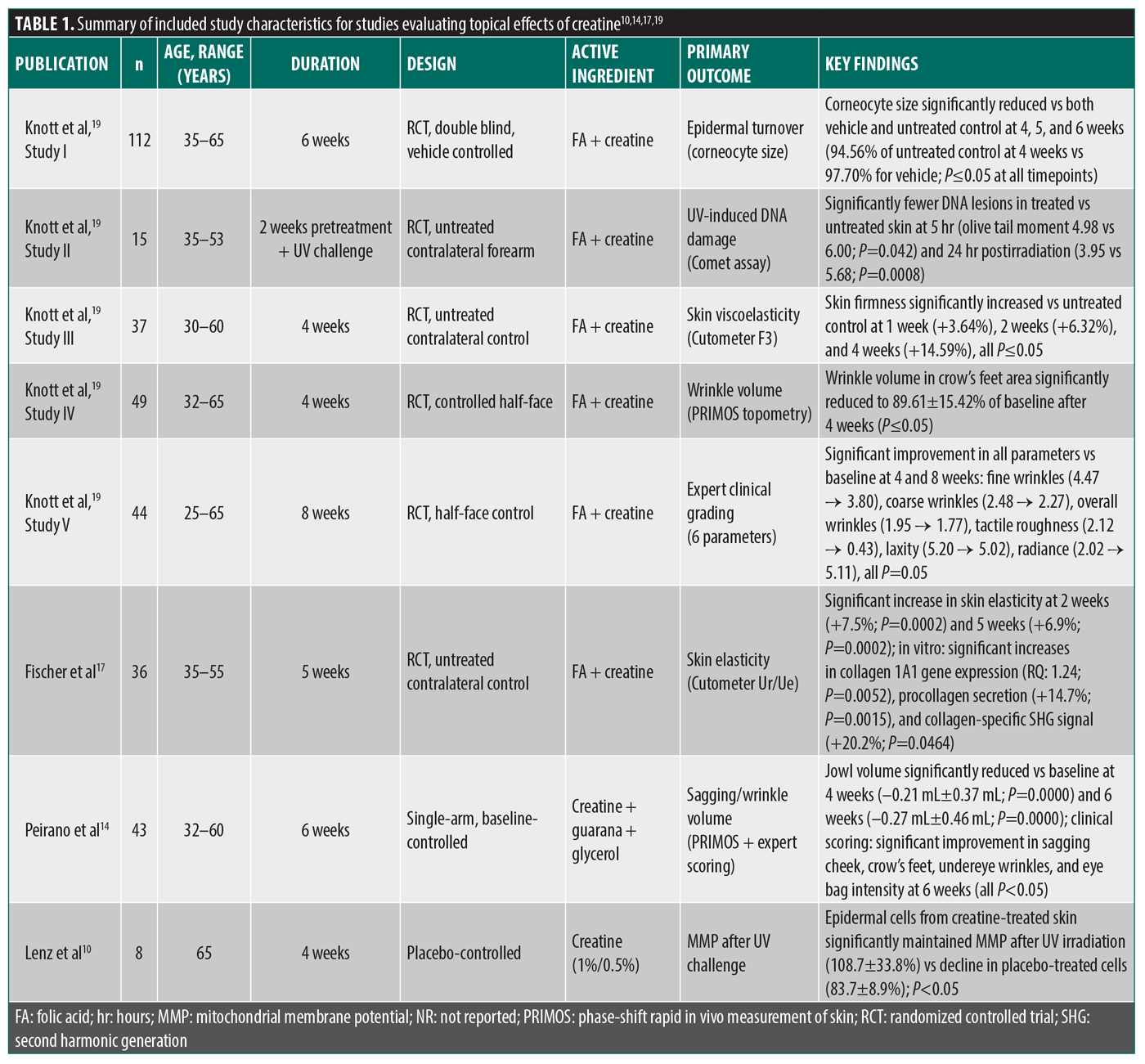
Creatine: topical application. Topical creatine application directly targets dermal structures, influencing skin metabolism and integrity. Based on the database search as above, we conducted a thorough review of the 4 available publications and identified 8 distinct in vivo substudies across them, enrolling a cumulative total of 344 participants, with topical creatine treatment durations ranging from 2 to 8 weeks (Table 1).
Peirano et al14 demonstrated the mechanism by which topical creatine stimulates collagen synthesis in vitro and improves skin firmness in vivo. When applied to the skin, creatine moves through the stratum corneum through passive diffusion or specific transport mechanisms. To facilitate better absorption through the epidermis, creatine is often combined with liposomes or penetration enhancers. Upon reaching the dermis, creatine interacts with dermal fibroblasts to replenish phosphocreatine stores, increasing energy availability. Consequently, this supports collagen production and antioxidant defenses, ultimately improving skin firmness and elasticity.14 Topical creatine also has been shown to counteract collagen degradation through MMP-1.15 This further supports the importance of maintaining an energy supply within the skin’s creatine system for collagen metabolism.
These cellular mechanisms of creatine in the dermis are further supported by clinical in vivo evidence showing its effectiveness in enhancing skin firmness and other visible signs of aging. For example, Peirano et al14 conducted both in vitro and in vivo studies to evaluate the effects of topical creatine on skin physiology. In vitro, creatine demonstrated penetration in a pig skin model and significantly increased collagen 1A1 mRNA expression in fibroblasts (relative quantification [RQ] parameter value: 1.28±0.45; P=0.0107; n=13), accompanied by a corresponding increase in procollagen secretion (109.7% vs control; P=0.0128; n=13), suggesting a stimulatory effect on collagen production. In vivo, 43 male volunteers applied a topical formulation containing 0.2% creatine and 0.05% creatine to the face twice daily for 6 weeks.14 Treatment effects were assessed using phase-shift rapid in vivo measurement of skin (PRIMOS), expert clinical evaluation by 2 independent assessors using an 11-point scale, and self-assessment by each participant. Compared to baseline, PRIMOS analysis demonstrated a significant reduction in jowl volume at 4 weeks (–0.21 mL±0.37 mL; P<0.0001; n=40) and 6 weeks (–0.27 mL±0.46 mL; P<0.0001; n=39). Clinical evaluation further revealed significant improvements in multiple signs of skin aging, including undereye wrinkles, crow’s feet, sagging cheeks, and eye bag intensity by Week 6.14 Further analysis confirmed that this effect was attributed primarily to creatine, ruling out the influence of other active ingredients in the formulation.14 While preliminary findings suggest that topical creatine may improve measures of skin firmness and wrinkle appearance, the current evidence base remains limited. The observed improvements primarily reflect clinical and imaging-based outcomes rather than direct evidence of structural dermal changes. This study evaluated outcomes over only 6 weeks, which may not be sufficient to determine the long-term durability of treatment effects or meaningful changes in skin aging. Interpretation of these findings is also limited by the absence of histologic confirmation, tissue biomarkers, or biopsy-based assessments of collagen remodeling. Furthermore, the investigated formulation contained both creatine (0.2%) and creatinine (0.05%), making it difficult to isolate the specific contribution of creatine.
Fischer et al17 evaluated a topical formulation combining folic acid and creatine on collagen density and skin firmness in 36 female volunteers aged 35 to 55 years. Using multiphoton laser scanning microscopy, in vitro results demonstrated a statistically significant increase in collagen 1A1 gene expression (RQ=1.24±0.22; P=0.0052), a 14.7% increase in procollagen secretion (P=0.0015), and a 20.2% increase in collagen fiber density (P=0.0464) in fibroblast-populated collagen gels. In vivo, skin firmness improved significantly after both 2 weeks (elastic parameter Ur/Ue: 107.5±11.5%; P=0.0002) and 5 weeks (elastic parameter Ur/Ue: 106.9±10.5%; P=0.0002) of twice-daily application.17 Although these findings are promising, interpretation is limited by the inclusion of folic acid alongside creatine in the tested formulation. As both ingredients have been implicated in pathways related to collagen metabolism and skin repair, the relative contribution of creatine to the observed in vitro and in vivo effects cannot be attributed exclusively in this study. Additional studies evaluating creatine as a single active ingredient are needed to clarify its independent role in skin rejuvenation.
Beyond collagen production, topical creatine also promotes the synthesis of glycosaminoglycans and ceramides, improving premature aging and the skin barrier.18 It also offers photoprotective benefits, particularly against UV damage, by reducing DNA damage and improving skin cell turnover, which further contributes to improved skin firmness.10,19 Collectively, the existing evidence underscores the multifaceted potential of topical creatine to improve skin firmness, making it a promising agent in the treatment and prevention of skin aging.
Creatine: oral supplementation. While creatine’s role in muscle growth and recovery is well established, its role in skin health needs to be further investigated. Upon oral ingestion, creatine is absorbed in the intestines, transported through the bloodstream, and taken up by tissues with high energy demands, including the skin. Research has shown that creatine increases ATP synthesis, which is critical for fibroblast activity, collagen production, and cellular repair, while also reducing oxidative stress by supporting mitochondrial function and limiting free radical damage.10,11 Lenz et al10 demonstrated this mechanism at the cellular level, showing that exogenous creatine taken up by keratinocytes led to a statistically significant 23% increase in CK activity (P<0.05) in aged donor cells (n=13), following a 24-hour preloading with 150 µM creatine, compared to untreated controls. Furthermore, exposure to hydrogen peroxide reduced CK activity by 40% to 50%, while creatine preloading partially reversed this decline by 10% to 19% depending on oxidative stress concentration, with the protective effect attributed to stabilization of mitochondrial energy metabolism.10 Complementing these findings, Mahajan et al11 showed that creatine pretreatment of primary dermal human fibroblasts significantly protected against oxidant-induced cellular senescence (P<0.05), blocked hydrogen peroxide-induced ROS generation, and helped preserve insulinlike growth factor-1 expression, while also reducing pro-inflammatory senescence-associated cytokines interleukin (IL)-6, IL-8, and tumor necrosis factor-α. Although direct studies on oral creatine’s impact on skin firmness are limited, its systemic absorption and bioavailability indicate it may offer potential benefits for the skin.
Current research on creatine’s effects on muscle mass and hydration may indirectly support its effects on skin firmness. Wu et al20 conducted a scoping review of 16 randomized controlled trials on oral creatine supplementation published between 2012 and 2021, encompassing a total of 456 participants across various populations. The review consistently found that oral creatine supplementation increased lean muscle mass and muscular strength in healthy young adults across a variety of dosage strategies and training modalities.20 Notably, Nunes et al (as cited in Wu et al20) reported a statistically significant increase in lean soft tissue in the upper limbs, lower limbs, and trunk in the creatine group compared to placebo (P<0.001) following a loading dose of 0.3 g/kg per day for 7 days and a maintenance dose of 0.03 g/kg per day for 49 days combined with resistance training. The review further noted that increased intramuscular creatine content raises osmotic pressure, promoting cellular water retention and muscle cell swelling, which is a recognized stimulus for cell growth.20 By promoting muscle hypertrophy, creatine helps maintain underlying structural support for the skin, potentially contributing to a reduced appearance of skin laxity, particularly in aging individuals or those experiencing muscle loss. Furthermore, creatine’s hygroscopic nature facilitates intracellular water retention and cellular hydration, and its critical role in ATP resynthesis supports energy metabolism across a variety of tissues, suggesting that oral supplementation may offer broader physiological benefits beyond skeletal muscle.21 While more research is needed to establish a direct link between oral creatine supplementation and skin firmness, existing evidence on its effects on cellular energy metabolism, oxidative stress reduction, cellular hydration, and muscle structure suggests a plausible role in supporting skin health, although direct clinical evidence remains limited.
Safety and Adverse Effects
Available clinical studies evaluating topical creatine formulations have reported few treatment-related adverse events. Research indicates that topical creatine effectively penetrates the stratum corneum, allowing for localized bioavailability without systemic absorption, which reduces the risk of systemic toxicity.14 To date, there have been no clinical evaluations of creatine-based skincare products that reported significant irritation, erythema, or allergic reactions when applied at standard concentrations. Additionally, studies have shown that creatine is noncytotoxic and nonmutagenic, with no evidence of endocrine disruption or systemic toxicity.22
Research on creatine’s interaction with other active skincare ingredients, such as niacinamide and folic acid, also suggests that creatine does not exacerbate irritation when used in combination.17 In vivo experiments have demonstrated that topical creatine has photoprotective effects and improves skin firmness by stimulating collagen synthesis.18 Unlike active ingredients that cause irritation or increase photosensitivity, creatine does not heighten susceptibility to UV damage, making it safe for daytime and nighttime use. Furthermore, creatine is also well tolerated across various skin types, with no cases of delayed hypersensitivity reactions or long-term dermal toxicity reported in clinical cases or trials, further supporting its safety profile.
Oral creatine supplementation is also recognized for its good safety profile, with studies confirming its tolerability at recommended doses (typically 3–5 g daily) in healthy individuals.23 Clinical trials consistently report no harmful effects on renal or hepatic function. Long-term studies, some extending up to 5 years, have found no evidence of kidney dysfunction despite slight increases in serum creatinine (due to increased turnover), contradicting early concerns that creatine supplementation could contribute to renal damage.24 Similarly, no significant alterations in liver enzymes have been observed, further reinforcing its safety profile.
Gastrointestinal discomfort (bloating, cramping, and nausea) has been reported in some cases, especially with single higher doses (>10 g).25 These mild effects can be minimized by dividing the dose and ensuring adequate hydration. Studies examining creatine’s effects on hydration and thermoregulation have also found no evidence that it increases dehydration, muscle cramps, or heat-related illnesses, even during intense activity.26 To date, there has only been one reported case of a pigmented pruritic dermatosis in a patient taking an oral supplement containing creatine and hydroxymethylbutyrate with symptoms self-resolving two weeks following discontinuation of the supplement.27
Concerns regarding creatine’s potential role in promoting androgenic effects have also been investigated. However, no conclusive evidence links supplementation to significant changes in testosterone or dihydrotestosterone levels, though transient increases in dihydrotestosterone have not been associated with clinically relevant outcomes such as accelerated hair loss.28 Additionally, creatine has no adverse impact on cardiovascular health, including blood pressure and lipid profiles, even with prolonged use.29 Some studies suggest potential neuroprotective benefits, such as supporting cognitive function, reducing oxidative stress, and potential benefits for individuals with neurodegenerative conditions.30 Overall, existing research confirms that when administered or consumed within recommended guidelines, topical and oral creatine are well tolerated with minimal risk.
Future Research Directions
While preliminary findings on creatine’s dermatologic applications are promising, research gaps remain. Many existing studies evaluate creatine in combination with other compounds, making it difficult to isolate its specific effects and highlighting the need for more focused research. Additionally, in vivo studies are scarce, especially assessing oral creatine on skin health, limiting our understanding. Further molecular studies are essential to elucidate the precise mechanisms by which creatine impacts skin cells and key skin functions, including collagen synthesis, hydration regulation, and cellular energy metabolism, before advancing to extensive clinical trials.
Future research should expand in vitro and in vivo studies to explore systemic responses to topical creatine, assessing whether it triggers measurable changes in circulating creatine levels or other relevant physiological markers. Investigating biomarkers for epidermal creatine absorption would also be valuable for optimizing topical delivery and assessing bioavailability. While current research supports the safety of creatine-based skincare, long-term studies are needed to provide insight into its effects with prolonged daily use at higher concentrations. Ensuring product safety is paramount and requires comprehensive assessments of potential dermal irritation and systemic effects, especially with long-term use. Addressing these gaps will not only validate creatine’s dermatologic potential but also refine its evidence-based application in skincare formulations.
Conclusion
Despite the limited literature, both topical and oral creatine supplementation show potential in improving skin firmness through cellular mechanisms that enhance collagen synthesis, cellular energy metabolism, and antioxidant defenses in the skin. While topical formulations directly target dermal fibroblasts and extracellular matrix integrity, oral supplementation may offer similar systemic benefits by supporting fibroblast function and muscle structure, indirectly influencing skin firmness. Clinical evidence suggests that creatine has a favorable safety profile with minimal-to-no local or systemic adverse effects. However, despite compelling preliminary findings, gaps remain in our understanding of its long-term efficacy and potential synergistic effects with other active compounds commonly used in dermatology and aesthetics. Future research should address these gaps through large-scale, controlled clinical trials, enabling dermatologists and practitioners to make informed decisions about creatine’s integration into skincare regimens. As interest in noninvasive bioactive compounds for improving skin firmness and reducing visible signs of aging grows, creatine emerges as a promising avenue for further research in skin health.
References
- Taipale J, Keski-Oja J. Growth factors in the extracellular matrix. FASEB J. 1997;11(1):51–59.
- Langton AK, Halai P, Griffiths CE, et al. The impact of intrinsic ageing on the protein composition of the dermal-epidermal junction. Mech Ageing Dev. 2016;156:14–16.
- Quan T, Qin Z, Xia W, et al. Matrix-degrading metalloproteinases in photoaging. J Investig Dermatol Symp Proc. 2009;14(1):20–24.
- Farage MA, Miller KW, Elsner P, Maibach HI. Intrinsic and extrinsic factors in skin ageing: a review. Int J Cosmet Sci. 2008;30(2):87–95.
- Hussein RS, Bin Dayel S, Abahussein O, El-Sherbiny AA. Influences on skin and intrinsic aging: biological, environmental, and therapeutic insights. J Cosmet Dermatol. 2024;24(2):e16688.
- Blatt T, Lenz H, Koop U, et al. Stimulation of skin’s energy metabolism provides multiple benefits for mature human skin. Biofactors. 2005;25(1–):179–185.
- Kreider RB, Kalman DS, Antonio J, et al. International Society of Sports Nutrition position stand: safety and efficacy of creatine supplementation in exercise, sport, and medicine. J Int Soc Sports Nutr. 2017;14:18.
- Nomura A, Zhang M, Sakamoto T, et al. Anti-inflammatory activity of creatine supplementation in endothelial cells in vitro. Br J Pharmacol. 2003;139(4):715–720.
- Meyer LE, Machado LB, Santiago AP, et al. Mitochondrial creatine kinase activity prevents reactive oxygen species generation: antioxidant role of mitochondrial kinase-dependent ADP re-cycling activity. J Biol Chem. 2006;281(49):37361–37371.
- Lenz H, Schmidt M, Welge V, et al. The creatine kinase system in human skin: protective effects of creatine against oxidative and UV damage in vitro and in vivo. J Invest Dermatol. 2005;124(2):443–452.
- Mahajan AS, Arikatla VS, Thyagarajan A, et al. Creatine and nicotinamide prevent oxidant-induced senescence in human fibroblasts. Nutrients. 2021;13(11):4102.
- Zemtsov A. Skin phosphocreatine. Skin Res Technol. 2007;13(2):115–118.
- Schlattner U, Möckli N, Speer O, et al. Creatine kinase and creatine transporter in normal, wounded, and diseased skin. J Invest Dermatol. 2002;118(3):416–423.
- Peirano RI, Achterberg V, Düsing HJ, et al. Dermal penetration of creatine from a face-care formulation containing creatine, guarana and glycerol is linked to effective antiwrinkle and antisagging efficacy in male subjects. J Cosmet Dermatol. 2011;10(4):273–281.
- Berneburg M, Gremmel T, Kürten V, et al. Creatine supplementation normalizes mutagenesis of mitochondrial DNA as well as functional consequences. J Invest Dermatol. 2005;125(2):213–220.
- Hussen N, Abdulla S, Ali N, et al. Role of antioxidants in skin aging and the molecular mechanism of ROS: a comprehensive review. Aspects Mol Med. 2025;5:100063.
- Fischer F, Achterberg V, März A, et al. Folic acid and creatine improve the firmness of human skin in vivo. J Cosmet Dermatol. 2011;10(1):15–23.
- Blatt T, Lenz H, Weber T, Staeb F. Topical application of creatine is multibeneficial for human skin. J Am Acad Dermatol. 2005; 52(3):P32.
- Knott A, Koop U, Mielke H, et al. A novel treatment option for photoaged skin. J Cosmet Dermatol. 2008;7(1):15–22.
- Wu SH, Chen KL, Hsu C, et al. Creatine supplementation for muscle growth: a scoping review of randomized clinical trials from 2012 to 2021. Nutrients. 2022;14(6):1255.
- Gutiérrez-Hellín J, Del Coso J, Franco-Andrés A, et al. Creatine supplementation beyond athletics: benefits of different types of creatine for women, vegans, and clinical populations-a narrative review. Nutrients. 2024;17(1):95.
- Volek JS, Kraemer WJ, Bush JA, et al. Creatine supplementation enhances muscular performance during high-intensity resistance exercise. J Am Diet Assoc. 1997;97(7):765–770.
- Jagim AR, Stecker RA, Harty PS, et al. Safety of creatine supplementation in active adolescents and youth: a brief review. Front Nutr. 2018;5:115.
- Antonio J, Candow DG, Forbes SC, et al. Common questions and misconceptions about creatine supplementation: what does the scientific evidence really show? J Int Soc Sports Nutr. 2021;18(1):13.
- Ostojic SM, Ahmetovic Z. Gastrointestinal distress after creatine supplementation in athletes: are side effects dose dependent? Res Sports Med. 2008;16(1):15–22.
- Lopez RM, Casa DJ, McDermott BP, et al. Does creatine supplementation hinder exercise heat tolerance or hydration status? A systematic review with meta-analyses. J Athl Train. 2009;44(2):215–223.
- Chorny JA, Cohen J. Pigmented purpuric dermatosis associated with creatine supplementation. Arch Dermatol. 2006;142(12):1662–1663.
- van der Merwe J, Brooks NE, Myburgh KH. Three weeks of creatine monohydrate supplementation affects dihydrotestosterone to testosterone ratio in college-aged rugby players. Clin J Sport Med. 2009;19(5):399–404.
- Clarke H, Hickner RC, Ormsbee MJ. The potential role of creatine in vascular health. Nutrients. 2021;13(3):857.
- Marques EP, Wyse ATS. Creatine as a neuroprotector: an actor that can play many parts. Neurotox Res. 2019;36(2):411–423.