
J Clin Aesthet Dermatol. 2026;19(9):38–41.
Emily Kavanaugh, BS; Alina Galaria, BA; Aamir N. Hussain, MD, MAPP; and Adel Haque, MD
Ms. Kavanaugh is with Misericordia University Physician Assistant Studies, Dallas, Pennsylvania. Ms. Galaria is with Sidney Kimmel Medical College, Philadelphia, Pennsylvania. Dr. Hussain is with the Donald and Barbara Zucker School of Medicine at Hofstra/Northwell, Manhasset, New York. Dr. Haque is with the Department of Dermatology, University of Pennsylvania, Philadelphia, Pennsylvania.
FUNDING: No funding was provided for this article.
DISCLOSURES: Ms. Galaria is an immediate family member of the founder of Inner Glow Vitamins and has no financial relationship with Inner Glow Vitamins. The remaining authors declare no conflicts of interest.
Abstract: OBJECTIVE: To evaluate the long-term safety and tolerability of a physician-formulated hair growth supplement developed by a board-certified dermatologist and board-certified plastic surgeon, with particular attention to liver function testing. METHODS: A retrospective chart review was conducted across four dermatology practices. The study included 508 patients who took the supplement for at least 12 weeks between July 2020 and December 2024. Duration of use ranged from 12 to 255 weeks. Eligible patients were required to have at least 2 in-person evaluations by a board-certified dermatologist. Patients were excluded if they were pregnant, concurrently taking other hair loss supplements, or had significant pre-existing medical conditions that could confound safety evaluation. Data collected included patient demographics, clinical history, physical examination documentation, and liver function test results, including alanine aminotransferase, aspartate aminotransferase, alkaline phosphatase, bilirubin, and gamma-glutamyl transferase. RESULTS: A total of 508 patient charts met inclusion criteria. The cohort included 452 female patients (89.0%) and 56 male patients (11.0%), with an average age of 48.4 years. Participants took the supplement for an average of 34 weeks, with 92 patients taking it for more than 52 weeks and 33 patients taking it for more than 104 weeks. Overall, 48% of the total study population had documented liver function testing during the study period. All documented liver function tests remained within normal reference ranges. Among patients taking the supplement for at least 52 weeks, 80% had laboratory testing available, and all results were within normal limits. Among patients taking the supplement for more than 104 weeks, 88% had liver function testing available, and all results were within normal limits. No hepatic adverse events, clinically significant laboratory abnormalities, or liver-function-related discontinuations were reported. LIMITATIONS: Limitations include the retrospective study design, availability of laboratory data for only a subset of participants, potential selection bias, and lack of a prospective randomized control group. CONCLUSION: In this retrospective review of 508 patients, long-term use of the studied physician-formulated hair growth supplement was well tolerated, with no documented liver function abnormalities among patients with available laboratory data. These findings support a favorable long-term safety profile when the supplement is used as directed. Future prospective, randomized, controlled studies with standardized outcome measures are warranted to further evaluate safety and efficacy. Keywords: Hair loss, over-the-counter supplementation, nutraceutical, liver function, liver abnormalities, alopecia, hair growth supplement
Introduction
Hair loss is a multifactorial condition that can significantly impact quality of life and self-esteem and is one of the most common presenting complaints at dermatology offices.1 As dermatologists, we are increasingly seeing patients turn to over-the-counter supplements in the hopes of restoring hair growth. Recently, nutritional deficiencies and new weight loss medications have been associated with increased hair thinning, making targeted supplementation a logical and effective first-line approach. Indeed, a growing body of evidence supports the role of supplementation in addressing these deficiencies and improving hair density, strength, and growth. Supplementation is also a common first-line option to ensure that patients are receiving optimal nutrition during hormonal changes, as up to 30% of premenopausal women experience hair loss due to nutritional deficiencies.1 Given that the United States (US) nutraceuticals market size was valued at $163.7 billion in 2024 and is anticipated to grow at a compound annual growth rate of 6.2% from 2025 to 2030, it is critical for skin specialists to know the benefits and risks of various supplements.2
The supplement industry remains largely unregulated by the US Food and Drug Administration (FDA), leading to wide variability in product quality and safety. Many commercially available hair vitamins contain excessive or unbalanced doses of ingredients such as biotin, turmeric, or fat-soluble vitamins, which may pose risks such as laboratory test interference, hepatotoxicity, or other systemic adverse effects. This lack of oversight can leave consumers vulnerable to products that may do more harm than good.
Certain compounds may cause serious health concerns when taken in excessive doses; for example, biotin, which is frequently included in supplements due to certain benefits for hair and nail health, can cause severe liver damage when taken in excess. The Department of Agriculture recommends a dietary intake of 30 μg of biotin per day; however, some over-the-counter supplements contain doses as high as 300 mg per day—10,000 times the recommended intake.3 In 2019, the FDA issued a warning regarding the potential for biotin to interfere with troponin assays, which are critical for the diagnosis of myocardial infarction,4 and in 2024, there was a case of severe biopsy-proven hepatic necrosis in a 26-year-old taking a popular hair supplement with a mega-dose of biotin, which fully resolved upon discontinuation of the supplement.5 High doses of biotin can show positive interference with thyroxine (T4), free T4, triiodothyronine (T3), and free T3 assays but falsely lower thyrotropin value because of negative interference, thus mimicking a clinical picture of hyperthyroidism.6 High biotin levels can also create false-negative COVID-19 results.7
Saw palmetto, ashwagandha, and turmeric are other nutraceuticals commonly found in hair, skin, and nail supplements. These nutraceuticals can be effective at helping promote hair health but can potentially be hazardous if taken at high dosages. Saw palmetto can help regulate hormonal causes of hair loss, as it acts as a competitive, nonselective inhibitor of 5-α reductase types I and II.8 Ashwagandha has been proven to have a direct positive effect on the endocrine system, benefiting telogen effluvium.9 In several human studies, ashwagandha supplementation was associated with reduced cortisol concentrations, which may also contribute to hair-enhancing effects.10 Turmeric/curcumin supplementation successfully reduced levels of inflammatory markers, including C-reactive protein while also improving antioxidant activity through enhancing total antioxidant capacity.11
Although many benefits can be seen from these nutraceuticals, it is important to mention potential hazards. Saw palmetto can affect sex hormones and cause menstrual irregularities and erectile dysfunction.12 Ashwagandha has also been associated with rare reports of liver injury, and proposed mechanisms include deoxyribonucleic acid (DNA) damage related to withanone, a bioactive compound found in Withania somnifera.13 Turmeric can cause gastrointestinal problems and indigestion.14 Given these concerns and the lack of regulation in the supplement industry, it is critical for physicians to recommend supplements that are effective and delivered in safe dosages.
This study aims to evaluate the efficacy and safety of a hair growth supplement formulated by a board-certified dermatologist and a board-certified plastic surgeon. The supplement, manufactured in an FDA-regulated facility in the US, has been in common use among healthcare providers since 2020. This study aims to assess the long-term safety of this nutraceutical in 508 patients in a medical setting, specifically examining its tolerability and effect on liver function to determine its potential safety profile.
Methods
A retrospective chart review was conducted to assess the long-term safety profile of the study supplement. The study evaluated patients from 4 dermatology practices who had taken the study supplement for durations ranging from 12 to 255 weeks between July 2020 and December 2024. The primary objective was to identify any clinical or laboratory evidence of adverse effects, with particular attention to liver function.
Eligible participants were required to have taken the study supplement for a minimum of 12 weeks and to have had at least 2 in-person evaluations by a board-certified dermatologist. Patients were excluded if they were concurrently taking other hair loss supplements, had significant pre-existing medical conditions that could confound safety evaluation (eg, autoimmune disease, gastrointestinal disorders), or were pregnant during the study period. Continued supplement use was confirmed by medical assistants during follow-up visits.
Data were extracted from electronic medical records and included demographic information (age and gender), documentation from physical examinations, and liver function test (LFT) results. LFT parameters included alanine aminotransferase (ALT), aspartate aminotransferase (AST), alkaline phosphatase (ALP), bilirubin, and gamma-glutamyl transferase (GGT). All personal health data were de-identified for analysis, and records were securely stored in compliance with HIPAA guidelines.
Results
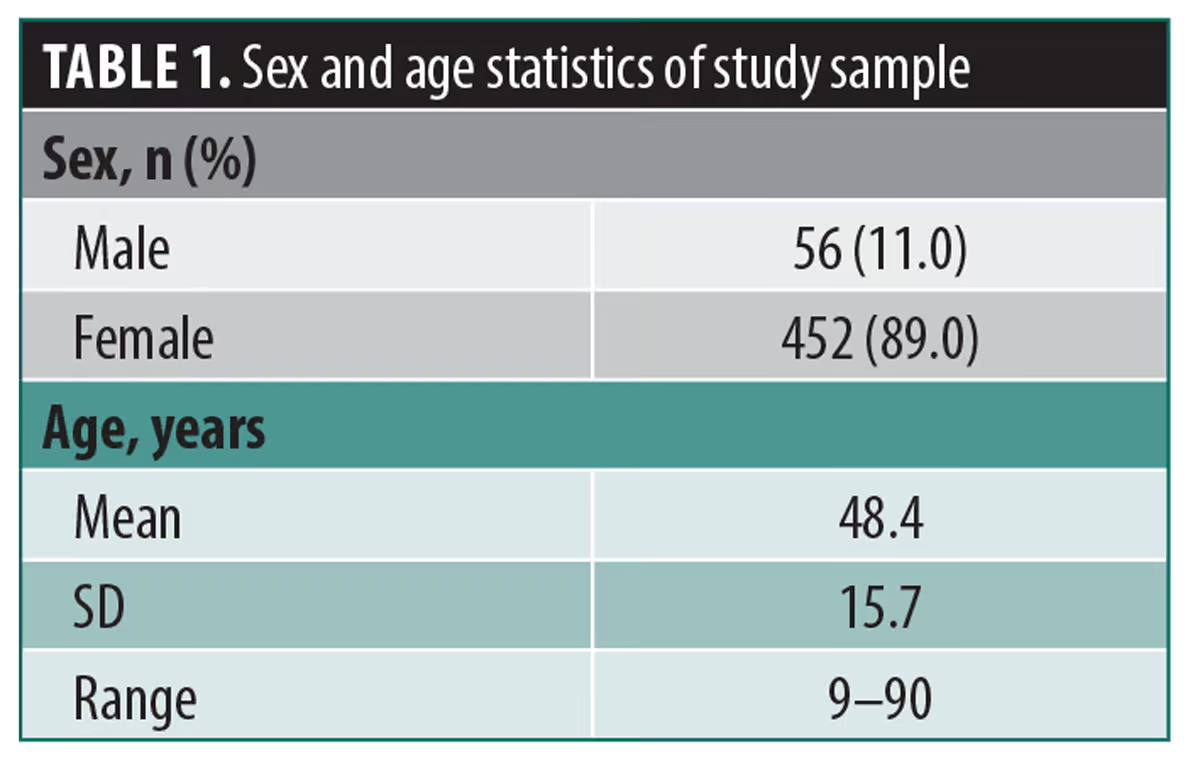
A total of 508 patient charts met inclusion criteria and were analyzed. The cohort included 452 female (89.0%) and 54 male (11.0%) participants, with an average age of 48.4 years (SD: 15.7 years; range: 9–90 years; Table 1).
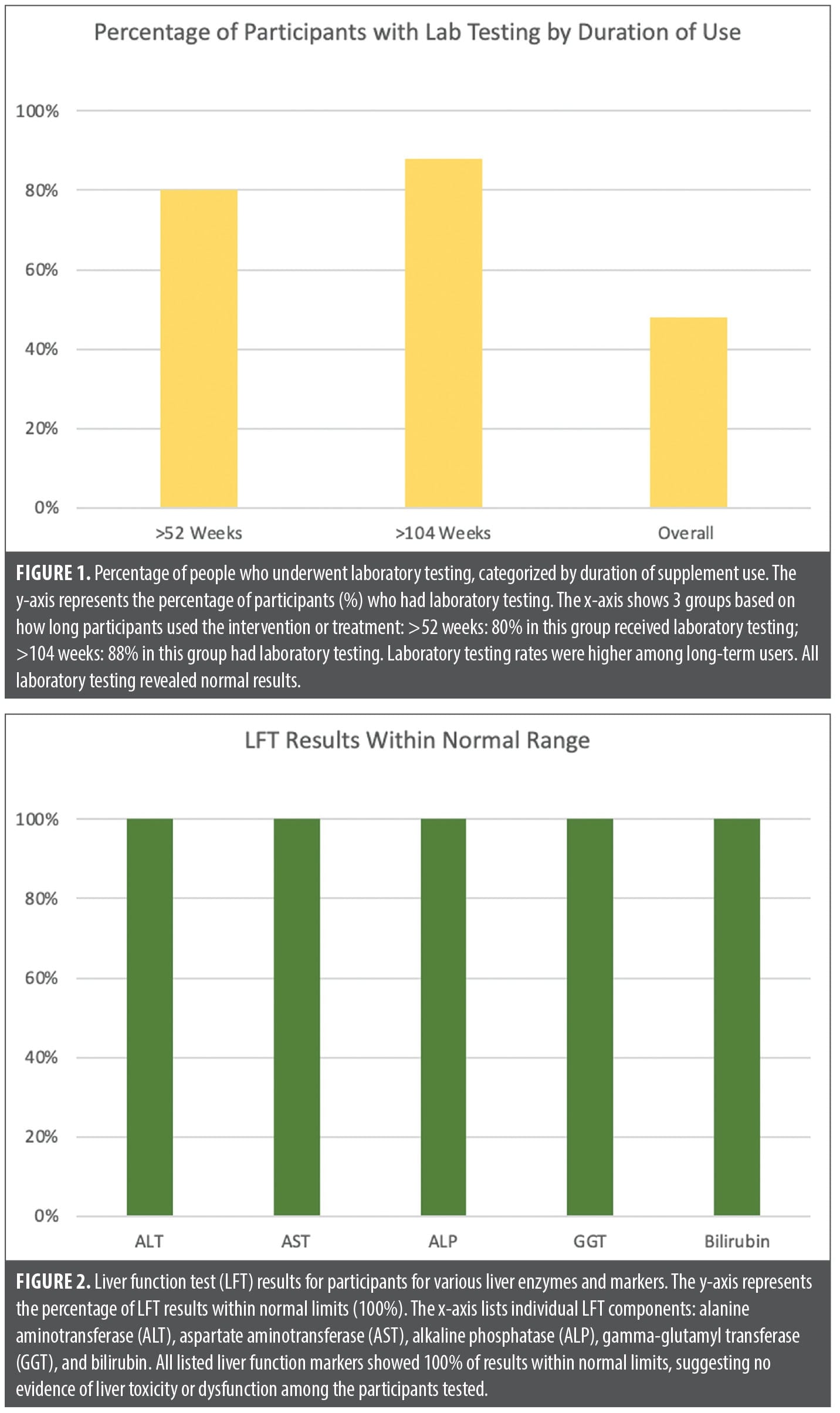
Participants took the study supplement for an average duration of 34 weeks and a maximum duration of 255 weeks, with 92 individuals (18.1%) taking the supplement for more than 52 weeks and 33 individuals (6.5%) taking it for more than 104 weeks (Figure 1). Of the long-term users (≥52 weeks), 80% had laboratory testing performed in the study offices or in their primary care physician’s office, and 100% of those results fell within standard reference ranges. Even more notably, among those taking the supplement for more than 2 years, 88% had LFTs performed, all of which were within normal limits.
Overall, 48% of the total study population had liver function tests documented during the study period. In every case, ALT, AST, ALP, bilirubin, and GGT levels remained within reference ranges (Figure 2). No hepatic adverse events or clinically significant laboratory abnormalities were reported during the study period. Additionally, no participants discontinued the study supplement due to adverse effects related to liver function.
These findings contrast with previously reported cases of hepatotoxicity associated with other over-the-counter hair, skin, and nail supplements, where liver abnormalities have been observed within 1 month of use.
Discussion
The study supplement is a popular supplement frequently recommended by dermatologists. This retrospective study aimed to evaluate its long-term safety, with all participants required to have taken the supplement for a minimum of 12 weeks to be included. On average, participants took the study supplement for 34 weeks.
Notably, 33 participants took the supplement for more than 2 years (104 weeks), and 88% had LFTs. In this group, 100% of the laboratory values were within normal limits. Additionally, 92 participants had taken the study supplement for more than 1 year (52 weeks), of whom 80% had LFTs; 100% of laboratory values were within normal limits.
Overall, 48% of total study participants had laboratory data available that were directly reviewed by a dermatologist. In every case, the laboratory results fell within established reference ranges. Specifically, LFTs, including ALT, AST, and ALP, were within normal limits, suggesting that liver function was preserved during the duration of supplementation. This contrasts with other popular hair, skin, and nail supplements, some of which have been associated with liver abnormalities as early as 1 month into use.5
It is important to note that only laboratory tests reviewed and analyzed directly by a dermatologist were included in this analysis. Patients who self-reported normal laboratory testing results from their primary care physician were excluded from the laboratory review group. Had they been included, the number of participants with normal laboratory test results would have been higher.
We officially did not analyze whether the supplement was safe in pregnancy. Pregnant individuals were asked to stop taking the supplement and advised to only take their prenatal vitamins and were therefore excluded from the study. We encouraged patients to consult with their obstetrics and gynecology physician (OBGYN). After consulting with OBGYN, 3 patients were advised that they could restart the supplement when breastfeeding.
In light of FDA warnings that high-dose biotin, commonly found in many hair supplements, can interfere with diagnostic assays, including cardiac troponin levels, the study supplement was deliberately formulated with vitamins and minerals at or near the recommended dietary allowance.15 This formulation minimizes the risk of laboratory test interference and systemic strain. Additionally, herbal ingredients such as turmeric were included at low concentrations to align with the product’s long-term use intention and to reduce the risk of hepatotoxicity associated with prolonged ingestion of high-dose herbals.14
Given that approximately 85% of men and 33% of women will experience hair loss during their lifetime,16 the long-term safety of nutraceuticals is particularly relevant. Patients often take hair supplements chronically and in combination with other therapies, frequently without physician oversight. As physicians, ensuring the safety of such over-the-counter products is a critical responsibility.
While findings from this retrospective review are reassuring, several limitations must be acknowledged. LFTs, while useful, offer only a snapshot of hepatic status and do not substitute for more definitive measures such as liver biopsy, which would not be ethically or practically feasible in this context. Furthermore, this study may be subject to selection bias; individuals who experienced intolerance or pill burden were unlikely to complete the 12-week course and thus would have been excluded. Although no adverse events were reported and the majority of participants noted perceived hair growth, many were undergoing multimodal treatment, making it difficult to attribute improvements solely to the supplement.
Conclusion
The long-term safety data collected throughout this 4-year study support the conclusion that the the study supplement has a favorable safety profile for long-term use with no reported adverse effects or changes in LFTs. Regular monitoring of participant health throughout the study revealed no cumulative toxicity or any indication of long-term adverse effects related to the active ingredients. Future studies should be prospective, randomized, and controlled in design, with larger sample sizes and standardized outcome measures to more rigorously evaluate both safety and efficacy.
In conclusion, this long-term safety study provides compelling evidence that the study supplement is safe for most individuals when taken as directed. However, as with all dietary supplements, further studies involving more diverse populations and extended follow-up periods are recommended to ensure the ongoing safety profile, especially in individuals with pre-existing medical conditions or those taking concurrent medications.
References
- Rushton DH, Norris MJ, Dover R, Busuttil N. Causes of hair loss and the developments in hair rejuvenation. Int J Cosmet Sci. 2002;24(1):17–23.
- US Nutraceuticals market size | industry report. 2030. Accessed 8 Feb 2025. https://www.grandviewresearch.com/industry-analysis/us-nutraceuticals-market-report
- Chun KY. Biotin interference in diagnostic tests. Clin Chem. 2017;63(2):619–620.
- FDA in Brief: FDA reminds patients, health care professionals and laboratory personnel about the potential for biotin interference with certain test results, especially specific tests to aid in heart attack diagnoses. United States Food and Drug Administration. Accessed 28 Feb 2025. https://www.fda.gov/news events/fda-brief/fda-brief-fda-reminds-patients health-care-professionals-and-laboratory-personnel
- Dugal J, Malhi A, Singh Y, et al. Nutrafol’s hair gains and liver strains. Am J Gastroenterol. 2024;119(suppl 10):S2733–S2734.
- Dasgupta A, Yeo KTJ. Biotin interference in immunoassays and patient safety. Am J Clin Pathol. 2023;159(1):1–2.
- Collinson P. Biotin interference in cardiac troponin immunoassay – where the wild things are? Clin Chem Lab Med. 2020;58(11):1769–1771.
- Zanzottera F, Bizzaro G, Michelotti A, Nobile V. Efficacy of a nutritional supplement, standardized in fatty acids and phytosterols, on hair loss and hair health in both women and men. J Cosmo Trichol. 2017;3(2):1000121.
- Wiciński M, Fajkiel-Madajczyk A, Kurant Z, et al. Can ashwagandha benefit the endocrine system?-a review. Int J Mol Sci. 2023;24(22):16513.
- Smith SJ, Lopresti AL, Teo SYM, Fairchild TJ. Examining the effects of herbs on testosterone concentrations in men: a systematic review. Adv Nutr. 2021;12(3):744–765.
- Dehzad MJ, Ghalandari H, Nouri M, Askarpour M. Antioxidant and anti-inflammatory effects of curcumin/turmeric supplementation in adults: a GRADE-assessed systematic review and dose-response meta-analysis of randomized controlled trials. Cytokine. 2023;164:156144.
- Appendix K. Prototype focused monograph: review of antiandrogenic risks of saw palmetto ingestion by women. In: Dietary Supplements: A Framework for Evaluating Safety. National Academies Press; 2005. Accessed 16 Mar 2025. https://www.ncbi.nlm.nih.gov/books/NBK216069/
- Siddiqui S, Ahmed N, Goswami M, et al. DNA damage by Withanone as a potential cause of liver toxicity observed for herbal products of Withania somnifera (Ashwagandha). Curr Res Toxicol. 2021;2:72–81.
- Burgos-Morón E, Calderón-Montaño JM, Salvador J, et al. The dark side of curcumin. Int J Cancer. 2010;126(7):1771–1775.
- Subcommittee on Upper Reference Levels of Nutrients, et al. “Dietary reference intakes for thiamin, riboflavin, niacin, vitamin B6, folate, vitamin B12, pantothenic acid, biotin, and choline.” (2000). https://www.ncbi.nlm.nih.gov/books/NBK114310/]]
- Scott P, ed. Hair loss statistics (2025). Medihair. Updated 27 Feb 2025. Accessed 28 Mar 2025. https://medihair.com/en/hair-loss-statistics/