
J Clin Aesthet Dermatol. 2026;19(5):7–8.
Use of Complementary and Alternative Medicine in Skin Diseases: A Global Analysis
Dear Editor:
There is growing interest in complementary and alternative medicine (CAM) to treat dermatologic conditions.1 A comprehensive global examination of CAM use among dermatology patients has not been conducted. Our study aims to describe the global prevalence and modalities of CAM use among individuals with skin diseases.
The study was conducted by HC Conseil (Paris, France) between January 2023 to April 2023. The study population was selected from Megabase (Kantar Health), a large-scale database for market research and opinion polling. In 20 countries, a sample of the population aged 16 years or older was recruited using proportional sampling to reflect the population distributions of age, gender, living environment, and income. The sample size for each country was adjusted according to the ability of the reference panels to extract a representative sample. The following CAM practices were used by patients who reported skin diseases in the last 12 months: yoga, sophrology, meditation, hypnosis, acupuncture, homeopathy, herbal medicine, essential oils, sylvotherapy, tai-chi-chuan, magnetizer/healer, and/or dietary supplementation (DS).
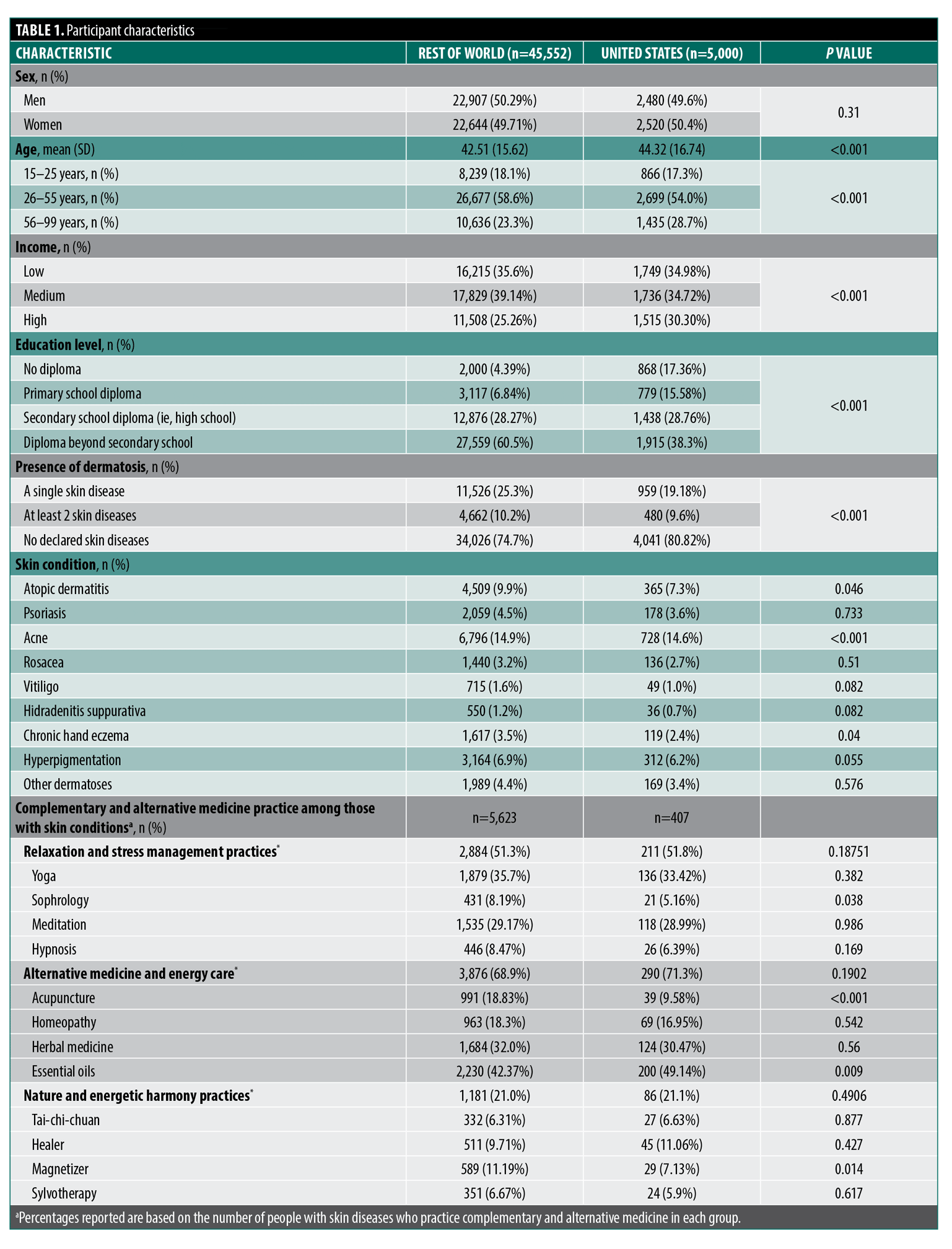
The sample characteristics (N=50,552) can be found in Table 1. Among individuals with skin diseases, use of CAM was more prevalent in the rest of the world (34.7%, n=5,623) compared to the United States (US; 28.3%; n=407; P=0.001). The types of CAM practiced was similar between the 2 groups, with some differences in use of sophrology, acupuncture, essential oils, and magnetizers.
Use of DS was less prevalent in the US (rest of world: 34.8% [n=5,626]; US: 23.7% [n=341]; P<0.001). Most patients reported using DS to slow skin disease progression (rest of world: 44.9% [n=2,527]; US: 45.2% [n=154], P=0.852). Other motivations for DS use were replacing a drug treatment (rest of world: 31.6% [n=1,777]; US: 24.0% [n=82]; P=0.005) or prolonging the effect of medication (rest of world: 31.7% [n=1,781], USA: 14.7% [n=50]; P<0.001).
The use of CAM for skin diseases is more common in non-US countries, which could be explained by differences in accessibility and confidence in CAM. In non-US countries, CAM is better integrated into healthcare systems, with many countries having national CAM policies.2 In the US, it remains less institutionalized and may lack insurance coverage.2 Furthermore, outside of the US, access to dermatologic care can be limited or costly, prompting patients to opt for more affordable and accessible solutions.3,4 Finally, in some countries, CAM is historically rooted and considered effective.5 Meanwhile, the US favors scientific evidence that is less often employed to investigate CAM.
Despite differences in adoption of CAM, methodology remains similar. Furthermore, DS was primarily used for slowing disease progression, rather than replacing drug treatments, challenging the misconception that alternative approaches are pursued at the expense of traditional medicine. However, a non-negligible minority of participants reported using DS to replace drug treatments. While some practices have been scientifically validated, others require further research to determine their efficacy in the management of dermatologic diseases. Understanding global CAM use provides a foundation for investigating the less prevalent use of CAM in the US and how evidence-based CAM modalities can be integrated into dermatologic care.
With regard,
Courtney Chau, BS; Markéta Saint Aroman, MD; Kelly Barta; Cheryl Barry, MS; and Peter Lio, MD
Keywords: Alternative medicine, holistic medicine, traditional Chinese medicine, complementary medicine
Affiliations: Ms. Chau is with the Icahn School of Medicine at Mount Sinai, New York, New York. Dr. Aroman is with Laboratoires Pierre Fabre, Toulouse, France. Ms. Barta is with ITSAN, Dacula, Georgia. Ms. Barry is with Avène USA, Secaucus, New Jersey. Dr. Lio is with Northwestern University Feinberg School of Medicine, Chicago, Illinois.
Funding: Funding for this article was provided by Laboratoires Pierre Fabre.
Disclosures: Dr. Saint Aroman is an employee of Laboratoires Pierre Fabre, France. Ms. Barry is an employee of Avène USA, Pierre Fabre. Dr. Lio reports being on the speaker’s bureau for AbbVie, Arcutis, Galderma, Hyphens Pharma, Incyte, La Roche-Posay/L’Oréal, Lilly, Pfizer, Pierre-Fabre Dermatologie, Regeneron/Sanofi Genzyme, and Verrica; and reports consulting/advisory boards for Alphyn Biologics (stock options), AbbVie, Almirall, Amyris, Arcutis, ASLAN, Bristol Myers Squibb, Burt’s Bees, Castle Biosciences, Codex Labs (stock options), Concerto Biosci (stock options), Dermavant, Galderma, Janssen, LEO Pharma, Lilly, Lipidor, L’Oréal, Merck, Micreos, MyOR Diagnostics, Regeneron/Sanofi Genzyme, Sibel Health, Skinfix, Suneco Technologies (stock options), Theraplex, UCB, Unilever, Verdant Scientific (stock options), Verrica, and Yobee Care (stock options). In addition, Dr. Lio has a patent pending for a Theraplex product with royalties paid and is a board member and Scientific Advisory Committee Member emeritus of the National Eczema Association. Ms. Chau and Ms. Barta have no relevant conflicts of interest.
Correspondence: Peter Lio, MD
References
- Pourang A, Hendricks AJ, Shi VY. Managing dermatology patients who prefer “all natural” treatments. Clin Dermatol. 2020;38(3):348–353.
- World Health Organization. WHO Global Report on Traditional and Complementary Medicine 2019. World Health Organization; 2019. Accessed 15 May 15 2025. https://iris.who.int/handle/10665/312342
- Millikan LE. Complementary medicine in dermatology. Clin Dermatol. 2002;20(5):602–605.
- Neldner KH. Complementary and alternative medicine. Dermatol Clin. 2000;18(1):189–193.
- Ernst E, Pittler MH, Stevinson C. Complementary/alternative medicine in dermatology: evidence-assessed efficacy of two diseases and two treatments. Am J Clin Dermatol. 2002;3(5):341–348.
From the 2nd Annual RAPIDS Immuno-Dermatology Conference: From Approval to Adoption—Translating Innovation Into Clinical Practice