
J Clin Aesthet Dermatol. 2026;19(4):7–9.
Exploring the Therapeutic Potential of Topical Honey in Atopic Dermatitis
Dear Editor:
Honey is one of the oldest natural medicines and has been shown to have antimicrobial, anti-inflammatory, and antioxidant properties. Though topical honey is most well known in the context of treating wounds, several studies have investigated the use of topical honey in the management of atopic dermatitis (AD). Preliminary evidence suggests that topical honey is a promising treatment option, though the mechanisms by which honey produces therapeutic benefits in AD are not yet well understood. Several therapeutic mechanisms have been proposed, including modulation of the skin microbiome, activation of aryl hydrocarbon receptor (AHR) signaling, and modulation of local prostaglandin and nitric oxide (NO) synthesis and activity.
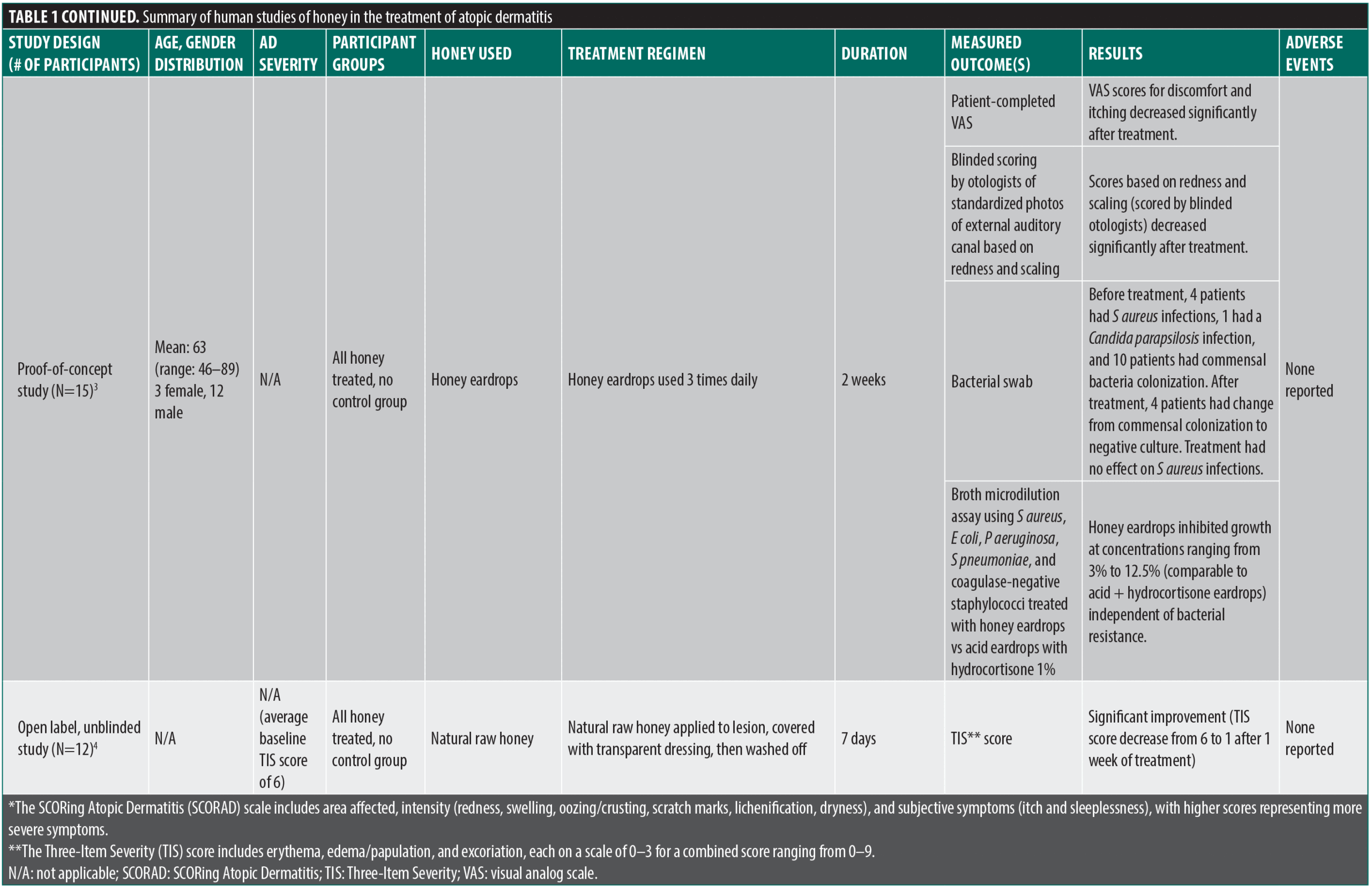
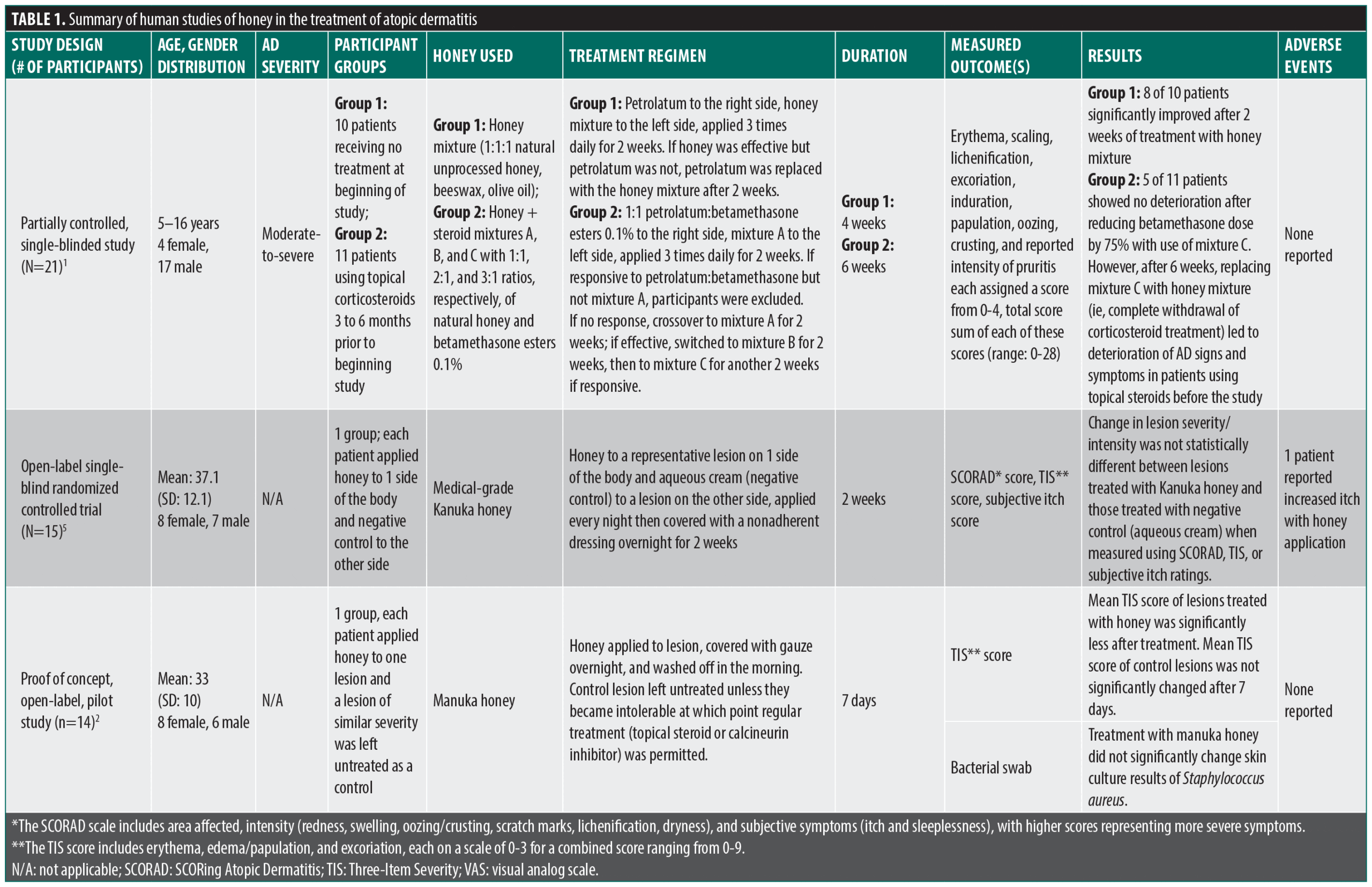
On January 19, 2025, an online search was conducted using the databases PubMed, Embase, and Web of Science to identify all published clinical trials investigating the use of honey in the treatment of AD in human participants. This search yielded 5 studies that met our inclusion/exclusion criteria. A detailed summary of all study characteristics and outcomes can be found in Table 1. Four studies reported that treatment with topical honey resulted in statistically significant improvements in AD symptoms using measures of severity including Three-Item Severity scores, SCORing Atopic Dermatitis, and Visual Analog Scale (VAS).1–4 One study also measured outcomes in eczematous external otitis using VAS and found that VAS scores for discomfort and itching significantly decreased after 2 weeks of treatment with honey eardrops.3 Only 1 of the 5 studies reported that treatment with honey was not significantly more efficacious than control (aqueous cream).5 Two studies collected bacterial swabs of lesions before and after honey treatment.2,3 While both studies found that treatment with manuka honey did not significantly change skin culture results of Staphylococcus aureus, 1 study did find that in some participants, honey eardrops led to a shift from commensal bacterial colonization pretreatment to negative culture posttreatment.2,3 Interestingly, 1 study found that adding topical honey as part of the treatment regimen enabled patients previously using topical corticosteroids to reduce their dose by 75% without clinical deterioration or exacerbation of symptoms.1 This suggests that topical honey may be especially useful as an adjunct therapy to optimize symptom control while using lower doses of conventional treatments like topical corticosteroids, minimizing the risk of adverse effects. Topical honey was generally well tolerated across all studies with minimal adverse events (increased itching in 1 patient in 1 study).5
While preliminary evidence for topical honey in AD is promising, existing research is significantly limited by small sample sizes, the absence of double-blinded design, and the lack of controls. Financial and technical barriers, along with limited interest from clinicians and industry, are challenges that likely contribute to the scarcity of rigorous trials. Future studies should address sample size, randomization, blinding, and control comparisons and investigate the biochemical pathways through which medicinal honey affects AD.
With regard,
Aileen Park, BS; Lanah Almatroud, BA; Leo Wan, BA; and Peter Lio, MD
Keywords. Honey, atopic dermatitis, integrative medicine, topical, eczema
Affiliations. Ms. Park is with the University of Colorado Anschutz School of Medicine, Aurora, Colorado. Ms. Almatroud is with the Michigan State University College of Human Medicine, East Lansing, Michigan. Mr. Wan is with the West Virginia School of Osteopathic Medicine, Lewisburg, West Virginia. Dr. Lio is with the Feinberg School of Medicine at Northwestern University and Medical Dermatology Associates of Chicago, Chicago, Illinois.
Funding. No funding was provided for this article.
Disclosures. Dr. Lio reports being on the speaker’s bureau for AbbVie, Arcutis, Galderma, Hyphens Pharma, Incyte, La Roche-Posay/L’Oréal, Lilly, Pfizer, Pierre-Fabre Dermatologie, Regeneron/Sanofi Genzyme, Verrica; reports consulting/advisory boards for Alphyn Biologics, AbbVie, Almirall, Amyris, Arcutis, ASLAN, Bristol Myers Squibb, Burt’s Bees, Castle Biosciences, Codex Labs, Concerto Biosci, Dermavant, Galderma, Janssen, LEO Pharma, Lilly, Lipidor, L’Oréal, Merck, Micreos, MyOR Diagnostics, Regeneron/Sanofi Genzyme, Sibel Health, Skinfix, Suneco Technologies (stock options), Theraplex, UCB, Unilever, Verdant Scientific, Verrica, and Yobee Care. In addition, Dr. Lio has a patent pending for a Theraplex product with royalties paid and is a board member and scientific advisory committee member emeritus of the National Eczema Association. The remaining authors have no relevant conflicts of interest.
References
- Al-Waili NS. Topical application of natural honey, beeswax and olive oil mixture for atopic dermatitis or psoriasis: partially controlled, single-blinded study. Complement Ther Med. 2003;11(4):226–234.
- Alangari AA, Morris K, Lwaleed BA, et al. Honey is potentially effective in the treatment of atopic dermatitis: clinical and mechanistic studies. Immun Inflamm Dis. 2017;5(2):190–199.
- Henatsch D, Nabuurs CH, van de Goor RM, Wolffs PT, Stokroos RJ. Treatment of recurrent eczematous external otitis with honey eardrops: a proof-of-concept study. Otolaryngol Head Neck Surg. 2017;157(4):696–699.
- Mohammed H. Anti-inflammatory properties of raw honey and its clinical applications in daily practice. Qatar Med J. 2022;2022(2):27.
- Fingleton J, Helm C, Tofield C, Weatherall M, Beasley R. A randomised controlled trial of topical Kanuka honey for the treatment of eczema. JRSM Open. 2014;5(1):2042533313509263.
Optimizing Surgical Tray Setup and Instrument Selection in Dermatologic Surgery